Choosing between deep tissue and Swedish massage can be confusing when the service names do not explain how the session will feel. Many people assume deep tissue means pain and Swedish means pressure that is too light to address tightness. That assumption can lead to booking a massage that does not match the reason for the appointment.
At MV Massage Therapy LLC, clients may arrive unsure which style fits their goals. Some request deep tissue massage because they feel tight, then realize they mainly want to relax with added attention to the shoulders, back, or legs. Others choose Swedish massage expecting very light pressure when they would prefer more focused work. The better choice starts with the goal for the session, not the strongest-sounding service name.
The Short Answer: What Is the Difference Between Deep Tissue and Swedish Massage?
Deep tissue massage generally uses slower, more focused techniques and firmer pressure in selected areas of tension. Swedish massage uses smoother, flowing strokes and a broader full-body rhythm centered on relaxation and comfort. Both services can include attention to tight areas, but the overall pace and purpose are different.
- Deep tissue massage: More deliberate pacing, concentrated attention, and firmer pressure when appropriate.
- Swedish massage: Flowing movement, light-to-moderate pressure, and a calmer full-body experience.
- The key decision: Choose based on whether focused work or relaxation is the main purpose of the session.
Pressure matters, but it is not the whole story. A massage can feel firm without becoming overly intense, and Swedish massage can still include meaningful attention to everyday tightness. A service label alone does not always describe the experience a person wants from the appointment.
What a Deep Tissue Massage Experience Is Like
Deep tissue massage is generally built around focused, deliberate work. Rather than using the same broad rhythm across the body, the session may spend more time in areas that feel persistently tight from daily activity, repetitive movement, or general stress.
Pressure, Pace, and Focused Techniques
Deep tissue massage generally moves more slowly through specific areas and may use firmer pressure than a relaxation-centered massage. The purpose is not to use maximum force. It is to apply focused pressure that matches the client’s stated priorities and comfort level.
Many people confuse “deep” with “painful.” That expectation can make it harder to relax or give useful feedback during the session. If pressure feels sharp, overwhelming, or difficult to tolerate, communicate that so the approach can be adjusted.
Readers looking for a session centered on concentrated attention can learn more about deep tissue massage.
When Clients Often Choose Deep Tissue Massage
- They prefer firmer pressure that remains comfortable.
- They want focused attention on recurring areas of everyday tightness.
- They feel that a slower, targeted session better fits their current goals.
- They have had massage before and know they prefer a more concentrated style.
Deep tissue massage can be a practical choice when a client can identify where they want more attention and prefers a slower approach in those areas. If the main goal is simply to decompress from a demanding week, a full deep tissue session may feel more intense than necessary.
What Deep Tissue Massage Is Not
Deep tissue massage is not necessarily painful, and it is not automatically better because the pressure is firmer. Strong pressure without a clear purpose can make a session less comfortable and make it harder to communicate what feels right.
It is also not a substitute for medical evaluation of an injury, unexplained pain, or a significant health concern. Recent injuries, unusual sensitivity, recent procedures, and areas of substantial pain should be discussed before the session. These details may affect whether massage is appropriate and how the session should be approached.
What a Swedish Massage Experience Is Like
Swedish massage is generally designed around a calmer, more flowing full-body experience. It typically uses smooth strokes and kneading to create an unhurried session focused on relaxation rather than extended work in only one or two areas.
Flowing Strokes and Relaxation-Focused Pacing
Swedish massage generally includes long gliding strokes, kneading, and a steady rhythm that supports relaxation. It is often selected by people who want to unwind, decompress, and enjoy a less intense massage experience.
Pressure still matters in Swedish massage. A client can prefer light pressure, moderate pressure, or something in between. The difference is that the session generally remains centered on overall flow and relaxation rather than spending extended time on deeper, targeted work.
For a more detailed description of this service, explore Swedish relaxation massage.
When Clients Often Choose Swedish Massage
- They want relaxation to be the primary purpose of the appointment.
- They prefer light-to-moderate pressure or are unsure how they will respond to firmer pressure.
- They want broader attention across the body instead of concentrated work in one area.
- They are scheduling massage as part of a stress-relief or self-care routine.
Swedish massage is often an approachable starting point for first-time clients because its pace is easy to understand and communicate around. That does not make it a beginner-only service. Clients who value a calming, full-body experience may continue to choose Swedish massage because it better matches their goals than a more focused session.
Can Swedish Massage Still Address Muscle Tension?
Yes. Swedish massage can include attention to the shoulders, back, legs, or other areas that feel tight from daily activity. The difference is that this work stays within a broader relaxation-centered session instead of becoming the main focus for most of the appointment.
This distinction matters when someone feels generally tense but does not want an intense, targeted session. When tightness is spread across several areas after long days, routine activity, or ongoing stress, a session that combines full-body flow with attention to those areas may be a better fit. Swedish massage is often chosen for that purpose.
Deep Tissue vs. Swedish Massage at a Glance
- Primary focus: Deep tissue massage is more targeted. Swedish massage is more full-body and relaxation-centered.
- Pressure: Deep tissue massage may use firmer pressure. Swedish massage generally stays light to moderate, based on comfort preferences.
- Pace: Deep tissue massage often moves slowly through selected areas. Swedish massage usually maintains a smoother, more continuous rhythm.
- Best fit: Deep tissue massage may suit focused attention to recurring tension. Swedish massage may suit stress relief and an overall calming experience.
- Overall feel: Deep tissue massage may feel more deliberate and concentrated. Swedish massage may feel more soothing and flowing.
- Communication: Both benefit from clear discussion of goals, sensitive areas, and pressure preferences.
Individual preferences matter more than labels. A massage therapist can adjust the session within the selected service based on client feedback. The most suitable choice is generally the one that matches the reason someone is booking at that time.
Which Massage Should You Choose?
A practical starting point is to choose deep tissue massage when concentrated work is the priority and Swedish massage when full-body relaxation is the priority. If both goals matter equally, a blended approach may make more sense than forcing the session into one category.
Choose Deep Tissue Massage If You Want More Focused Work
- You want deliberate attention in one or more areas that feel repeatedly tight.
- You generally like firmer pressure when it stays within a comfortable range.
- You want slower, more concentrated work instead of a primarily relaxation-focused flow.
Deep tissue massage can be a strong choice when the appointment has a specific focus. The important part is not tolerating as much pressure as possible. It is being clear about where the work should be directed and how the pressure feels as the session progresses.
Choose Swedish Massage If You Want a Calmer, Full-Body Experience
- You want to relax, slow down, and feel less mentally and physically wound up.
- You prefer a broader full-body session over extended focus in one area.
- You want light-to-moderate pressure or a gentler starting point.
Swedish massage is often the better fit when stress relief and overall comfort are the central goals. Choosing it does not mean ignoring tense areas. It means those areas can be addressed as part of a smoother, more restorative full-body experience.
Consider a Signature Massage If You Want a Balance of Both
Some clients do not fit neatly into either category. They want to relax overall but also want extra time spent on a few areas that feel tight. This can be a useful option for someone carrying stress through the shoulders or back who does not want the entire session to feel deeply focused.
A Signature Massage may be a practical choice when both priorities matter. It can help avoid choosing deep tissue solely because there is tension when the client’s broader goal is to leave feeling rested and reset.
How to Communicate Your Preferences Before and During a Massage
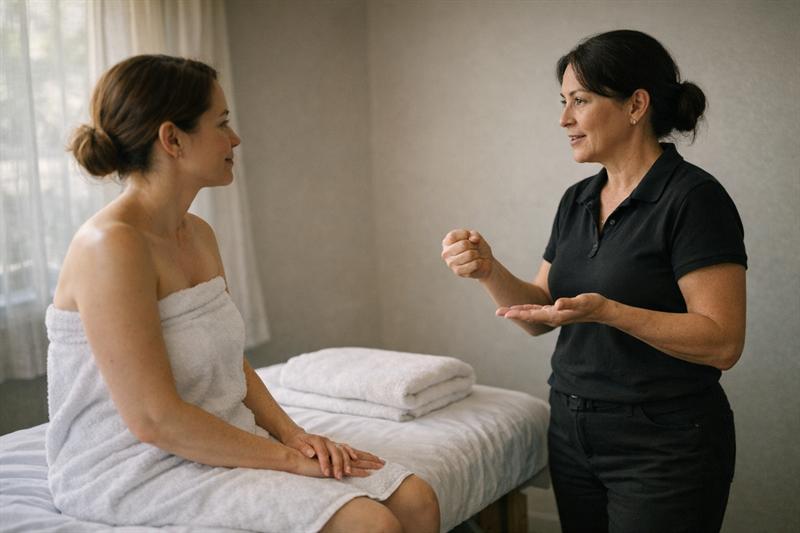
Clear communication can change the massage experience. Service names provide a starting point, but the details a client shares help the therapist understand what should receive more attention, what should receive less, and what level of pressure feels right.
- State the main reason for booking, such as relaxation, general tightness, focused attention, or a blend of goals.
- Point out areas where you want more time and areas you would prefer to avoid.
- Describe pressure in plain language instead of assuming “deep tissue” means maximum intensity.
- Speak up if pressure feels too light, too intense, sharp, or uncomfortable.
- Share relevant health information that could affect the session.
Discuss the service choice and session plan clearly before the massage begins if any of the following apply:
- You are choosing deep tissue massage only because you feel sore, but your real goal is to relax.
- You want a gentle Swedish session but have one area that needs more focused attention.
- You have had a previous massage where the pressure felt overwhelming or ineffective.
- You are dealing with recent changes such as an injury, pregnancy, a procedure, or unusual sensitivity.
When these details stay unspoken, the session may not match the client’s expectations. Clear direction helps the massage reflect the experience the client is seeking.
When to Ask for Additional Guidance Before Booking
Massage choices require more care when there are factors beyond everyday tightness or stress. Recent injuries, pregnancy, surgeries or procedures, health conditions, unusual pain, and areas of significant sensitivity should be disclosed before the appointment. In these situations, a standard comparison between deep tissue and Swedish massage may not provide enough context.
MV Massage Therapy LLC offers Prenatal Massage and Lymphatic Drainage by Margarita for clients seeking more specialized massage services. Margarita has post-operative cosmetic surgery certification. These services should be discussed in relation to the client’s circumstances rather than treated as interchangeable with Swedish or deep tissue massage.
When there is uncertainty about whether massage is appropriate, seeking relevant health guidance before proceeding may be helpful. Significant pain or recent medical changes are important details to consider when planning a massage session.
Key Takeaways: Deep Tissue Massage vs. Swedish Massage
- Deep tissue massage is generally more focused, slower-paced, and may use firmer pressure in selected areas.
- Swedish massage is generally more flowing, full-body, and relaxation-centered.
- Neither service is automatically better. The right fit depends on whether the appointment calls for concentrated work, relaxation, or both.
- Pressure should be communicated, not assumed from the service name.
- Recent injuries, procedures, pregnancy, or unusual pain require additional context before choosing a massage style.
Conclusion
The real challenge is not choosing between two massage names. It is booking a session based on the wrong expectation. Deep tissue massage is not simply a painful option, and Swedish massage is not simply a light option. Each service has a different purpose, pace, and feel.
When that difference is overlooked, clients may end up with a massage that feels too intense, too general, or disconnected from why they booked in the first place. MV Massage Therapy LLC can help clients make that decision based on their immediate goals, comfort preferences, and the kind of experience they need now.
For focused work, full-body relaxation, or a balanced session, book a massage appointment with MV Massage Therapy LLC in Vienna, Virginia. Taking time to choose the right approach before the session starts can support a clearer, more comfortable massage experience.
How MV Massage Therapy LLC Approaches the Choice
MV Massage Therapy LLC starts with the client’s reason for booking rather than assuming the service label tells the whole story. A client who says “deep tissue” may want firmer work in one area, while another may simply want relief from feeling generally tense after a long week. Those are different goals, and they can call for different session priorities.
This approach helps prevent a common mismatch: using intensity as the only measure of value. The more suitable massage is generally the one that fits the client’s stated goal, respects comfort feedback, and keeps the session focused on what matters most that day.
Frequently Asked Questions
Is deep tissue massage more painful than Swedish massage?
Deep tissue massage may feel more intense than Swedish massage because it generally uses slower, more focused work and can involve firmer pressure. It should not require you to tolerate pain. The useful distinction is between steady pressure that feels focused and pressure that feels sharp, overwhelming, or difficult to manage. The second kind should be communicated so the approach can be adjusted.
Is Swedish massage only for relaxation?
No. Swedish massage is relaxation-centered, but it can still include attention to the shoulders, back, legs, or other areas that feel tight from daily activity. What changes is the overall structure of the session. Swedish massage keeps a broader, flowing full-body rhythm, while deep tissue massage generally spends more deliberate time in selected areas.
Which massage is better for tight muscles?
The answer depends on whether the tightness is concentrated or widespread. Deep tissue massage may be the better fit when you want slower, focused attention in specific areas and prefer firmer pressure. Swedish massage may be the better fit when you feel generally tense and want a calming full-body session. The deciding factor is the purpose of this appointment, not which option sounds stronger.
Should I get a Swedish or deep tissue massage for my first massage?
Swedish massage is often an easy starting point for a first massage because its pace is calm and its pressure is generally lighter to moderate. Deep tissue massage can still be appropriate for a first-time client who wants focused work and communicates clearly about pressure. The main issue is expectation: first-time clients should not assume deep tissue means they need to endure intense pressure.
Can I ask for less pressure during a deep tissue massage?
Yes. Choosing deep tissue massage does not mean agreeing to the strongest possible pressure for the entire session. Pressure should change based on the area being addressed, your sensitivity, and what feels manageable in the moment. If the pressure becomes sharp or causes you to tense up, that is a clear sign it should be reduced.
What should I tell my massage therapist before the appointment?
Explain why you booked, what areas need more or less attention, and what pressure you generally prefer. Mention relevant details such as recent injuries, pregnancy, procedures, unusual sensitivity, or health concerns that could affect the session. This information helps turn a broad service label into a massage plan that better reflects what you are looking for.