Quick Answer: A first massage appointment generally begins with a conversation about your goals, comfort, relevant health information, and preferences before the hands-on session starts. You should understand how privacy and draping work, feel comfortable requesting changes during the massage, and leave with a clearer sense of which massage style fits your needs.
Many first-time clients delay booking because the unknowns feel more uncomfortable than the appointment itself. MV Massage Therapy LLC helps clients understand the process before they arrive, so questions about clothing, pressure, privacy, conversation, and service selection do not create unnecessary stress.
A First Massage Appointment Should Not Feel Like a Guessing Game
Your first massage should not require you to know the “right” thing to say or do. The appointment generally starts with communication and then moves into a session based on the information you share.
A common first-time concern is staying silent about discomfort because it feels awkward to interrupt. Pressure may be too intense, a position may not feel right, or time may be spent on an area you would rather avoid. Clear feedback gives the therapist a chance to adjust the session while it is happening.
Before Your Appointment: How to Prepare for Your First Massage
Preparing for a massage is usually straightforward. Choose a service that fits the reason for your visit, arrive in comfortable clothing, and be ready to discuss relevant health information and preferences.
- Review the massage options before booking.
- Wear comfortable clothes that are easy to change in and out of.
- Eat normally, but avoid arriving overly full or uncomfortable.
- Be prepared to share relevant health history, sensitivities, injuries, pregnancy information, or recent procedures.
- Follow the practice’s scheduling instructions for arrival time.
- Raise questions about service selection before the appointment if needed.
For clients who are pregnant, recovering from a procedure, or managing a health concern, provider instructions may affect the session plan. Massage therapy does not replace medical care or post-operative directions, and sharing that information helps establish appropriate boundaries for the appointment.
Choose a Massage Based on Your Goals
A familiar massage option is not automatically the right starting point. A relaxation-focused session, more focused pressure, prenatal massage, aromatherapy, hot stones, and lymphatic drainage each involve different expectations.
If your main goal is to unwind, Swedish or relaxation massage is often a practical place to begin. If you want more focused work in specific areas, deep tissue massage may be a better fit, provided the pressure remains comfortable. Readers comparing approaches can also review this guide to choosing the right massage.
What to Eat, Drink, and Wear
Wear whatever feels comfortable when you arrive. Loose, everyday clothing often works well because it is easy to change in and out of before and after the session.
During the massage, clothing preferences are part of the comfort conversation. Clients may keep undergarments on if they prefer, and professional draping is intended to keep the rest of the body covered while a specific area is being worked on.
What Happens When You Arrive for a Massage Appointment?
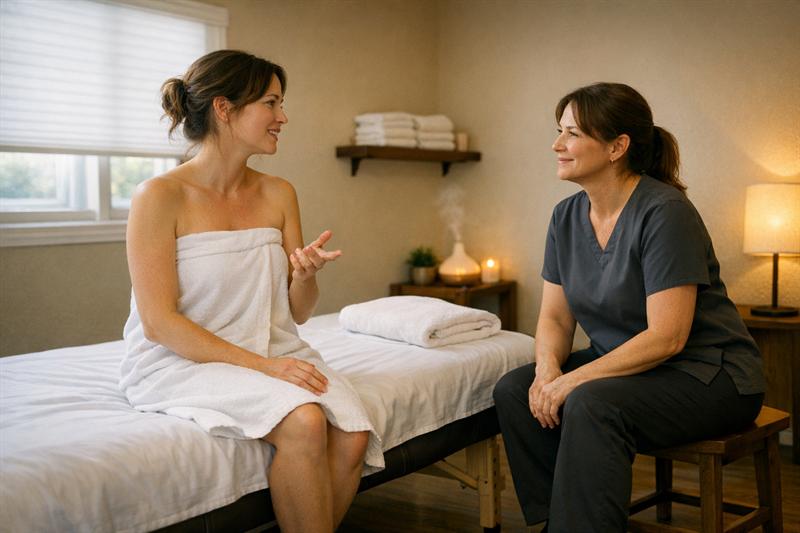
A first appointment typically includes check-in, intake paperwork or health history, and a brief consultation before the massage begins. This conversation helps the therapist understand your goals, preferences, and any details that should be considered during the session.
- Check in and complete any needed intake information.
- Discuss your goals, preferences, and relevant health details.
- Ask questions about the session before getting started.
- Receive privacy to get situated on the massage table.
Arrival instructions vary by practice, so follow the timing provided when you schedule. Rushing through intake can lead to missed details, especially when you have a specific focus area, sensitivity, recent procedure, or preference about pressure.
The First-Massage Consultation
The consultation is not a test, and you do not need a perfect explanation of what you need. It is a practical conversation that helps guide the session.
- Your reason for booking
- Your preferred pressure level
- Areas of tension or discomfort
- Areas you would like avoided
- Injuries, sensitivities, pregnancy, recent procedures, or relevant health history
- Preferences for talking, music, room temperature, and quiet
If you notice a pattern, such as discomfort after sitting, exercise, travel, or daily activity, describe what you feel rather than trying to label it. Details such as what feels tender, what feels restricted, what pressure is comfortable, and what you do not want worked on are useful for planning the session.
What Happens During a Massage?
Once the consultation is complete, you will generally have privacy to get situated. The massage then follows the plan discussed at the start, with room for adjustments as the session continues.
First-time clients sometimes assume the initial consultation locks the session into one plan. It does not. If the pressure is too firm, the room feels cold, you want less conversation, or an area becomes uncomfortable, say so directly. Waiting until the end means the therapist cannot make changes while the session is still in progress.
Privacy, Clothing, and Professional Draping
You are generally given privacy to get on the massage table and get comfortable under a sheet or blanket. Professional draping means only the part of the body being worked on is uncovered, while the rest remains covered.
You do not need to remove all clothing for a massage. Clients can discuss what they are comfortable removing and can keep undergarments on. If positioning, coverage, temperature, or any part of the setup feels uncomfortable, communicating that promptly helps keep the session comfortable and appropriate for you.
Pressure, Comfort, and Communication During the Session
You do not have to carry on a conversation during a massage. Quiet is completely appropriate, but communication about comfort should remain open.
- “Could you use lighter pressure there?”
- “Can we spend less time on that area?”
- “Could we focus more on my shoulders?”
- “I am feeling cold.”
- “I would prefer a quieter session.”
Deeper pressure is not automatically better. It is easy to assume discomfort means the massage is more effective, but pressure that causes you to tense up may not support the comfortable, focused session you want.
If you are staying tense, holding your breath, avoiding feedback, or feeling worse in an area during the session, ask for an adjustment.
- Pressure is stronger than you can comfortably tolerate.
- A focus area feels too sensitive or is not the area you wanted addressed.
- Your position, temperature, or coverage does not feel comfortable.
- You are unsure whether it is acceptable to speak up.
These are details worth addressing during the session. Clear feedback helps the therapist adjust the massage while there is still time to do so.
What a First Massage May Feel Like
Your first session may feel calming, focused, quiet, or more conversational depending on your preferences and the massage selected. Some sessions center on relaxation, while others spend more time on the areas identified during intake.
The session should reflect the goals discussed at the start. If the pressure, focus, or overall comfort does not match those goals, communicating that during the appointment gives the therapist an opportunity to adjust.
What Happens After a Massage?
After the massage, the therapist typically steps out so you can get dressed in private. A brief check-in may follow, giving you an opportunity to share how the session felt and discuss whether a future appointment should use the same approach or a different one.
This is also when clients may recognize what they would change next time. For example, someone who booked deep tissue massage but found the pressure too intense may prefer a relaxation-focused approach or more moderate pressure at a future visit.
Simple Aftercare Considerations
- Drink water according to your usual needs and preferences.
- Eat regular meals.
- Rest or choose gentle movement if that feels comfortable.
- Pay attention to how your body feels after the session.
- Seek appropriate medical guidance for unusual, severe, or concerning symptoms.
Aftercare does not need to become a strict routine. The useful approach is to notice what supports your comfort after the session rather than assuming every person responds in the same way.
Which Massage May Be Right for a First Appointment?
The best massage for a first appointment depends on what you want from the experience and what comes up during intake. Service names matter, but the reason for booking, your pressure preference, and relevant health considerations also matter.
MV Massage Therapy LLC offers several massage options, each with a different focus. For a closer comparison between two common starting points, read Deep Tissue Massage vs. Swedish Massage: Which Is Right for You?.
Swedish/Relaxation Massage
Swedish or relaxation massage is commonly chosen by clients seeking a calmer, more soothing experience. It is often a practical option for someone whose primary goal is to relax and become familiar with massage therapy.
Pressure preferences still matter. Relaxation massage does not mean you have to accept pressure that feels too light or too firm.
Deep Tissue Massage
Deep tissue massage generally involves more focused work and is often selected by clients who want attention on particular areas. The session should still remain within your comfort level.
A common misunderstanding is choosing deep tissue simply because it sounds more effective. If you are new to massage or unsure how much pressure you prefer, stating that clearly during intake helps prevent the session from becoming more intense than you want.
Signature Massage
A signature massage can combine techniques based on the goals and preferences discussed during your appointment. The consultation helps establish whether the session should lean more toward relaxation, focused work, or a balance of both.
Hot Stone Massage and Aromatherapy
Hot stones and aromatherapy change the sensory experience of a massage. Hot stones add warmth, while aromatherapy introduces scent as part of the session.
Temperature preferences, scent sensitivities, allergies, and skin sensitivities should be discussed before the session begins. Sharing those details early can support a more comfortable experience.
Prenatal Massage
Prenatal massage is planned with pregnancy-related comfort and positioning considerations in mind. Pregnancy stage, relevant health history, and any provider guidance should be shared during intake so the session can be planned with those details in view.
Prenatal massage is not simply a standard massage with a different label. Positioning and comfort considerations can change the session, which is why clear intake information is important.
Lymphatic Drainage and Post-Operative Considerations
Lymphatic drainage is a specialized service and differs from a general relaxation massage. Margarita provides lymphatic drainage and holds a post-operative cosmetic surgery certification, making this service a potential consideration for clients seeking massage as part of a post-operative plan.
For cosmetic surgery recovery, the details of the procedure and instructions from the surgical care team matter. Massage therapy does not replace medical follow-up, and surgical instructions should guide decisions about post-operative care. Any service plan should account for timing, limitations, and recovery guidance.
Questions to Ask Before Booking Your First Massage
Asking a few direct questions before your first appointment can prevent avoidable confusion. The most useful questions clarify service fit, comfort expectations, and circumstances that affect how the session should be planned.
- Which massage service best fits the reason for my visit?
- What information should I share before the appointment?
- What are the arrival, rescheduling, and cancellation policies?
- Can I request a specific pressure level or focus area?
- Can I request a quiet session?
- Do pregnancy, surgery, or another health consideration affect which service I should select?
If you are uncertain about service selection because of a specific need, addressing the question before the appointment can be helpful. Choosing based on a service name alone can result in an experience that does not match what you expected.
Key Takeaways
- A first massage is generally a guided process that begins with a consultation.
- You can communicate about pressure, quiet, temperature, focus areas, and comfort throughout the session.
- Professional draping and privacy are expected parts of the massage experience.
- Relevant health information can help guide the session appropriately.
- Service selection matters, especially for prenatal massage, lymphatic drainage, and post-operative considerations.
Ready to Plan Your First Massage in Vienna, VA?
The main barrier to a first massage is often uncertainty about what will happen, whether you can speak up, and whether you are choosing the right service. Addressing those questions before the appointment can help you choose a service that fits your goals and feel more at ease during the session.
MV Massage Therapy LLC offers massage services with a process that begins with communication and keeps comfort preferences central throughout the session. Review the available services, then book your massage appointment when you are ready for a first visit with clearer expectations.
First Massage Appointment FAQs
What should I wear to my first massage appointment?
Wear comfortable clothing to your appointment, preferably something easy to change in and out of. During the massage, you can discuss clothing preferences with the therapist and keep undergarments on if that is most comfortable for you.
Professional draping means only the area being worked on is uncovered. Clothing is not an all-or-nothing decision: privacy, comfort, and communication remain part of the session.
Do I have to talk during a massage?
No. Conversation is optional, and many clients prefer a quiet massage. You should still speak up about anything that affects comfort, including pressure, temperature, positioning, coverage, or the area being worked on.
For example, “Could you use lighter pressure on my shoulders?” gives the therapist a clear direction. Social conversation is optional; comfort communication is important.
How early should I arrive for my first massage?
First-time clients generally need enough time for intake information and a consultation about goals, pressure preferences, and relevant health details. The exact arrival time depends on the practice’s scheduling instructions.
Your first appointment includes more than the hands-on massage. Arriving without enough time can make the consultation feel rushed, and important preferences may be missed.
What should I tell my massage therapist before the session?
Share what you want from the session, what pressure feels comfortable, which areas you want addressed, and which areas you want avoided. Mention relevant details such as sensitivities, injuries, pregnancy, recent procedures, allergies, medications, and provider guidance.
You do not need medical terminology or a perfect explanation. Details such as “my upper back feels tense after sitting at work” or “I do not like very deep pressure” give the therapist useful direction for planning the session.
Which massage should I choose for my first appointment?
Choose based on your reason for booking rather than the assumption that one service is best for everyone. Swedish or relaxation massage is commonly a practical starting point for clients who want a calmer experience, while deep tissue massage involves more focused work and should remain comfortable.
Hot stones and aromatherapy change the sensory experience, prenatal massage includes pregnancy-related positioning considerations, and lymphatic drainage is a specialized service. The decision may change when you have a specific circumstance, such as pregnancy or post-operative cosmetic surgery recovery, because those details can affect how the appointment should be planned.
What should I do after a massage?
Return to normal meals, drink water according to your usual needs, and choose rest or gentle movement based on how you feel. A brief post-session check-in can also help identify preferences to carry into a future appointment.
Aftercare is not a strict formula. Pay attention to comfort rather than assuming every person responds the same way after massage.