If you have searched for lymphatic drainage vs swedish massage, you have probably found two kinds of pages: one explaining lymphatic drainage, one explaining Swedish massage, and very little that sets the two next to each other. The gap matters. Both services are gentle, both move slowly, and both usually sit a line apart on the same menu, so the names alone give you nothing to choose with.
This comparison works through the three things that actually separate them — pace, pressure, and purpose — in plain language, then covers the practical details for booking either one at MV Massage Therapy in Vienna, Virginia.
The Short Answer
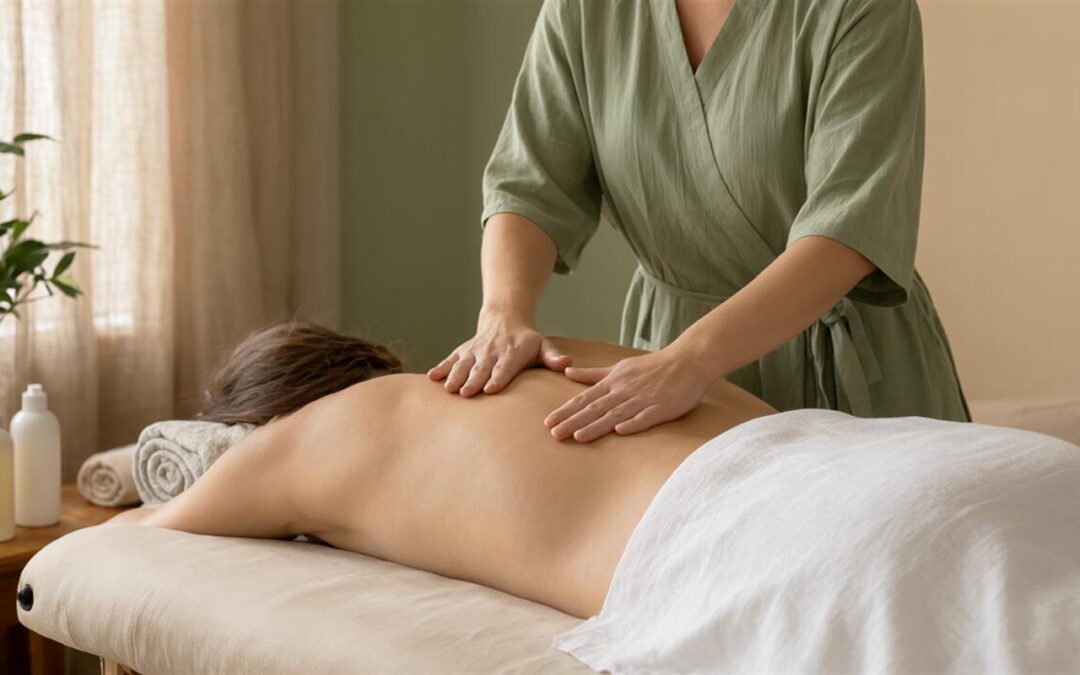
Swedish massage works muscle. Palms, thumbs, and knuckles glide, knead, lift, and circle across the body in long connected strokes, usually with oil or lotion, usually over the whole body. Pressure is a dial you control, from barely there to firm, and it can change as the hour goes on.
Lymphatic drainage works along the paths of the lymphatic system instead. The strokes stay very light and repeat in one direction, following the routes that lead toward lymph nodes in the neck, armpits, and groin. There is no kneading into a tight muscle and no pressure worth bracing for. If the reason you are booking is that you want to switch off and be worked over, Swedish fits. If the reason is more specific, and what you want is light, repeated, directional work, lymphatic drainage fits.
Pace: Repetition or Continuous Flow
A Swedish session is built as a chain. One stroke leads into the next — a long glide up the back, a knead into the shoulder, a circle over the hip, then back down. The hands rarely leave the body for long, and the rhythm stays steady, which gives the nervous system something continuous to follow. That continuity does a lot of the work. Nothing in the hour asks you to track anything new.
Lymphatic drainage runs on the opposite logic. A stroke repeats several times in the same direction over the same short stretch of skin, then the hands shift slightly and repeat again. There is no sweeping sequence to sink into, only a methodical one. The first few minutes can feel odd, light enough that it seems like nothing is happening, and then the rhythm takes over.
The practical difference is what the hour feels like from the inside. Swedish feels like one long movement that travels around the body. Lymphatic drainage feels like a set of sequences that stay in one place until they are finished. Neither runs faster in a way you would notice from the waiting room.
Pressure: Light and Directional or Adjustable and Broad
Lymphatic drainage stays light because of where the work is aimed. Lymph vessels sit close to the surface of the skin, so the stroke stays near the surface too. Lightness is the technique, not a polite version of a stronger one. Pressing harder would not change the path the stroke takes; it would only change what the tissue underneath reports.
Swedish pressure is adjustable by design. The same session can stay quiet and soft for someone who wants to drift, or firm through the shoulders and low back for someone who sits at a desk all day. Because the strokes cover large areas, the pressure is spread broadly rather than concentrated into one spot.
If you are still deciding, two requests at booking do more than the service names. Ask for light pressure that keeps moving in one direction, and you have described lymphatic drainage. Ask for pressure that can be turned up or down as the session goes, and you have described Swedish.
Purpose: Fluid Movement or Whole-Body Settling
Swedish massage is built around settling the whole body. Each major area gets time, the pace is unhurried, and the point of the appointment is the general state you walk out in rather than one region of tension.
Lymphatic drainage is built around movement along a pathway. The work often concentrates on one area — an arm, a leg, the abdomen — because a directional sequence has somewhere to go, and finishing the sequence matters more than covering every part of the body.
That difference shows up in how the appointment is described, too. A Swedish session is usually explained by how much of the body it covers. A lymphatic session is usually explained by where it starts and which way it travels. Neither one examines, diagnoses, or decides anything on your behalf, and neither substitutes for medical care.
Why Lymphatic Drainage vs Swedish Massage Get Mixed Up
Side by side, the confusion is understandable. Both are booked in the same 45, 60, 75, and 90 minute blocks. Both happen in a quiet room with oil, low light, and a warm table. Both are gentler than deep tissue. A menu that lists only names and prices gives you nothing to separate them with, so most people default to whichever name sounds more familiar.
The word “drainage” does some of the damage as well. It sounds clinical, which makes the service sound intense, when in practice it is the lightest touch on the menu. If you want the full picture of one session before deciding — how it begins, what gets asked, how the hour is paced — what to expect from a lymphatic drainage session walks through it step by step. The rest of this comparison will read more clearly after that.
How Sessions Are Planned at MV Massage Therapy
MV Massage Therapy is a one-practitioner practice in Vienna, Virginia. Margarita Valdivia provides every service on the menu: Swedish/relaxation, lymphatic drainage, deep tissue, signature massage, hot stones, aromatherapy, and prenatal massage. Lymphatic drainage is the one she describes as her exclusive offering, and she continues training in it, including work with clients recovering from surgery.
Rates are published by session length. Lymphatic drainage is $110 for 45 minutes, $140 for 60, $165 for 75, and $200 for 90. Swedish/relaxation is $95 for 45 minutes, $120 for 60, $145 for 75, and $180 for 90. The distance between those two columns is the plainest sign on the price list that these are separate services rather than two labels for one.
In-home and mobile appointments are also available in Vienna and Fairfax, with the exact address confirmed before the visit. The contact page lists the practice as open every day, 11am to 8pm. Appointment requests go through the booking page, so the service and the session length are settled before you arrive.
When Swedish Massage Tends to Fit Better
Swedish tends to fit the client who wants to be worked over rather than to direct the work. A first massage, a long week, a stiff neck that is clearly part of a bigger pattern, a preference for broad contact and quiet — that profile usually lands on Swedish.
It also suits anyone who wants the pressure to change mid-session without renegotiating the appointment. Because the strokes travel, the focus travels with them, and nothing has to be decided in advance.
If that sounds like the hour you are after, the Swedish relaxation massage service page sets out the session lengths, rates, and what the hour includes.
When Lymphatic Drainage Tends to Fit Better
Lymphatic drainage tends to fit when there is a specific reason for the appointment and a preference for very light touch. That could be someone who finds firm pressure distracting, someone following a care plan they can describe, or someone recovering from a cosmetic procedure whose surgeon has already cleared massage.
The practice holds a post-op cosmetic surgery certification, which shapes how those appointments are planned. Timing is still a medical question, though. When a session can begin after a procedure belongs to the surgeon, and the certification does not replace the surgeon’s instructions. Say where you are in recovery when you book, and the plan follows from there.
The lymphatic drainage service page covers the session itself. Anything your surgeon has said about timing, medication, or aftercare is worth raising in the booking conversation rather than leaving until the table.
Questions Worth Asking Before You Choose
Three questions settle most of this before you book. What is the reason for the appointment — a general need to unwind, or something specific that has been building? How does very light pressure sit with you: soothing, or maddening? Would you rather be covered broadly, or followed along one pathway until the sequence is done?
Ask them in that order. The reason usually decides the service, and the other two confirm it. If the answers point clearly at neither, a guide to finding the right massage fit compares the rest of the menu using the same logic.
- Is the goal to switch off, or to address something specific?
- Does very light, repeated touch feel calming or distracting?
- Would you rather be worked over broadly or followed in one direction?
- Is there a procedure, injury, or care plan the practitioner should know about?
Key Takeaways
Both services are gentle. That is where the similarity ends.
- Swedish massage covers the body in connected gliding and kneading strokes, with pressure you can raise or lower as the hour goes.
- Lymphatic drainage stays feather-light, repeats in a single direction, and follows the routes toward lymph nodes.
- Session length tells you nothing, because both are offered at the same four lengths; the reason for booking is what separates them.
- Lymphatic drainage is Margarita’s own service here, and it is the more specialized of the two.
If something is still open — a procedure date, a pressure preference, a question about which one to start with — send a question through the contact page before choosing.
Closing
Choosing between lymphatic drainage and Swedish massage comes down to the reason behind the appointment. A body that needs an hour of broad, unhurried contact is asking for Swedish. A specific reason that calls for light, repeated, directional work is asking for lymphatic drainage. When the two still blur, describe the reason at booking and let the service follow from it.
Both are available in Vienna, Virginia, for clients in Vienna and Fairfax, in the studio or at home, through MV Massage Therapy. When the choice is clear, request an appointment and note the service you have in mind. When it is not clear yet, ask first and book after.