Quick Answer: Aromatherapy massage is a relaxation massage where a scent choice, usually an essential oil blend, is built into the session, not used as a medical treatment. The common problem is that clients treat it like a regular oil massage with a scented add-on, which leads to mismatched expectations about scent, pressure, and session length.
At MV Massage Therapy LLC, this service is framed around three moving parts: the scent choice, the underlying relaxation strokes, and the client preference conversation that happens before the bodywork begins.
The purpose of this guide is practical. It should help you know what the session includes, what it is not, and how to choose the version that fits your current comfort level.
What Is Aromatherapy Massage?
A Simple Definition
Aromatherapy massage is a massage format built on a relaxation base, usually Swedish-style strokes, with scent selected as a named part of the appointment. Most versions use an essential oil blend diluted in a carrier oil, and an unscented base is a normal variation. It is not a clinical treatment. The session focuses on comfort, sensory preference, and pacing.
The distinction matters because most oil-based massage already uses a carrier oil for glide. In a standard relaxation massage, the oil helps the hands move smoothly. In aromatherapy massage, the scent is a design choice. You choose a direction before the session begins.
First-time clients sometimes search for “aromatherapy” and expect a stronger or more intense experience. In practice, the difference is often subtle. The long gliding strokes stay similar. The scent is added as a layer. That layer is what the client controls.
How Essential Oils Are Typically Used in a Massage
Essential oils are normally diluted in a carrier oil before they are used on the skin. A carrier oil can be jojoba, almond oil, grapeseed oil, or another base the studio uses. The essential oil is not poured undiluted onto the skin. The dilution keeps the scent present without making it the main stimulus.
The oil usually reaches you in two ways. The therapist’s hands carry the scent during strokes, and the room air carries a soft hint of the blend. Inhalation is not a separate ritual in most massage sessions. It happens through normal breathing while you are lying down and the oil is nearby.
Most aromatherapy services offer a small set of blends rather than a broad list of single oils. A typical menu includes a citrus-forward option, a lavender-forward option, a woodsy or herbal option, and an unscented option. The point of the small selection is choice. You are choosing a direction, not engineering a precise formula.
How Aromatherapy Massage Differs From a Standard Oil-Based Massage
A standard oil-based massage uses oil to reduce friction. The scent of that oil is usually neutral or faint. You do not need to make a scent decision for the session to run. The focus stays on strokes, pressure, and body positioning.
In an aromatherapy massage, the scent is part of the appointment from intake. You choose a blend, or you choose an unscented base, before the massage begins. That choice changes the sensory atmosphere. It does not change the fundamental structure of a relaxation massage.
The difference is design, not technique. The therapist may use the same long strokes, but the experience includes a chosen aromatic element. When that expectation is not stated, the session can feel like a normal oil massage with an added scent. That is where first-time confusion starts.
What to Expect During an Aromatherapy Massage
The Intake and Preference Check
The intake is the first practical part of the session. It covers pressure preference, areas to avoid, clothing comfort, fragrance choice, and any known sensitivities. This conversation changes the session. It is not a formality.
If you are unsure about your preferences, a short note before the appointment helps. It can cover pressure, scent, and areas of focus. The therapist uses that note to prepare the oil and pacing. This reduces awkward pauses during the bodywork.
If the intake is skipped or rushed, the session defaults to a middle setting. A middle setting avoids intensity, but it can miss the specific comfort or focus you need. That is where a client ends up with pressure that is too light or a scent that was not expected.
Scent Selection and Aroma Preference
Scent selection is short. You are shown or described a small selection of options. You are not expected to know essential oil names. You choose based on preference, not a claimed benefit.
- A citrus-forward option is bright and is often chosen when you want a clearer, cleaner atmosphere.
- A lavender-forward option is soft and is often chosen when you want a quieter start.
- A woodsy or herbal option is grounding and is often chosen when you prefer less floral scent.
An unscented option is part of the same service. The carrier oil is unscented, the session length stays the same, and the pressure range stays the same. Choosing no fragrance is not a reduced version. It is a normal preference.
Pressure, Pacing, and Session Flow
A 60-minute aromatherapy session follows a relaxed rhythm. The therapist works in continuous strokes over larger regions. The pressure starts at a moderate or light level, and you can request adjustment. The session is not organized like a deep tissue session where each tight area is targeted individually.
A typical 60-minute session moves through the body in general order:
- The back receives the largest portion of the session.
- The legs follow, with a repositioning pause.
- The arms, neck, and scalp or hands round out the work.
- The final minutes are a quiet wind-down before you get up.
The intake usually takes a few minutes, and the dressing time is part of the appointment length. That means the time on the table is slightly shorter than the booked minutes. This is normal across massage sessions, and it is worth expecting rather than discovering mid-session.
Room Environment and Comfort Details
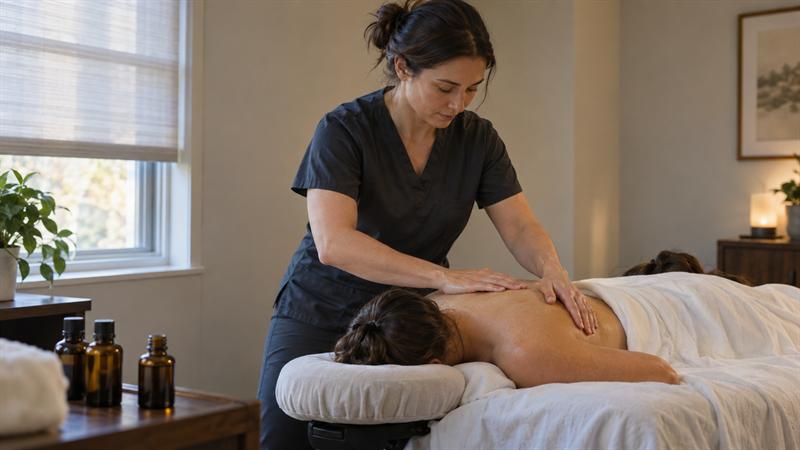
The room is set for low stimulation. Lights are softened, the table is kept comfortable, and clean linens are used. You lie covered, and the therapist works within the drape. The door is closed, and the session is meant to stay quiet.
Comfort details matter because aromatherapy relies on you noticing the scent and the rhythm. A cold room, a hard surface, or constant movement pulls attention away from the session. The environment is part of the format. It is not just decoration.
How to Choose an Aromatherapy Massage That Fits
Choosing Based on Sensory Preference
Choose aromatherapy massage when you want a relaxation session with a sensory choice built in. If you like the idea of selecting a scent, the service fits. If you want to avoid fragrance, the unscented version still gives the same session structure without the aromatic element.
Aromatherapy often appeals to clients who want the session to feel less generic. A standard relaxation massage can satisfy that need for some people. For others, the scent choice makes the appointment feel more personal. The deciding factor is whether you value that choice before lying down.
If you are new to oil-based massage, a 60-minute session with a mild scent is a practical first try. It gives the full body experience without a long time commitment. You can then decide whether you want stronger scent, no scent, or a different massage style next time.
Choosing Based on Pressure Comfort
Aromatherapy massage is best suited to moderate or light pressure. If you want deep pressure on specific muscles, that goal points to deep tissue or a targeted signature session. Aromatherapy is not the default format for a targeted pressure goal.
You can still ask for more focus on the shoulders, upper back, or jaw. The therapist can add attention within the relaxation pacing. The session remains aimed at overall relaxation. The difference is that the focus is layered onto a soft rhythm, not built around firm work.
Pressure preference changes over time. A session that feels right one week can feel too light the next. This is normal. You should state the current preference each appointment. For a practical pressure guide, see how to choose massage pressure.
Choosing Based on Schedule or Session Length
A 60-minute session is the standard fit for a full body aromatherapy relaxation session. It includes enough time for intake, scent choice, full body coverage, and wind-down. It is the most practical first appointment when you want the full experience without a long block of time.
A 90-minute session slows the pace. The therapist spends more time on the hands, feet, scalp, or areas you want additional attention. This length works when you want a deeper relaxation without a firm-pressure format.
A 30-minute session is a reset. It usually covers the back and neck. It is not a full body aromatherapy session. If you are deciding on your first try, a shorter session reduces the time commitment, but it also limits how complete the experience feels.
When Another Massage Style May Be a Better Fit
If the goal is more targeted work on a tight shoulder, neck, or muscle group, or firmer pressure after exercise, deep tissue or signature massage can serve that goal more directly. Aromatherapy massage is not designed to replace targeted work. It is designed to create a sensory relaxation session.
A common mismatch happens when clients book a scent-based relaxation session and expect a firm, corrective massage. That can make the session feel too soft. The practical fix is to choose the massage style based on the goal first, then add scent if it fits.
If a massage has missed the mark, the issue often comes back to intake rather than intensity.
- The session felt too light, but the main goal was more targeted work.
- The scent was too stimulating, but the massage style itself was right.
- You keep booking deep tissue when the actual need is controlled relaxation.
- You cannot easily describe the pressure you want without waiting until the session starts.
If you recognize these signs, correct the appointment details before the next session. State the pressure choice, the scent preference or unscented option, and the main body area you want addressed.
Comfort, Sensitivity, and Practical Considerations
Fragrance Sensitivity and Unscented Options
Fragrance sensitivity is a normal comfort factor, not a specialty request. If you dislike strong perfume, essential oils, or air fresheners, an unscented carrier oil is the appropriate option. The session does not lose structure. It simply removes the aromatic layer.
A known sensitivity to a specific oil is different from a general dislike of scent. Some carrier oils are nut-derived, so it is worth mentioning a known nut sensitivity before the session. The therapist can check the base oil and use an unscented or non-nut-derived option when appropriate.
The practical rule is simple. General scent preference is a comfort choice; a known sensitivity or previous skin reaction is worth sharing at booking or intake.
Skin Comfort, Allergies, and Pre-Appointment Questions
If you have open skin, a recent sunburn, or an area that seems sensitive, mention it before the session. The therapist can adjust draping, work around that area, or use a gentler base oil. This helps keep the session comfortable on a sensitive spot.
The questions below settle expectations before the bodywork starts.
- Do you offer an unscented option?
- Can I hear a short description of the available blends before I choose?
- Can I adjust the pressure during the session if it feels too light or too firm?
- Do I need to shower before or after?
- What is the cancellation or rescheduling window?
These questions give the therapist clear boundaries and give you a more reliable session. If you wait until the bodywork is already going, you often end up accepting a default session that misses the mark.
What to Consider After the Session
There is no fixed aftercare requirement. You can get up, change, and leave. Some people prefer to stay on the table for a minute or two. That choice is personal. It is not a sign that the session needs correction.
If a scented oil was used, the fragrance can stay on the skin for several hours. It fades over time. If you have a work evening or a meeting the next day and prefer less scent, a short shower later is enough. There is no obligation to rinse immediately.
Drinking water after the session is a normal comfort habit. It is not required for a relaxation massage to feel complete. The session is complete when the bodywork ends.
How Aromatherapy Massage Fits Into the Relaxation Massage Cluster
Aromatherapy Massage and Swedish Relaxation Massage
Swedish relaxation massage is the common base for aromatherapy. The strokes are long, gliding, and rhythmic. Aromatherapy adds a selected scent layer on top of that base. The technique does not change. The atmosphere changes.
A person who enjoys Swedish massage and wants a personal sensory element is a good fit for aromatherapy. A person who wants a straightforward relaxation session without a scent decision is also fine with Swedish. Both choices are valid. The difference is the role of aroma in the appointment.
This separation matters because aromatherapy is often listed next to Swedish and hot stone. It is not a replacement for either. It is a variation built on a relaxation format, with scent as the defining choice.
Key Takeaways
- Aromatherapy massage is a relaxation massage with a chosen scent direction as a designed part of the experience.
- The session usually includes an intake, scent selection, full body strokes, and a quiet wind-down.
- An unscented option keeps the same structure and removes only the aromatic layer.
- Pressure and pace are adjustable, and you should state current preferences at intake.
- The service described here is a sensory relaxation option, not a clinical treatment.
How MV Massage Therapy LLC approaches this service: The focus is on sensory preference, a clear pressure choice, and a clear intake. You are not expected to know essential oil names. You are asked what you want to feel, what you want to avoid, and where the session should focus. That keeps the aromatherapy session practical and fitted to the person on the table.
Frequently Asked Questions About Aromatherapy Massage
What is aromatherapy massage and how is it different from a regular massage?
Aromatherapy massage is a relaxation massage in which a scent choice is built into the appointment. The underlying strokes are usually Swedish-based. The difference from a regular oil massage is that the scent direction is chosen before the session starts. In a regular oil massage, the oil scent is incidental. In aromatherapy massage, the scent is part of the appointment design. That means you can request a soft citrus option, a lavender-leaning option, a woodsy option, or no scent at all.
Can I get an aromatherapy massage without the scent?
Yes. The therapist can use an unscented carrier oil instead of a scented essential oil blend. The session structure, pressure range, and coverage stay aligned with the standard aromatherapy appointment. The only change is the removal of the aromatic layer. This option is useful when you dislike fragrance, have a mild sensitivity to scent, or want a simpler sensory experience. It is not a lighter version of the appointment. It is the same session with one variable removed.
What does a 60-minute aromatherapy massage include?
A 60-minute aromatherapy massage usually includes a short intake, a scent choice, and full body relaxation work over the back, legs, arms, and neck or scalp. The actual time on the table is slightly less than the full booked minutes because the intake and dressing are included. The back receives the largest portion of the time, followed by the legs, and then the arms, neck, and scalp or hands. The final minutes are quiet, and you do not need to rush off the table. The scent should be soft enough that you notice it without it becoming the main focus.
Do I need to shower before or after an aromatherapy massage?
Before the session, no shower is required. The studio uses clean linens, a fresh towel, and a prepared table. After the session, a shower is a personal comfort choice, not a required step. If a scented oil was used, the fragrance may linger on the skin for several hours. If you want to reduce that lingering scent before an evening event or a meeting, a short shower later is enough. If an unscented oil was used, the decision is usually about how you feel after lying down. There is no timing rule that makes a later shower wrong.
How do I know if aromatherapy massage is right for me?
Aromatherapy massage is the right fit when you want a relaxation session with a sensory choice built into the appointment. It works well for a first oil-based massage, a week that needs a softer reset, or a client who wants control over scent. It is less suited when the main goal is firm work on a specific muscle group or tight area. The decision usually comes down to whether you want aroma as part of the experience or a more targeted pressure format. If the goal is targeted work, deep tissue or signature massage can serve it more directly. If the goal is calm, controlled relaxation, aromatherapy fits.
How is an aromatherapy massage different from a hot stone massage?
The main difference is the sensory focus. Aromatherapy massage centers on the scent component, usually a chosen essential oil blend. Hot stone massage centers on warmth from heated stones placed on the body. Both often use a relaxation base, so the strokes remain similar. What changes is what you feel most: scent in one, heat in the other. The decision comes down to which sensation you want to emphasize. If warmth is the missing element, choose hot stone. If scent is the missing element, choose aromatherapy.
Conclusion: Is Aromatherapy Massage the Right First Appointment?
The real problem is usually not the essential oil. It is choosing a massage format without clarifying pressure, pace, and sensory preference. When that happens, the session can feel too soft, too stimulating, or simply not aligned with your goal. That mismatch is easier to fix before the appointment than to correct after the fact.
At MV Massage Therapy LLC, the aromatherapy service is built around the intake conversation, the scent choice, and your pressure preference. If you are deciding whether a soft, sensory relaxation session fits better than a deeper pressure format, the practical next step is a clear booking note. This tells the therapist what to prepare and keeps the session aligned with your actual goal.
For details on session lengths and scent options, see the Aromatherapy service page. The next step is to book an appointment and note the scent direction, pressure level, and any areas to avoid. This turns a vague relaxation idea into a session that can be prepared for in advance.