What Massage Pressure Actually Means
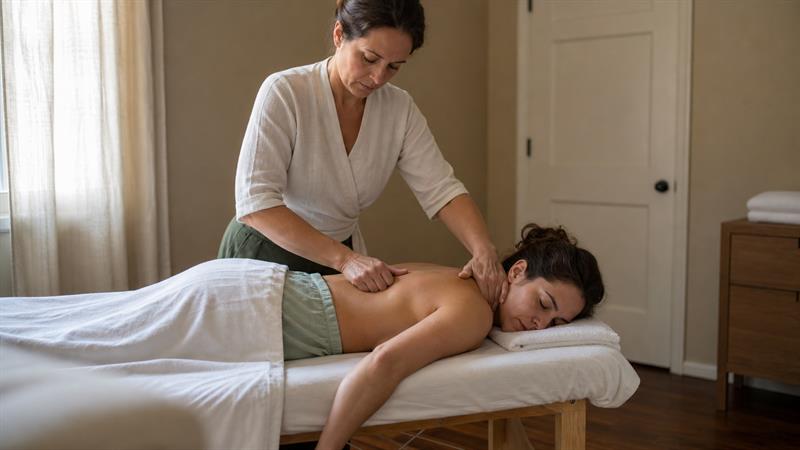
Massage pressure is a practical setting built from depth, pace, duration, and how the tissue responds. It is not simply how hard the therapist presses. A slower, sustained hand on a deeper layer can feel more useful than quick, heavy rubbing on the surface.
In plain terms, the three pressure ranges work like this:
- Light pressure stays near the surface of the muscle and is commonly used for gentle movement, relaxation, and sensitive areas.
- Medium pressure presses into the muscle belly and can work as a useful starting point.
- Firm pressure uses slow, focused force on deeper muscle and connective tissue and is a common choice for persistent tension.
Pressure level and pressure quality are different things. Even pacing and continuous strokes create a different body response than fast, choppy pressure at the same intensity. A lighter session can still be useful when the tissue needs rhythm and gentle movement instead of strong force.
Pressure is also collaborative. The therapist applies the technique, and the client reports what the body is doing. A short, clear sentence in the early part of the session can change the direction of the whole visit.
How to Choose Pressure Based on Your Goal
Choose massage pressure by starting with the goal. The goal helps decide whether the session should lower overall stimulation, target a specific area, or use light pressure for a more sensitive body state.
Choosing Pressure for Relaxation and Stress Support
For relaxation, light to medium pressure is a common starting point. The goal is to slow the body down, not to work through every tight spot at high intensity. The body tends to respond more to rhythm and consistency than to stronger force, and long, even strokes support that response.
This is a common consideration after a heavy week of work, travel, or screen time. A Swedish-style session can be a clear fit when the desired result is a calmer state and a fuller body reset rather than focused tissue breakdown.
Choosing Pressure for Stiffness and Muscle Tension
For stiffness, medium to firm pressure is a common match. The goal is not to make the whole body feel heavy at the same time. It is to target the area that has become locked, such as the upper back, shoulders, neck, or lower back.
This is where a common mismatch starts. A client asks for deep pressure everywhere, and the neck or lower spine feels overloaded. The better plan is firm focus on one or two areas, with lighter work elsewhere. If the tension is chronic and concentrated, deep tissue pressure is a logical next direction.
Choosing Pressure for Gentle Recovery or Increased Sensitivity
Yes, lighter pressure can be effective. It is often used when the goal is gentle comfort, support for sensitive tissue, or a calmer session during post-exercise recovery, prenatal comfort, or other low-stimulation goals. Light, slow pressure is not a reduced version of a deeper massage.
It is a different technique built for a different tissue state. The practical benefit comes from consistency, pace, and direction. Force becomes less important than the pattern of touch, and the person may not register the session as “strong,” which can make it harder to trust the result. Understanding that the technique is doing its work at that intensity level is what changes the expectation.
Choosing Pressure for a First-Time Guest
For a first-time session, medium pressure is a clear starting point. It gives enough information about what lighter and firmer work feels like without asking the client to commit to a strong preference before the body has a baseline.
The first session is a reference point. If the goal is relaxation, starting lighter is useful. If one area feels clearly tight, noting it for the next visit makes the second choice easier and more precise.
Matching Pressure to Massage Styles
Match pressure to the massage style by looking at the pressure range each style is built to use. The style name matters less than the role the pressure plays in the session.
Swedish and Relaxation Massage
Swedish and relaxation styles generally use light to medium pressure. The strokes are longer, flowing, and rhythmic. The aim is a fuller body reset and a calmer state after the session. Hot stone work and aromatherapy can also fit in that same range when the primary goal is relaxation.
Swedish massage is often associated with relaxation and gentle circulation, while deep tissue focus uses slower, firmer work on specific areas. A fuller comparison between those directions is covered in Deep Tissue Massage vs. Swedish Massage: Which Is Right for You?
Signature Massage and Personalized Pressure
Signature style work often allows pressure to vary across the session. It can open with lighter, relaxing strokes and then move into more focused work on the area that needs attention.
This is useful when the client wants both a fuller body reset and a clear focus on one area, without having to label the entire hour as either a relaxation session or a therapeutic one. The pressure plan becomes part of the session structure rather than a single setting chosen in advance.
Deep Tissue Massage
Deep tissue massage uses firm, slow, sustained pressure. It targets deeper muscle layers and connective tissue. It is a common choice for persistent, well-defined tension that has not responded to lighter pressure.
It is not for every area. Firm work over broad muscle groups can feel productive, but the same force near the spine, ribs, or neck generally needs more control. Mild tenderness for a short period after deeper work can occur. If the discomfort is sharp, shooting, or escalating during the session, that is a different signal and should prompt an adjustment.
Lymphatic Drainage, Prenatal, and Low Pressure Options
For lymphatic drainage, prenatal massage, and other low pressure options, light pressure is generally the intended technique. The focus is not on deep muscle penetration. The focus is on gentle rhythm, movement, and physical comfort.
This can be hard to trust if the person expects a massage to feel “strong” to count. With low pressure methods, the practical benefit comes from the pattern of movement and the careful use of light touch, not from intensity. Recognizing that the pressure range is intentional, not a compromise, is what makes the session feel useful.
When pressure feels off, adjusting it is the more practical move than pushing through.
If these signs appear during or after a massage, they can suggest the pressure range or service style is not matching the body.
- The discomfort is sharp, burning, or traveling into another area.
- The breathing tightens instead of slowing down.
- The same area feels worse after the stroke finishes.
- The same tension returns with each repeat session, which points to a plan that was not the right fit.
When this pattern shows up, the pressure goal and target area need to be redefined before the next booking. Repeating sessions at the same wrong setting can leave the same tension in place without resolving it.
The First Minutes of a Session: How to Test Pressure
The early part of a session works as the pressure test. Many sessions begin with broad, even strokes that help the body settle, and this is the clearest window to make an adjustment.
The client does not need to name muscles. The useful information is simple: the pressure feels right, too much, or not enough. If the sensation is even and the breathing slows, the pressure is in a useful range. If the body tightens, the pressure needs to change. If the stroke feels like it is sliding over the surface, the pace or depth needs adjustment.
Pressure preferences tend to shift from one area to the next. The upper back may work better with firmer touch, while the lower spine often responds better to lighter, slower strokes. The early minutes set the direction, and the session stays adjustable from there.
How to Communicate Pressure Effectively
Communicate pressure by giving short, specific direction. The most helpful feedback includes a direction, an amount of change, and a location.
The phrases below work because they are clear and low effort. They give the therapist a concrete adjustment to make without a long explanation.
- A little lighter, please.
- That is about right. Keep it there.
- A bit more focus on this area.
- Same pressure, a little slower.
- Let us shift to the shoulders for a bit.
If the client is unsure, a handoff phrase works well: Try a bit firmer and let me know what I notice. This is especially useful in a first-time session, where the therapist can adjust while the client provides the comfort boundary. A useful guide for planning this conversation is available in How to Communicate Your Massage Preferences Before and During Your Session
Common Mistakes and Safety Signals
The most common mistakes are treating pain as proof of effectiveness, ignoring the quality of the sensation, and assuming one pressure works for the whole body.
Mistaking Pain for Effectiveness
The idea that a massage must hurt to work leads sessions in the wrong direction. Deep pressure can feel intense, but it does not need to feel sharp, burning, or electric. A productive sensation often leaves the area feeling released after the stroke finishes. A harmful sensation can tighten the body, speed up the breath, or make the client brace.
This is where problems start when the client endures pain and interprets it as progress. The result is often increased guarding rather than release, and the same tension can carry into the next session.
Ignoring the Kind of Discomfort You Are Feeling
The texture of the discomfort matters. The following points help separate normal deep work from pressure that is too strong for the area.
- Dull, heavy ache. This can be part of deeper work, especially if it eases between strokes.
- Sharp or stabbing pain. This is a signal to lighten the pressure or change the area.
- Burning sensation. This can point to too much intensity for that specific location.
- Pain traveling into the arm or leg. This is generally a sign to pause the session and seek professional guidance if it continues or is new.
- Discomfort that gets worse with every repetition. This usually means the pressure is not a fit for the tissue in that moment.
When the sensation shifts from deep pressure to sharp, burning, or radiating pain, the session should pause. The therapist can reduce the pressure, slow the pace, or move to a different area.
Expecting the Same Pressure to Work Everywhere
One pressure does not fit the whole body. The upper back, shoulders, lower back, ribs, neck, and legs frequently need different levels. A pressure that feels correct on a broad muscle group can feel excessive near bony or sensitive areas.
This is why some clients describe a massage as too hard even though the therapist was using the same force throughout. The fix is area-by-area adjustment, not simply asking for less overall.
Safety also has a clear boundary. For acute injury, recent surgery, known spinal or cardiovascular conditions, or pain that travels into the limbs, medical guidance is the first step before choosing a massage pressure. Massage can support the body, but it does not replace a medical evaluation when the tissue state is uncertain.
Building a Pressure Plan for Repeat Sessions
Build a pressure plan by reviewing how the body responded between sessions. Pressure preference is not fixed. It changes as the body’s baseline changes.
A common pattern is that a client starts with firm, targeted pressure during a high-stress or high-activity period. As the tension eases, the same pressure can start to feel too intense. The body does not always reset to the same starting point, so the next session often needs a different plan.
If the body stays tight quickly, focused pressure may still be useful. If the body stays looser for a longer period, a lighter maintenance approach often works better. The most useful signals are the ones between appointments: how long the ease lasts, where tension returns first, and whether the body feels more mobile before the next session.
When the schedule becomes more stable, the massage routine can shift from a larger reset to regular maintenance. Over time, that shift often reduces the need for very firm pressure and keeps the sessions comfortable enough to sustain.
Key Takeaways
The core decision is to choose pressure based on goal, area, and session role, then adjust as the body responds.
A Quick Decision Guide
- Start with the goal, not the service name.
- Match the pressure range to the body area and current sensitivity.
- Use the early part of the session as the calibration point.
- Adjust freely during the session. Short feedback is enough.
- Revisit the choice at each session because the body changes.
Choosing a Service That Matches the Pressure You Want
The service should fit the pressure you selected. If the goal is relaxation, lower pressure styles are a common match. If the goal is a specific tension pattern, focused therapeutic work is a common match. If the goal is a gentler pace, sensory comfort, or a sensitive state, light pressure services are a common fit. The menu is easier to read when pressure is the organizing question rather than the service label.
Booking With More Confidence
With a pressure goal and a target area, booking becomes simpler. Note the primary goal, the main area, and whether the body feels sensitive or tense. That note gives the therapist a clearer starting point and reduces guesswork from the first stroke.
The approach at MV Massage Therapy LLC is to treat pressure as a guided selection rather than a fixed menu choice. Clients identify the goal, the body area, and the comfort boundary before the session begins. This keeps the session aligned with the body instead of forcing it into a preset intensity.
Frequently Asked Questions
The questions below cover the points where pressure decisions usually become unclear.
What pressure should I choose for a first massage?
Medium pressure is a practical starting point for a first session. It gives a clear reference without requiring the client to know whether the body needs deeper work. In the early part of the session, the therapist can start with broad, even strokes, which creates a natural moment to ask for a little less or a little more.
The purpose of a first session is to create a reference point. By the second visit, the choice is easier because the body has had a usable reference level.
Does lighter pressure mean the massage is less effective?
No. Light pressure can be effective when the goal is gentle movement, sensory comfort, or a calm reset. It is not a weaker version of deeper work. It is a different pressure range with a different job.
The mistake is measuring effectiveness only by how strong the pressure feels. In low pressure work, the result often comes from pace, rhythm, coverage, and careful adjustment. If the tissue is sensitive or the session is meant to support a recovery-related goal, light pressure is often the more appropriate choice.
How do I tell the difference between productive pressure and pressure that is too much?
The clearest difference is often what happens after the stroke. Productive pressure may feel intense but can leave the area feeling released or lighter. Pressure that is too much can leave the area feeling aggravated, tight, or guarded.
Breathing is another signal. Slower breathing often accompanies pressure the body is accepting, while quick, shallow breathing can signal bracing. If the discomfort is a heavy ache that eases between strokes, it can be within a normal range for deeper work. If it is sharp, burning, or worse with each repetition, the pressure or area generally needs adjustment.
Can different areas of the body need different pressure in the same session?
Yes. The body does not always respond uniformly. The upper back and shoulders often handle more focused pressure, while the neck, lower spine, and ribcage often need lighter, slower work.
Trying to use one intensity across the whole body can create a session where some areas feel underworked and others feel too intense. A simple note before the session helps. Saying that the shoulders need more focus while the lower back needs lighter touch gives the therapist a usable map.
When is deep tissue pressure not the right approach?
Deep tissue pressure is not always the right approach when the goal is relaxation, when the tissue is acutely sensitive, or when the session is meant for lymphatic support or prenatal comfort. It is also not always the best first choice when the tension is new, diffused, or unclear.
Deep tissue pressure is often most useful when there is a clear, persistent area of tension that has not responded to lighter work. If the client wants a calmer session, lighter or medium pressure is the common match. If the client wants a targeted approach for a chronic knot, deep tissue pressure is the logical direction.
How do I know what pressure to ask for at the next session if my body has changed?
Use the gap between sessions as the guide. If the body feels tight again quickly, a stronger or more focused approach may be useful, or the stress pattern may still be active. If the body feels loose for a longer period, the next session can work well with lighter pressure and a maintenance focus.
If a new area of tightness has appeared, making that area the priority helps reshape the pressure plan. A short note about how the body felt after the last session gives the therapist a clearer starting point for the next visit.
Conclusion: The real problem is not whether massage pressure should be light or firm. The real problem is that pressure is often chosen without a clear goal, and the session drifts toward a pressure that does not fit the body. When that happens, the client leaves uncertain, the same tension reappears, and the next booking feels less clear than it should. At MV Massage Therapy LLC, the practical next step is to define the pressure intention, note the main area, and book an appointment with that plan ready.