At MV Massage Therapy LLC, this is a common point of confusion. Many people know they want comfort and support, but they are not sure what to ask before scheduling. After a procedure, the booking conversation changes. It is no longer just about choosing a time or a preferred pressure.
If you are trying to sort out what to ask before booking massage after a procedure, the goal is straightforward. You need enough clarity to know whether the service fits your current stage, what details the therapist needs, and what kind of session makes the most sense before you arrive.
Why asking questions before booking matters after a procedure
Post-procedure sessions often need more planning than a routine relaxation appointment. Timing, tenderness, swelling, garments, movement limits, and service type can all affect whether the appointment feels supportive or frustrating. When those details are skipped, the result is often mismatched expectations and a session that has to be adjusted on the spot.
- The wrong service choice can lead to discomfort or confusion during the appointment.
- Missing details about positioning or tenderness can create problems before the session even starts.
- Vague intake can leave the therapist working with incomplete information.
- Clear questions up front often lead to a more comfortable, better-matched first visit.
If you want a broader framework for screening any therapist, these questions to ask before booking a massage therapist are a helpful starting point. After a procedure, though, the screening usually needs to go further.
How a post-procedure booking differs from a standard massage appointment
A standard booking usually centers on goals like relaxation, general tension, or preferred pressure. A post-procedure booking may add another layer: healing stage, comfort boundaries, swelling, table positioning, garments, and whether a regular massage is the right fit yet.
This is where problems can start. If someone books as if nothing has changed, the appointment may feel poorly matched before the session even begins. The booking conversation should reflect what is happening now, not just what they normally choose.
10 questions to ask before booking a post-procedure massage
The most useful pre-booking questions help you confirm fit before you commit to an appointment. These questions are not about making the process difficult. They help reduce the chance of booking a session that does not match your current comfort level.
Do you work with clients who recently had procedures?
This question helps you understand whether the therapist regularly handles this kind of booking or is treating it like a standard massage appointment. A thoughtful answer will usually include follow-up questions about timing, restrictions, and comfort. A vague answer may mean the provider is speaking in general terms rather than screening for fit.
A common pattern is hearing “yes, that should be fine” without being asked anything meaningful. That often becomes more noticeable at the appointment, when practical issues like positioning or tenderness come up too late.
What information do you need from me before I book?
A careful therapist may want to know the procedure type, roughly when it happened, what areas feel tender, whether swelling is present, and whether there are movement or garment-related limits. This is where a good intake process starts. If no details are requested, the booking may be handled too generally.
- What procedure was done and when
- What feels tender, swollen, or sensitive right now
- What movements, positions, or clothing restrictions need to be considered
Do I need clearance or instructions from my surgeon or provider?
This question matters because provider instructions sometimes affect timing or how the appointment should be approached. The point is not to turn the massage appointment into a medical conversation. It is to make sure the therapist knows whether there are specific limits or instructions that change the session plan.
What people commonly misunderstand is that “feeling ready” and “having clear guidance” are not the same thing. If instructions exist and are not mentioned, the therapist may be missing information that could shape the session.
Which service is the best fit for my current stage and comfort level?
This is one of the most important questions because not every service is interchangeable. Someone may think they need a regular massage when a gentler session is a better fit for their current condition. This is especially relevant when deciding whether to ask about lymphatic drainage instead of assuming a standard massage is the right choice.
If you are comparing options, lymphatic drainage massage and how to plan the session gives a clearer picture of what that type of appointment involves. The key distinction is that service fit matters more than simply booking the first available opening.
How do you handle pressure, positioning, and tender areas?
Pressure and positioning are often where comfort issues become obvious quickly. If lying flat is difficult, turning over is uncomfortable, or certain areas cannot tolerate much contact, those details need to shape the session. A good answer explains how the therapist adjusts rather than simply saying they will “work around it.”
The main issue is not whether massage sounds helpful in theory, but whether the setup of the session matches what the client can comfortably do.
What should I wear or bring to the appointment?
This question helps prevent avoidable stress. Loose clothing, garments, written instructions, or anything that affects ease of movement may matter depending on the appointment. If you are unsure what basics help you feel prepared, this simple checklist for what to bring to your first massage can help you think through the practical side.
What matters here is not formality. It is whether clothing, garments, or comfort items affect how easily the session can begin.
Can you work around garments, drains, or movement restrictions?
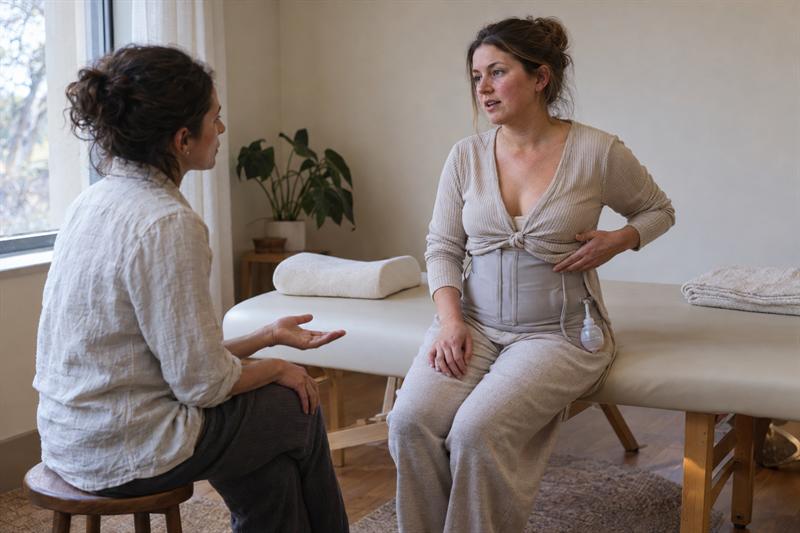
This should be discussed before the appointment, not discovered at check-in. Garments, drains, and movement limits affect positioning, access, pacing, and whether the service is appropriate. When these details come up late, the therapist has less room to plan well.
This is where complications can stack up. A booking that sounded simple may become more involved because the real limitations were not part of the original conversation.
What should I expect during the first session?
The first session often includes more communication and adjustment than a routine appointment. Intake, comfort boundaries, body positioning, and pace usually matter more than intensity. If you want a general preview of appointment flow, what to expect at your first massage appointment covers the basics, but post-procedure sessions may require more detail.
A common assumption is that the first session will feel like a normal follow-up massage. It may not. The first appointment is often more about fit and response than doing too much too soon.
When should I wait, reschedule, or ask more questions first?
If the answers you are getting are vague, if your comfort limits are still unclear, or if you are not sure the provider understands your restrictions, you are not ready to treat it like a routine booking. Uncertainty at this stage usually means the intake is incomplete.
- You still do not know which service fits your current stage
- You are unsure how positioning or tenderness will be handled
- Important restrictions have not been discussed clearly
- The provider is giving broad reassurance instead of specific answers
When those signs are present, more clarification is usually needed before the appointment moves forward.
How should follow-up sessions be decided?
Follow-up sessions should be based on how the first appointment fits, how your comfort level changes, and what the session reveals about what feels manageable. The mistake is assuming a preset schedule makes sense before the first session has clarified the basics.
If the first session shows the service type or pace needs to change, the follow-up plan should change with it.
If these signs sound familiar, it may be worth clarifying a few details before you book.
- You are not sure whether to choose regular massage or lymphatic drainage
- You have tenderness, swelling, garments, or movement limits that affect positioning
- You keep finding general massage information, but not answers about your current situation
- You want the session to feel comfortable from the start, not improvised after you arrive
Those indicators usually mean the booking conversation needs to be more specific, and the right service choice should be clarified first.
What to share with a massage therapist before your appointment
The best booking conversations happen when the therapist has enough real information to plan around your current needs. This is not about oversharing. It is about giving details that directly affect comfort, positioning, pacing, and service selection.
Procedure type and approximate timing
The therapist does not need every detail of your experience, but general timing and procedure type matter because they shape what kind of session makes sense. A booking conversation based on “I had something done recently” is usually too vague to be useful.
Current tenderness, swelling, and sensitivity
These are not minor details. They directly affect pressure, area selection, and how the session should be approached. If one area feels fine but another is very tender, the therapist needs that distinction before the appointment, not halfway through it.
If you are noticing active tenderness or sensitivity, it usually means the session needs to be planned more carefully and may call for a gentler approach than you would normally choose.
Garments, drains, and mobility limitations
These details can change logistics quickly. They affect how you get on the table, whether certain positions are realistic, and how much movement feels manageable. What sounds like a simple appointment can become more complicated if those details come up too late.
Any provider instructions you were given
If you were given instructions that affect timing, areas of focus, or movement, the therapist needs to know that early. This does not make the session complicated. It makes the plan clearer. The goal is to reduce guesswork and shape the appointment around real limits instead of assumptions.
Signs a therapist is approaching your booking thoughtfully
A careful therapist does not just say yes and move on. They ask enough to understand whether the session fits your situation. That difference matters because thoughtful screening often helps prevent the exact problems that make post-procedure appointments feel uncomfortable or mismatched.
- They ask about timing, tenderness, restrictions, and comfort goals
- They explain how pressure and positioning would be adjusted
- They clarify service fit instead of assuming all massage is the same
- They are willing to slow the booking down if key details are missing
They ask detailed intake questions
Good intake is a strong sign because it shows the therapist is thinking beyond availability. This is how fit gets clarified. When no meaningful intake happens, the burden shifts to the client to figure everything out alone, and that can lead to a less comfortable first appointment.
They explain how they adapt pressure and positioning
Specific explanations build trust because they show the therapist is planning around real conditions, not speaking in generalities. If someone can clearly explain how they approach tenderness, side-lying, limited turning, or avoiding certain areas, that usually means they understand the practical side of the session.
They are willing to say “not yet” or “let’s clarify first”
This is a positive sign, not a red flag. A therapist who sets boundaries is showing judgment. The opposite can create problems: a rushed yes, an incomplete intake, and an appointment that has to be reworked once the client arrives.
How to choose between standard massage and lymphatic drainage after a procedure
The most practical question is not “Which massage sounds best?” It is “Which service fits what my body can comfortably handle right now?” That is why service selection matters more than convenience after a procedure.
- Standard massage is usually chosen around general tension, pressure preference, or relaxation goals.
- Lymphatic drainage may be a better fit when a gentler, more specialized approach makes more sense for the current stage.
- The right choice depends on present comfort needs, not just what you usually book.
When a gentler, more specialized session may make more sense
If the main concern is sensitivity, swelling, or wanting a session that feels less pressure-driven and more carefully paced, a gentler specialized service may deserve stronger consideration. This does not mean every post-procedure client needs the same thing. It means regular massage should not be treated as the default without asking better questions first.
Why service selection matters more than booking the fastest available appointment
Fast booking solves the wrong problem when the real issue is mismatch. The appointment that is easiest to schedule is not automatically the one that fits your current condition. This becomes more noticeable when people prioritize convenience first and only think about tenderness, garments, or movement limits after the appointment is already set.
Key Takeaways Before You Book
- Post-procedure massage questions are about fit, not just availability.
- The wrong service choice can create discomfort, confusion, or last-minute adjustments.
- Pressure, positioning, tenderness, garments, and movement limits should be discussed before booking.
- A thoughtful therapist asks detailed intake questions instead of giving broad reassurance.
- Service selection matters more than booking the fastest open appointment.
- If important details are still unclear, the booking conversation is not finished yet.
Conclusion
The real problem is not simply deciding whether to get a massage after a procedure. The real problem is booking without enough clarity about service fit, comfort boundaries, and practical limits. When that is handled poorly, the result is often a mismatched appointment, unnecessary stress, and a session that starts with adjustments that should have been addressed earlier.
MV Massage Therapy LLC is a strong next step for clients who want that booking conversation handled thoughtfully from the start. The patterns discussed here are why service matching, intake detail, and comfort planning matter so much. If you are dealing with tenderness, swelling, movement restrictions, or uncertainty about whether standard massage or lymphatic drainage makes more sense, booking with MV Massage Therapy LLC is a practical way to move forward with clearer expectations and a better-matched appointment.
Company approach
At MV Massage Therapy LLC, a better approach is not to treat every post-procedure request like a normal massage booking. It is to slow the decision down just enough to understand what is happening now, what feels manageable, and which service actually fits. That helps prevent avoidable discomfort and confusing first appointments.
This article has focused on questions because those questions usually determine whether the session starts on the right track. When the intake is specific, the service choice gets clearer. When the service choice gets clearer, the appointment usually feels more comfortable from the beginning.
FAQ
What questions should be asked before booking a massage after a procedure?
The most useful questions are the ones that clarify fit, readiness, and comfort. Ask whether the therapist works with clients who recently had procedures, what information they need before booking, whether provider instructions affect the appointment, which service fits best, how pressure and positioning are handled, and what the first session will be like.
The important distinction is that this is not a routine booking conversation. After a procedure, details like tenderness, garments, or movement limits change the appointment in practical ways. Good questions bring those factors into the decision before the session starts.
Do all massage therapists offer post-procedure or post-op massage?
No. A therapist may offer massage without regularly handling post-procedure bookings. The difference is not just the service menu. The difference is whether the provider knows how to screen for timing, restrictions, positioning, and comfort needs before confirming the appointment.
What usually gets misunderstood is that availability is not the same as fit. A therapist can have open time and still not be the right match for a recent procedure if the intake stays too general.
How is lymphatic drainage different from a regular massage after a procedure?
Lymphatic drainage is not just a regular massage with lighter pressure. It may be a better fit when a gentler, more specialized approach makes more sense for the person’s current situation. A regular massage is more commonly chosen around general tension or relaxation preferences.
The decision changes when the client’s immediate concern is not ordinary muscle tension, but how to choose a session that feels appropriate for current tenderness, swelling, or sensitivity. That is why the right comparison is not “which massage sounds better,” but “which service fits right now.”
What should be shared with a massage therapist before a post-procedure appointment?
Share the type of procedure, the approximate timing, areas of tenderness or swelling, movement limitations, garments or drains, and any instructions that affect the session setup. These details shape positioning, pacing, and service choice.
A simple example is turning over on the table. If that movement is difficult, it changes how the session should be planned. The same is true if one area is much more sensitive than another. Those details are what make the booking conversation useful instead of generic.
When should someone wait or ask more questions before booking massage after a procedure?
Slow down when the service type is still unclear, when positioning or pressure questions have not been answered, or when the provider is giving broad reassurance without addressing specific limits. That usually means the intake is not detailed enough yet.
What matters most is not how soon an appointment is available. What matters is whether the booking conversation has actually answered the comfort and fit questions that determine whether the session will work for you.
What can be expected at a first post-procedure massage appointment?
The first session usually involves more intake, more communication, and more adjustment than a routine appointment. Comfort boundaries, body positioning, pace, and current sensitivity usually matter more than intensity.
What this means in practice is that the first visit is often more about establishing the right approach than trying to do too much. People who expect it to feel like a standard follow-up massage are usually expecting the wrong kind of session.