Quick Answer: A common limitation before booking a massage is choosing a time before defining the session, which can leave the appointment feeling underdefined. The most useful questions to ask before booking a massage therapist cover service fit, comfort and pressure, health context, and practical logistics.
At MV Massage Therapy LLC, service fit is shaped before the session begins. This article gives a clear set of questions that help you choose the right service, set pressure expectations, and reduce first-visit uncertainty.
The aim is not to turn every booking call into a long interview. It is to cover the information that shapes the early part of the session: service, pressure range, attention areas, no-go areas, and arrival details.
Why Asking Questions Before Booking Matters
Questions matter because they turn a calendar slot into a well-defined session. A brief pre-booking conversation covers service fit, comfort and pressure, health context, and practical logistics. When those four areas are covered, the appointment starts with direction instead of guesswork.
A common pattern is that clients focus on availability and price first, then adjust pressure, draping, and problem areas during the early part of the session. That sequence uses part of the appointment to solve a problem that a short conversation could have solved earlier.
If these questions are skipped, the session can turn into a trial-and-error experience. You may end up guessing whether the therapist has enough context, while the therapist infers your preferences instead of confirming them. Without clear intake, similar gaps can repeat.
Questions to Ask About Safety, Health, and Medical Suitability
The first group of questions is about whether the planned service fits the body’s current condition. You should mention recent procedures, current medications, pregnancy status, skin sensitivity, mobility limits, recent illness, open wounds, and areas of acute pain. This is the information a practitioner needs before choosing pressure, positioning, and technique.
The wording can stay simple. “I recently had a procedure and I want to know what may need to change before the session.” “I take a medication that affects circulation, so I want to be clear about pressure.” “I have one area I would rather you skip today.” These statements give the therapist a clear boundary.
A licensed massage practice uses this information to adjust the session, not to diagnose a condition. Massage is a wellness service, not a substitute for medical care. If pain is new, worsening, severe, or paired with swelling, numbness, or other symptoms that need evaluation, a medical provider should be consulted before treating it as a massage concern.
What to mention before your appointment
- Current medications that affect circulation, skin sensitivity, or pain response
- Recent surgery, injection, procedure, illness, or recovery milestone
- Pregnancy status and any restrictions from the medical team
- Skin conditions, recent rashes, sunburn, or open areas
- Areas of acute discomfort that need clarification before the session
Problems often start when a recent procedure, medication, pregnancy status, or sensitive area is not mentioned before the session begins. The therapist may need to adjust the approach during the session, which can reduce the time and depth available for the area you wanted most.
When the first visit feels unclear, missing intake details are often part of the reason. Confirm these before the calendar is booked:
- You have not named a top area or goal for the session.
- You are unsure whether a specific service fits your current situation.
- You have a recent procedure, pregnancy status, medication, or sensitive area that has not been clearly communicated.
- You are choosing a therapist but do not yet know the therapist’s service-specific experience.
When any of these details is unclear, a short booking message can clear it up.
Questions to Ask About Comfort, Pressure, and Boundaries
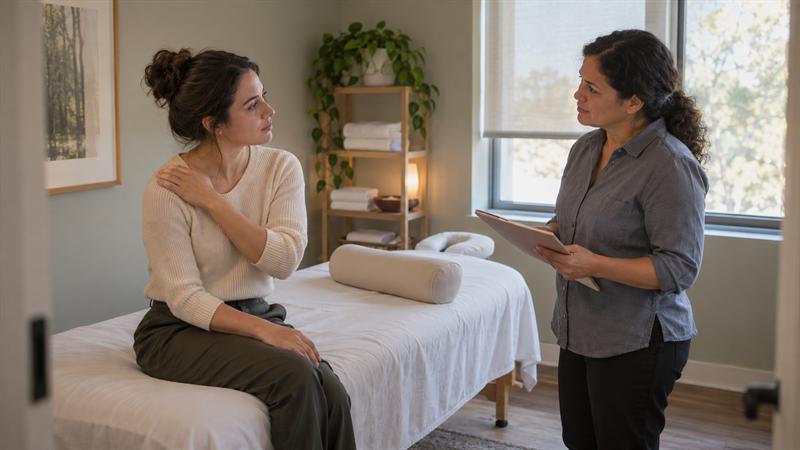
Pressure preferences are not a one-time decision. They are a starting point. A useful answer before booking is: “I would like to start light to medium and adjust up if a specific area needs deeper work.” That gives the therapist a range and a reason to check in.
No-go areas are normal. A new bruise, a surgical scar, a sensitive spot, a recent tattoo, or a place that simply does not feel comfortable to work on should be named. The therapist does not need a full backstory. “Please avoid the left shoulder today” is enough.
During the session, short updates keep the work on track. “A little less pressure here,” “that spot is good,” and “we can move to the back now” are clear. How to communicate massage preferences before and during the session helps set the baseline and fine-tune the work as the body responds.
The earlier a pressure mismatch is noted, the more room the therapist has to adjust. If the session starts at a level that does not work, sharing that early helps keep the full appointment in a usable range.
Questions to Ask About the Massage Style and Service Options
The right service depends on what you want the session to do. Swedish and relaxation, signature massage, deep tissue, hot stone, aromatherapy, prenatal massage, and lymphatic drainage are not the same service conversation. The questions below help narrow the choice before booking.
Swedish, Relaxation, and Aromatherapy Considerations
Swedish and relaxation massage are common choices when the goal is general tension reduction, a calmer end to a demanding week, or a first session with a new therapist. Aromatherapy adds scent preference, which matters for someone sensitive to fragrance or wanting a specific aromatic experience.
- What does a typical Swedish or relaxation session focus on from start to finish?
- Are essential oils included in the base service, or are they an add-on?
- Are there scent options for sensitive noses?
- How much time is built into the appointment for setting preferences?
Deep Tissue and Hot Stone Massage Considerations
Deep tissue is best reviewed through pressure expectations. The useful questions cover how deep the work goes, how tight tissue is handled, and what level of soreness is typical afterward. Hot stone adds temperature, skin contact, and comfort under the stones. You should mention heat sensitivity or a skin concern before the stones are introduced.
- For deep tissue, what pressure range is typical, and how is it adjusted?
- For hot stone, are the stones used on all areas or only select areas?
- What temperature preferences can be set before the session begins?
- Are there skin or recovery situations that change how the session is delivered?
Questions to Ask About Prenatal Massage
Prenatal massage questions should center on training, positioning, and clearance. Ask about specific prenatal experience, positions, and areas usually worked. Someone in the first trimester, someone with swelling, or someone with added medical considerations late in pregnancy does not need the same general answer.
- Do you have specific prenatal massage experience?
- What positioning options are available for side-lying and supported rest?
- Which areas are usually worked for prenatal sessions?
- What information from my OB-GYN or midwife should be confirmed before the session?
Medical clearance from an OB-GYN or midwife is a key step for many clients before booking prenatal massage. The session then works within the boundaries set by your medical team.
Questions to Ask About Lymphatic Drainage Massage
Lymphatic drainage massage is a distinct service. It is not a lighter version of Swedish massage or a stronger version of deep tissue work. The technique is lighter and directional, and your current condition matters. At MV Massage Therapy LLC, lymphatic drainage is provided by Margarita, so you should confirm her availability and review the service-specific details before booking.
- What does a typical lymphatic drainage session involve?
- How does the pressure differ from a standard relaxation or deep tissue massage?
- What training does the therapist have specifically in lymphatic drainage techniques?
- Are there current conditions that should be discussed with a medical provider before the session?
- Is Margarita available for the desired date and time?
When you have recent surgery, active infection, swelling that is new or worsening, or a medically complex situation, medical guidance comes first.
Questions About Post-Operative Cosmetic Surgery Massage Considerations
Post-operative cosmetic surgery massage questions are also service-specific. You should ask whether the therapist has relevant certification for post-procedure cosmetic care, what that training covers, and what the therapist checks before beginning. The therapist supports, rather than replaces, your surgeon or medical team. Clearance comes from the medical team, and the massage is performed within the timing and limitations the care team has approved.
- Do you have certification in post-operative cosmetic surgery massage?
- What does that training include for timing and technique?
- What information from my medical team should be confirmed before the session?
- How do you communicate limitations or stop conditions during the session?
- Which areas are typically appropriate to work at each recovery stage?
This is a situation where a general massage answer is not enough. A service-specific answer needs to match the procedure, the recovery stage, and your medical team’s instructions.
Questions to Ask About the Therapist and Professional Standards
The baseline question is whether the therapist is licensed. In Virginia, massage therapist licensure is a standard professional requirement. You can ask for confirmation of licensure and training background. Licensure confirms minimum professional standards. It does not confirm the best fit for a specific service need.
The next layer is service-specific experience. A therapist may be fully licensed for general massage and still have limited experience with prenatal massage, lymphatic drainage, or post-operative cosmetic surgery massage. The useful question is not just “Are you certified?” It is “What experience do you have with the service I am booking?”
Communication style is a legitimate part of the decision. A good therapist asks intake questions before starting, checks in during the session, adjusts pressure without friction, and treats no-go areas as routine. Vague answers, dismissal of a health-related question, or resisting a sensitive-area boundary are signs to pause.
Questions to Ask About Practical Details Before You Arrive
Practical questions prevent small logistics from becoming first-visit stress. You should know what to wear, when to eat, how to handle hydration, how long arrival should take, and whether parking is easy.
- What is the cancellation window for a new appointment, and is there a fee for late changes?
- Is a short intake conversation included before the timer starts?
- Should I arrive in comfortable clothing, or should I expect to change into a robe?
- Is a small snack better than a heavy meal before lying face down?
- Where should the car be parked, and how much time should be allowed to reach the suite from the car?
- Are linens, towels, robes, and oil options provided by the practice?
For the Vienna, Virginia area, location details matter because the visit should not become a puzzle. Convenient parking, a clear path to the suite, and buffer time for a first arrival keep the session from losing value. What to expect at your first massage appointment covers the arrival rhythm and the short conversation that makes the first session easier to manage.
A Practical Pre-Booking Question Checklist
Use the checklist below before contact, during the booking call, or in a short written message. You do not need every question. You need enough to make the first session intentional.
Questions to Ask During the Booking Conversation
These work best when you are confirming the time and service.
- What service would you recommend for a first visit focused on general tension?
- Do you have any specific instructions I should follow before arrival?
- What should I expect during the intake conversation before the session begins?
- If I am considering prenatal, lymphatic drainage, post-operative, or deep tissue, which therapist has the relevant experience?
Questions to Ask at Check-In (First 5 Minutes)
These work best during the first few minutes before the table session starts.
- Which area should receive the most attention today?
- What pressure level should we start with based on what I have shared?
- Are there areas I should flag as no-go areas for this session?
- How do you handle pressure adjustments if something feels too intense during the session?
Quick Questions You Can Send by Message or Email
These work when you prefer written contact before the first call or in-person visit.
- I would like to book a specific service for a certain date. Do you have any recommendations before my first visit?
- I have one area of tension and one area I would like you to avoid. Is there anything I should add for check-in?
- Do you offer a specific add-on or service on the day I am asking about?
What Strong Answers Sound Like (and What to Watch For)
Strong answers include details you can act on. A good response names the session focus, explains the intake step, and gives a clear way to adjust pressure or positioning. A weak response is mostly reassurance with no structure.
For example, “I will start with your upper back, check in after a few minutes, and keep away from the left shoulder” is useful. “We will take excellent care of you” is pleasant but thin. The first answer tells you what to expect and how to respond if something feels off.
- Strong answers include a clear session focus, a named check-in point, and a specific response to your stated concern.
- Strong answers include a clear way to request adjustments and, for specialized services, relevant training details.
- Watch for purely price-and-time answers when a service question has been asked.
- Watch for dismissal of a health-related question or pressure to skip intake.
A strong answer also points to the next step. Intake is part of the session. Before bodywork begins, the therapist asks about pressure preference, problem areas, no-go areas, recent procedures, and goals. At MV Massage Therapy LLC, service-specific answers are shaped by the service range. For lymphatic drainage, confirm the appropriate provider before booking. For post-operative cosmetic surgery, confirm clearance from the medical team before the session.
Conclusion
The real problem is not deciding that massage is worth trying. The problem is walking into the first appointment without enough information for the practice to shape the session. When that gap is left, the first session can become a rough draft. Pressure is guessed, no-go areas are delayed, and service-specific conversations become hurried.
MV Massage Therapy LLC is the practical next step when you want the first session to start with the right information. The service range includes Swedish and relaxation massage, signature massage, deep tissue massage, hot stone massage, aromatherapy, prenatal massage, and lymphatic drainage by Margarita. The practice also includes post-operative cosmetic surgery massage in its service range, which gives post-procedure massage questions a clear service context. That range makes service-specific answers more meaningful. To turn questions into a scheduled session, book your appointment.
Key Takeaways
- The four areas to cover before booking are service fit, comfort and pressure, health context, and practical logistics.
- It is normal to mention medications, recent procedures, pregnancy status, skin sensitivity, and areas of acute discomfort before the session.
- Pressure should be framed as a starting range, not a fixed command, so the therapist can adjust as the session unfolds.
- Licensure is the baseline, but service-specific experience matters when booking prenatal massage, lymphatic drainage, or post-operative cosmetic surgery massage.
- Strong answers include a clear session focus, a check-in point, and a direct response to your concern.
- If a health concern is new, severe, or medically complex, medical guidance comes before massage consultation.
Is it okay to ask a massage therapist a lot of questions before the session?
Yes. A licensed massage practice uses pre-session information to shape the session, so answering questions about pressure, problem areas, or recent procedures is part of standard intake. The therapist is not being interrupted. The session needs that context before pressure, positioning, and technique are locked in. What feels like too many questions is the information that helps the therapist adjust sooner rather than later.
What should I do if the massage pressure feels too much during the session?
Say so, even mid-stroke. “A little less on that spot” or “ease up slightly” is enough, and the therapist will adjust. The session is not a test of tolerance. If the adjustment does not resolve the discomfort, ask for a brief pause or a shift to a different area. Pressure is a shared setting, not a fixed level set at arrival.
How do I ask about prenatal massage without assuming the therapist will say yes?
Frame it as a training and availability question. Ask, “Do you have specific prenatal experience, and what positioning do you use for side-lying?” That gives the therapist a factual basis for confirming whether the session fits the therapist’s prenatal experience. Clearance from an OB-GYN or midwife is a key part of the decision for many clients. That distinction matters because prenatal massage depends on gestational timing, positioning, and medical guidance.
What is the difference between asking about deep tissue and asking about lymphatic drainage?
The questions are different because the techniques are different. With deep tissue, ask about pressure range, tissue response, and possible soreness afterward. With lymphatic drainage, ask about technique, service-specific training, current conditions, and provider availability. At MV Massage Therapy LLC, lymphatic drainage is provided by Margarita, so confirming her schedule is part of the service match. The same general answer cannot cover both services.
How far in advance should I book a first massage appointment in the Vienna area?
Availability varies by day and time. Weekend morning and early-evening appointments can be in higher demand, so booking ahead is useful. If the appointment involves Margarita for lymphatic drainage or a therapist with post-operative cosmetic surgery training, confirming that provider earlier helps. The service match depends on a particular therapist’s schedule, not just overall availability.
When the questions above are answered, the appointment stops being a guess. The service is chosen, the pressure range is set, the no-go areas are named, and the arrival details are clear. If that setup is ready, the next step is to confirm the session at MV Massage Therapy LLC.