
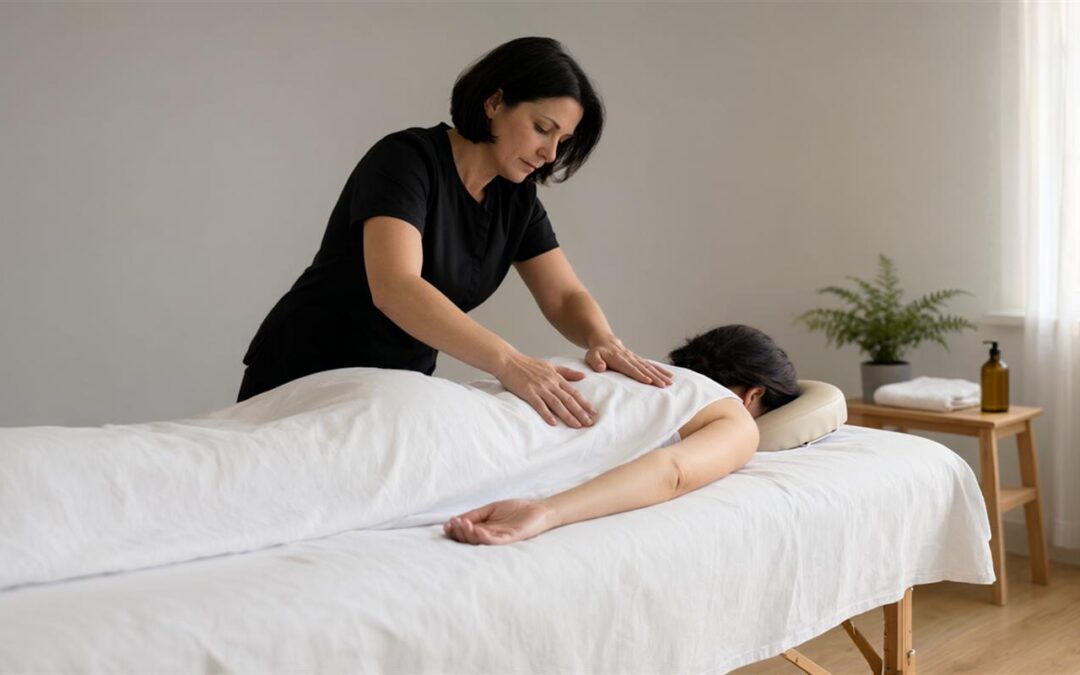
If you have typed how often should you get a massage into a search box, you have probably noticed that the answers do not agree. One page says weekly. Another says once a month. A third says only when something hurts. None of those numbers is wrong, and none of them is a rule. What holds up better than a number is a rhythm: a repeatable pattern of appointments that matches why you are booking, how your body responds, and how much room your week actually has. This guide is about finding that pattern instead of copying someone else’s.
How Often Should You Get a Massage? Start With Why You Are Booking
Frequency follows purpose. An appointment booked to unwind after a heavy month and an appointment booked because the same shoulder has been tight for weeks are not solving the same problem, even when they last the same hour.
Think in three rough purposes. Relaxation-led bookings usually sit furthest apart, because the aim is a reset rather than upkeep. Focused-tension bookings tend to sit closer together, because the area being worked on is also being reloaded daily by a desk, a commute, or a training schedule. Care that runs as a series, with lymphatic drainage the clearest example, is planned as a sequence from the start, with the spacing agreed at booking rather than guessed. Prenatal sessions sit somewhere in between, and the spacing gets revisited as pregnancy progresses because comfort changes from month to month.
Three Rhythms Worth Knowing: One-Time, Occasional, and Ongoing
Most repeat clients settle into one of three patterns. None of them is a commitment, and people move between them as life changes.
- One-time reset. A single appointment built around a specific moment: a demanding season at work, a long trip, a milestone. Useful when the tension has a clear beginning and a clear end.
- Occasional rhythm. A handful of visits a year, often tied to seasons, deadlines, or the point where you notice yourself carrying your shoulders again.
- Ongoing rhythm. A standing interval, booked ahead, for tension that rebuilds on a predictable schedule or for care that is planned as a series.
The difference between occasional and ongoing is not discipline. It is how quickly the work is undone. Tension that returns within a couple of weeks points one way; tension that stays settled for two months points another.
Matching the Interval to the Service You Choose
Different services sit at different points on that map, which is why one interval rarely carries over from one service to another. Swedish and relaxation sessions usually belong to an occasional rhythm. The point is a gentle, full-body reset, and it does not have to happen weekly to do that. Deep tissue and the signature massage service more often belong to a focused-tension rhythm, because the areas being worked are the same areas your day keeps reloading.
Hot stone and aromatherapy sit alongside the relaxation end of the menu rather than the focused end. Heat changes the pace of a session and scent changes how easy it is to settle into one, but neither changes the fact that the work is gentle, so both usually fit an occasional rhythm. If the reason you keep coming back is a specific area rather than a general reset, the session type is the part to change first and the interval second.
Lymphatic drainage is different in kind. It is light, slow, one-directional work, and it is usually planned as a series rather than a single appointment, with the spacing agreed when you book. The lymphatic drainage service at MV Massage Therapy is provided by Margarita only, so booking it means booking with her specifically, which is worth knowing before you compare dates.
Post-op cosmetic surgery certified care is a fourth case. The certification is a statement about training, not a schedule. What happens in those sessions depends on the practitioner’s guidance and on what came with your procedure, so the first appointment is a conversation about timing before it is a booking pattern.
Signs the Gap Between Visits Is Too Long
The clearest signal is not a date on the calendar. It is what the appointment feels like when you arrive. If the first ten minutes of every visit are spent finding the same tight places in the same order, the interval is probably doing less than you think.
Other signs are easier to spot once you know to look for them: tension returning within a week or two of a session, the same shoulder and neck pattern rebuilding on a predictable schedule, and the sense that you are starting over rather than continuing. None of that means you need a standing weekly appointment. It means the current gap is not holding, and a slightly shorter one is worth testing for two or three visits.
Signs You Are Booking Too Close Together
More is not automatically better. Tissue that stays sore between appointments, sessions where there is nothing new to work on, and a schedule that costs more than it returns are all reasons to widen the gap.
There is also a practical test that has little to do with tissue. If keeping the rhythm means cancelling other things, rushing across town, or arriving already tense, the rhythm is too tight to survive a normal month. Pressure is adjustable at any point in a session and worth saying out loud, but no amount of adjustment fixes an interval your week cannot hold.
Building a Rhythm You Can Actually Keep
The rhythm that lasts is usually attached to something that already repeats. A standing slot on the same day of the month is easier to protect than a vague intention to book again soon. Keeping the session length steady matters too, because a different length covers a different amount of ground, and switching every visit makes it hard to tell whether the interval itself is working. Choosing the right session length for your goal is a step worth taking before you set a cadence, not after.
Then book the next appointment before you leave the current one. It takes a minute, it removes the decision from a week that will be busy, and it keeps the interval honest: you are choosing the date while you still remember how the last one felt.
One-Time Reset or Ongoing Rhythm: How to Choose
Four questions usually settle it. Does the tension come back within a few weeks of a session? Is there a known reason for it, such as a desk setup, a training block, or a season of caregiving? Is there a date you are preparing for? And is the cost comfortable across a year rather than just this month?
A first appointment is where the answers start to exist. It establishes a baseline: where tension collects, how much pressure feels useful, and what you actually want from the hour. A follow-up then builds on that baseline instead of running the same assessment again, which is why the second and third visits say more about cadence than the first one can. What to expect from a follow-up massage appointment covers how that second visit differs.
Planning Around Work, Travel, and Seasons
Cadence is not a fixed setting. Busy quarters, travel, and seasonal load all change when an appointment earns its place. A deadline month might justify pulling the next visit forward. A quiet stretch might mean pushing it back and losing nothing.
The useful move is to plan around the load rather than the calendar alone: one appointment before a heavy stretch, one after it, and a standing interval for the ordinary weeks in between. When fitting appointments around work and family is the part that keeps slipping, planning relaxation appointments around a busy week is worth reading before you pick a date.
What to Confirm Before the First Repeat Visit
Before the second visit, a few practical details are worth settling. The practice’s contact page lists the practice as open every day, 11am to 8pm, which is a useful starting point for a standing slot, though any single week can differ. If lymphatic drainage is the reason for the series, confirm that Margarita is available for the dates you want. If a home visit would fit your week better than a studio appointment, ask whether your address is covered before you plan around it. And if a multi-session package would help, ask what the terms are at booking rather than assuming one exists.
Key Takeaways
There is no single answer to how often should you get a massage. What there is: a rhythm that matches your reason for booking and how quickly your tension rebuilds.
- Cadence follows purpose, and relaxation visits usually sit further apart than focused-tension work.
- Notice what the appointment feels like on arrival, not only the date on the calendar.
- Lymphatic drainage is planned as a series and provided by Margarita only.
- Attach the appointment to something that already repeats, and keep the session length steady.
- Adjust the interval after two or three visits, not after one.
A Rhythm That Fits Your Life
A schedule you can keep beats an ideal schedule you cannot. Start with one appointment, notice how long the comfort holds, and let that answer the question for your own body rather than someone else’s calendar. At MV Massage Therapy, appointments run in 45, 60, 75, and 90 minute lengths, the service list covers Swedish and relaxation work, deep tissue, signature, hot stone, aromatherapy, prenatal, and lymphatic drainage, and the next step is simple: book your next appointment and the rhythm can be worked out from there.