
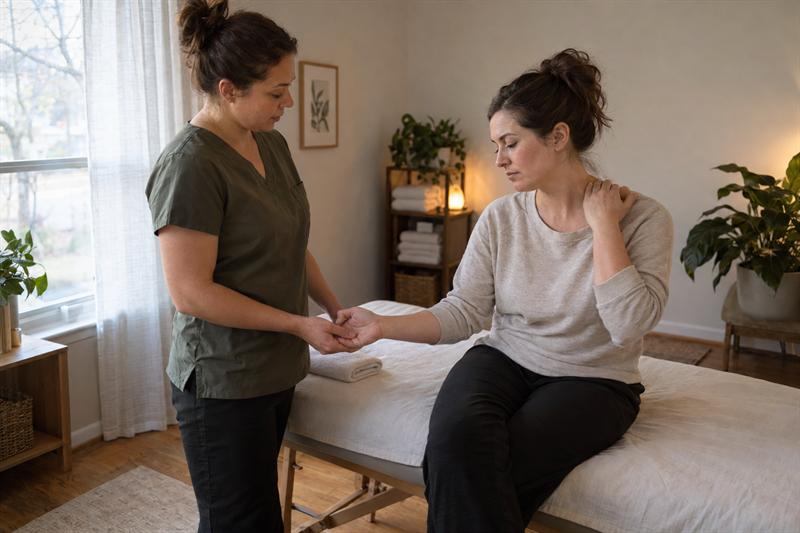
How a Follow-Up Massage Is Different From Your First Visit
A first massage appointment usually covers the basics: where you hold tension, how you respond to pressure, and whether you want more relaxation, more focused work, or a mix of both. A follow-up appointment uses that information instead of repeating the same process from the beginning.
That matters because many people expect the second visit to feel almost identical to the first. When nothing is adjusted, the session can miss what your body already showed the first time.
Your therapist already has a starting point
At a follow-up massage, there is usually less need to spend time figuring out your general preferences. The therapist may already know which areas stood out before, how you responded to pressure, and whether the session felt too broad or too concentrated.
Once that starting point is clearer, the session can become more efficient and more purposeful.
The goal is usually refinement, not starting over
A common pattern is that people leave the first massage with more useful information than they expected. They may realize their shoulders responded well, their lower back still needs more focused work, or firm pressure felt less helpful than medium pressure.
That can make the second session more productive. Instead of guessing what might help, the appointment can focus on what actually happened after the first one.
What to Share Before Your Next Massage Appointment
The most useful follow-up sessions usually begin with clear, simple feedback. You do not need perfect wording. What matters is describing what changed, what lasted, and what still feels off.
This is where many clients overthink it. They assume they need a full explanation when a few specific details are usually what shape the session.
- What felt better after the last session
- What still felt tight, tender, or unchanged
- Whether the pressure felt too light, too intense, or about right
- How long the relief lasted
- Whether a different area became more noticeable afterward
- Any new stress, activity, pregnancy-related comfort changes, or recovery needs
If you want help putting that feedback into words, how to communicate your massage preferences before and during your session offers helpful guidance.
What felt better after the last session
Positive feedback matters just as much as reporting discomfort. If your neck moved more easily, your shoulders felt lighter, or you slept better that night, that gives the therapist a clearer sense of what direction is working.
This often gets overlooked. People tend to focus only on what still hurts, but what improved is often one of the most useful clues for planning the next session.
What still feels tight, sensitive, or unchanged
This is where the next appointment can become more precise. If one area stayed tight, felt especially tender, or improved only briefly, that may mean it needs more focused time, a different pace, or a different pressure approach.
Be as specific as you can. “My upper back still feels stuck” gives more useful direction than saying the massage was good but did not fully help.
Whether the pressure felt right
Pressure preferences often change after the first session. Many people assume deeper always means better, then realize they responded better to medium pressure because they were able to relax instead of brace against it.
That is why pressure feedback matters so much at a follow-up. If you are still deciding what felt right, this guide to choosing massage pressure can help you sort out what to ask for next time.
Any new stress, activity, pregnancy changes, or recovery needs
Even if the last session went well, your next appointment may need a different plan. A stressful week, extra time driving, soreness after workouts, or changing comfort during pregnancy can all affect what feels most useful now.
This matters most when the original goal was specific. If your routine changed but the massage plan did not, the session may feel less helpful than it could.
If your last massage helped but you are not sure what should change next, a more targeted follow-up may be the right next step.
- You felt relief, but it faded quickly
- The pressure felt too intense or not focused enough
- A different area started bothering you after the session
- You realized you wanted more relaxation or more specific work
When those signs show up, repeating the same session without adjustment often leads to the same result.
What Might Change During a Regular Massage Session
A regular massage appointment should reflect what was learned from the last one. The most common changes involve pressure, focus areas, session length, or even the massage style itself.
This is where repeat sessions either become more useful or start to feel repetitive. If the appointment keeps following the same pattern when your response suggests otherwise, progress can stall.
Pressure adjustments
Pressure is one of the first things to get fine-tuned. If the first session left you guarding, tensing, or too sore afterward, staying at that same intensity may lead to the same problem again.
On the other hand, if an area still felt dense or unchanged and the first session stayed too general, more focused pressure may make sense next time. The goal is not simply “more pressure.” The goal is pressure your body can respond to without fighting it.
Focus areas and time distribution
A common pattern is that the first massage shows where time was well spent and where it was not enough. That can lead to a more deliberate use of time at the follow-up.
For example, one area may no longer need extended attention, while another clearly does. If that shift is ignored, the session can stay broad when it should be more targeted.
Session length or massage style
Sometimes the follow-up is not about changing pressure at all. It is about changing the overall approach. A client who started with Swedish or relaxation massage may want more focused work in one area, while someone who began with deep tissue may decide a more balanced session feels better.
This is where service choice matters. If you are comparing options, this guide to choosing the right massage can help connect your goal to the right session type.
Add-ons or service changes when appropriate
Not every useful follow-up gets more intense. In some cases, the better adjustment is added support. Hot stones or aromatherapy may fit better when the body is holding stress and guarding against deeper work.
Some clients assume only firm, targeted work counts as productive, when a more supportive approach may help the body settle enough for the session to feel more effective.
Common Experiences After the First Session and What They May Mean for the Next One
The first massage usually gives useful feedback, even when the result feels mixed. What matters is understanding that response instead of deciding the appointment either worked completely or did nothing at all.
That all-or-nothing thinking is where many people get stuck. It can lead to delaying a helpful follow-up or repeating an approach that clearly needs adjustment.
If you felt sore
Mild soreness after a focused session is one thing. Feeling overworked, too tender, or tense for too long points to a session that likely needs pressure or pacing changes next time.
If the next appointment repeats the same intensity without adjusting for how your body responded, you may end up bracing again instead of relaxing into the work.
If you felt relief that did not last long
Short-term relief is still useful information. It usually means something about the session helped, but the timing, focus, or consistency was not enough to support a longer-lasting result.
The better takeaway is usually not that the massage did nothing, but that the next appointment may need a more deliberate plan.
If a different area started bothering you
This is a common pattern after the first session. Once one area relaxes, another tension pattern can become easier to notice.
That does not automatically mean something went wrong. It usually means the follow-up should account for the new pattern instead of treating the body exactly the same way again.
If you wanted more relaxation or more focused work
Many people do not know what balance they want until after the first massage. Some realize they wanted more quiet, calming work. Others realize they wanted more concentrated attention on a specific area.
That shift matters because it changes the purpose of the next visit. Once your goal becomes clearer, the session should change with it.
How Follow-Up Expectations Can Vary by Massage Type
Not every follow-up massage works the same way. What changes between appointments depends partly on the service itself and partly on why you booked it in the first place.
This matters because the wrong expectation usually leads to the wrong plan. A repeat deep tissue session should not be approached the same way as a prenatal follow-up or a lymphatic drainage session.
Deep tissue follow-up visits
With deep tissue work, the second appointment usually focuses more closely on tolerance, recovery response, and whether the first session spent enough time in the right places. This is where many people learn that deeper is not always better.
If the first session left you too guarded or too sore, repeating that pattern may limit progress. A better follow-up often means refining pressure and focus, not simply increasing intensity.
Swedish or relaxation massage follow-ups
Relaxation-focused sessions still benefit from follow-up planning. Stress patterns change, sleep quality changes, and some areas may keep tightening even when your main goal is general comfort.
That means regular Swedish massage is not just repeating the same relaxing hour every time. The pace, focus, and overall feel of the session still need to reflect what is happening in your body now. For a fuller picture of that experience, see what to expect in a Swedish relaxation massage session.
Prenatal massage follow-ups
Prenatal follow-up sessions often change more quickly than other types of massage because comfort, positioning, and pressure needs can shift from one visit to the next. What felt supportive earlier may need adjustment later.
This is where clear communication matters most. If pregnancy-related discomfort changed and the massage plan did not, the session may be less likely to feel supportive in the way you need.
Lymphatic drainage follow-up considerations
Lymphatic drainage follow-ups usually need clearer goal tracking than a standard relaxation session. The reason for the session, the timing, and how the body responded all matter more from visit to visit.
At MV Massage Therapy LLC, lymphatic drainage is provided by Margarita. If that is the kind of follow-up you are planning, this lymphatic drainage planning guide can help set better expectations before the next appointment.
How Often to Schedule Massage for Ongoing Comfort and Relaxation
There is no single schedule that fits everyone, but waiting too long after a useful first session is one of the most common reasons momentum gets lost. If you wait until everything feels just as tense as before, the next appointment often has to spend more time catching up.
The more practical question is whether you are trying to maintain comfort or keep working on a pattern that returns quickly. Those are not the same goal, and they usually should not be scheduled the same way.
When shorter intervals may make sense
If the first massage helped but the relief faded quickly, a shorter interval is often more useful than waiting until the same pattern fully builds back up. The same is true when tension is persistent, stress is high, or the goal is more specific than general relaxation.
This is where consistency matters. Without it, the same tightness tends to rebuild before the next session has a chance to build on the last one.
When maintenance scheduling may be enough
If your main goal is ongoing comfort, steady relaxation, or support during stressful periods, a more flexible maintenance rhythm may be enough. The key is that the spacing should still match the way your body tends to tighten up again.
When the interval is too long, the pattern can reset. When the spacing fits your actual stress and tension cycle, regular massage may feel much more useful.
Key Takeaways
- A follow-up massage is usually more focused than the first visit.
- Your feedback helps shape pressure, focus areas, and session style.
- Common responses like soreness, short-lived relief, or shifting tension can help guide the next plan.
- Different massage types may have different follow-up expectations.
- Regular sessions often become more efficient and more tailored over time.
Conclusion
The real problem after a first massage is often not whether to book again. It is not knowing how the next appointment should change. When that goes unaddressed, people tend to repeat the same session, wait too long, or keep choosing pressure and focus that do not match how their body actually responded.
A better follow-up is usually more focused, more efficient, and more useful because it is based on real feedback instead of assumptions. At MV Massage Therapy LLC, that is the value of regular massage appointments: the session can be shaped by what your body has already shown, whether you need relaxation, deeper focused work, prenatal support, or lymphatic drainage with Margarita.
If your last session helped but left you with clearer questions about pressure, timing, or focus, the next step is simple. Book your next massage appointment with MV Massage Therapy LLC so the next session can build on what worked and adjust what did not.
Company Approach
At MV Massage Therapy LLC, follow-up care should feel clearer, not more confusing. The point of a repeat appointment is to use what was learned from the last session so the next one fits your goals more closely.
That approach matters because regular massage works best when patterns are recognized early. If pressure was too much, relief faded too quickly, or a different area became more noticeable, those details help shape a better session.
For clients in Vienna and Fairfax looking for a more thoughtful next step, MV Massage Therapy LLC offers follow-up massage care across relaxation, deep tissue, prenatal massage, signature massage, hot stones, aromatherapy, and lymphatic drainage. That can make it easier to adjust the plan instead of forcing every repeat appointment into the same format.
FAQ
Do I need to explain everything again at a follow-up massage?
No. A follow-up massage usually needs an update, not a full restart. The most useful part of the check-in is what changed after the last session, what still feels tight, and whether the pressure or focus should shift.
For example, saying your shoulders felt better for two days but your lower back stayed tight gives a clearer direction than repeating your full background. That kind of detail helps the next session become more focused instead of more repetitive.
What should I tell my massage therapist if I was sore after the last session?
Say where you felt sore, how intense it was, and how long it lasted. Those details matter more than just saying you were sore.
Mild soreness in one worked area points to something different than feeling too tender to relax afterward. What changes the decision is not soreness alone, but whether it felt manageable, whether it led to relief, and whether the same intensity makes sense again.
Should I get the same massage type at my next appointment?
Not always. The first session often shows whether the original massage type was the right fit or whether a different approach would be more useful next time.
Someone who started with deep tissue may realize a signature massage offers a better balance. Someone who booked a relaxation session may want more concentrated work in one area. The key distinction is whether your goal stayed the same or became more specific after the first visit.
Can the pressure be changed at a regular massage appointment?
Yes, and it usually should be adjusted when your response from the last session suggests it needs to be. Pressure is not something you set once and never revisit.
A common misunderstanding is that a stronger session is always more effective. In practice, pressure works best when it matches how your body responds. If you braced through the last session, lighter or more targeted work is often the better correction.
How soon should I book my next massage after the first one?
The timing depends on whether you are trying to maintain comfort or keep working on a pattern that came back quickly. If the first massage helped but the relief faded fast, waiting too long usually means starting the cycle over again.
That is why shorter spacing often makes more sense early on when tension is persistent. Maintenance timing works better when your goal is steady relaxation and the benefits hold longer between sessions.
Is a follow-up massage usually more effective than the first session?
It is usually more informed, which often makes it feel more useful. The first session shows how your body responds, while the follow-up uses that information to make better decisions.
For example, the first appointment may reveal that one area needed more time than expected or that moderate pressure worked better than firm pressure. The follow-up can feel more effective because it is more precise, not because it is automatically more intense.