Why Sharing Your Massage Preferences Matters
A massage is more likely to feel aligned with your needs when it has a clear direction. Your preferences can change from one appointment to the next. You may want a quieter session, more attention on your shoulders, lighter pressure around a sensitive area, or no aromatherapy at all.
At MV Massage Therapy LLC, clients are encouraged to share those details rather than assume they need to accept one pressure level or one plan for the entire appointment. Pressure, focus areas, room comfort, conversation, music, heat, and scent are all part of the experience.
- Your main goal for the session
- Areas you want to focus on
- Areas you do not want included
- Your preferred pressure and any sensitive spots
- Your preferences for quiet, music, blankets, heat, and scents
Clear feedback is part of a customized massage, not an interruption. If you want a session shaped around those details, a customized Signature Massage gives you an opportunity to discuss what feels most useful and comfortable that day.
What to Tell Your Massage Therapist Before the Session
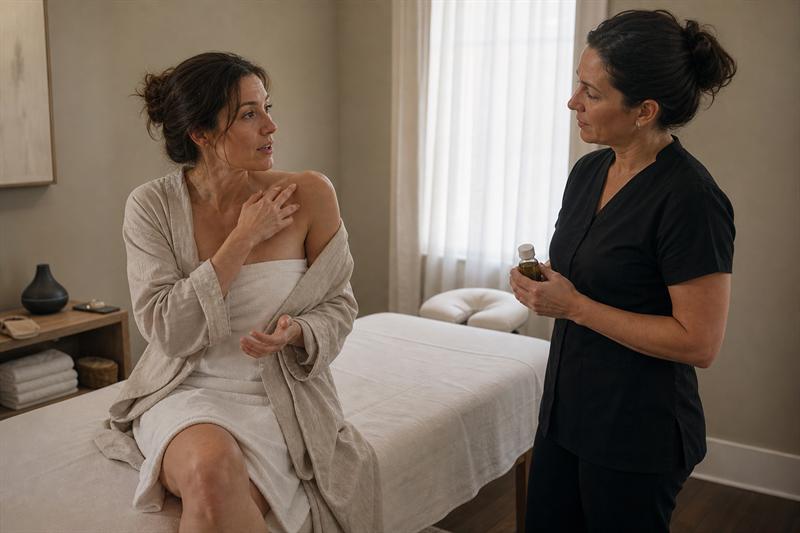
The conversation before your massage helps set the direction for the appointment. You do not need clinical language or a detailed explanation. A straightforward description of what feels tight, sensitive, relaxing, distracting, or uncomfortable gives your massage therapist useful information from the start.
Before a massage, it is helpful to share:
- What you want from the session, such as relaxation or attention to a specific area
- Areas you would like to focus on and areas you would prefer to avoid
- Whether you generally prefer gentle, moderate, or firmer pressure
- Preferences around quiet, music, room warmth, blankets, hot stones, or aromatherapy
- Relevant changes, including pregnancy, recent procedures, skin irritation, sensitivities, or new discomfort
This is also the time to mention anything that has changed since a previous session. A therapist cannot plan around a new sensitivity, procedure, or health change that has not been shared. Information that affects comfort or session planning is best discussed before the massage begins.
Your Goal for the Appointment
Start with a simple question: what would make this session feel worthwhile today? Your answer might be, “I want to relax,” “My shoulders feel especially tight,” “I would like a slower-paced massage,” or “I want more attention on my legs after a busy week.”
Your goal does not need to stay the same from visit to visit. A client who wants a calming session one month may want more focused attention in a particular area at the next appointment. Stating the goal early helps keep the session from becoming too general.
Areas You Want to Focus On or Avoid
You can request more attention to areas such as the neck, shoulders, back, hands, feet, or legs. You can also ask for an area to be skipped. That request may be based on tenderness, recent sensitivity, personal comfort, or simply because you do not want that area included.
You do not need to explain a personal boundary. If an area relates to a recent procedure, a new symptom, or another health concern, share the relevant information so the session can be planned appropriately.
Pressure and Comfort Preferences
“Firm pressure” means something different to every client. The clearest description is usually plain and specific: gentle overall, moderate pressure, firmer work on the upper back, or lighter pressure around the neck and shoulders.
More pressure is not automatically better. If you are wondering how to communicate massage preferences around pressure, describe what feels manageable in the moment: “Could you use a little less pressure there?” or “That pressure feels good on my back, but I need lighter pressure on my calves.” Sharp pain, numbness, tingling, dizziness, or feeling unwell should be communicated immediately rather than pushed through.
Scent, Temperature, Music, and Quiet Preferences
Massage comfort is not limited to touch. Some clients want soft music and a warm blanket. Others prefer a quiet room, less heat, or no scent during the session. Sharing those preferences early helps avoid distractions that can make it harder to relax.
- “I would prefer an unscented session today.”
- “Could I have an extra blanket?”
- “I prefer a quiet massage with only necessary check-ins.”
- “The music is a little loud for me. Could it be turned down?”
Scent sensitivities, allergies, and skin concerns are important to mention before aromatherapy products are used. Personal preference is enough reason to decline a scent, and health-related sensitivities should be shared clearly.
Relevant Health Updates or Recent Procedures
Tell your massage therapist about meaningful changes that could affect comfort or session planning. This includes pregnancy, recent surgery or cosmetic procedures, medication changes, skin irritation, a newly sensitive area, or instructions from a medical or surgical provider.
When this information is not discussed, the therapist has less context for making appropriate adjustments. Depending on the situation, the approach may need to change, the session may need to be postponed, or a particular service may not be suitable at that time. New, severe, or persistent symptoms should be evaluated by an appropriate medical provider.
Simple Ways to Describe What You Need
You do not need massage terminology to give helpful feedback. The clearest requests describe what you feel and what you would like changed.
- “I would like to focus more on my shoulders today.”
- “Could you use a little less pressure on that spot?”
- “That area is sensitive today. Please skip it.”
- “The pressure feels good on my back, but lighter around my neck.”
- “Could we spend less time on my feet and more time on my upper back?”
- “I would prefer no aromatherapy today.”
- “Could I have a little more warmth from the blanket?”
- “I would like a quiet session, but I will speak up if I need an adjustment.”
Many clients wait for the therapist to ask the exact right question. That can leave important details unspoken. A short request when you notice a concern is usually more useful than a detailed explanation after the appointment has ended.
How to Speak Up During a Massage Without Feeling Awkward
Speaking up during a massage does not make you difficult. It gives the therapist a chance to adjust the session while there is still time. If you wait until the end, there is less opportunity to change pressure, positioning, focus, or comfort.
Ask for a Pressure Change Early
Ask for a change as soon as pressure feels too light, too intense, or different from what you expected. Pressure can be adjusted by body area, so you do not need to choose one level for the entire session.
For example, “Could you use less pressure there?” is enough. If pressure feels comfortable in one location but not another, say so directly: “That feels good on my upper back, but I need lighter pressure around my shoulders.”
Request a Change in Focus, Position, or Comfort
Comfort can shift once you are on the table. A bolster may not feel supportive, the face cradle may need adjustment, a blanket may feel too warm, or an area you expected to address may feel too sensitive that day.
- Ask for a pillow, bolster, or position adjustment if you cannot settle comfortably.
- Request more or less time on a specific area.
- Ask for the room temperature, blanket, music, or conversation level to change.
- Speak up if a position is uncomfortable, especially during prenatal massage or when mobility is limited.
Ignoring positioning discomfort can leave you tense during the session. Ask for an adjustment when you first notice it so the massage can continue in a more comfortable position.
Know When to Pause the Session or Ask a Question
Pause the session or speak up immediately if you feel sharp pain, numbness, dizziness, nausea, skin discomfort, anxiety, excessive heat, or uncertainty about what is happening. These are important details to raise during the session rather than after you leave.
- Sharp pain instead of manageable pressure
- Numbness, tingling, dizziness, or nausea
- Feeling too hot from stones, blankets, or room temperature
- Skin discomfort, anxiety, or concern about positioning
When these signs appear, the massage can be paused, modified, or stopped based on what you report and the information available.
Massage Preferences by Service Type
Different services can involve different questions and preferences. A practical approach is to choose the massage style that fits your general goal, then explain what you want adjusted within that service. For help comparing options, read which massage may be the right fit for your needs.
Signature Massage
A Signature Massage is a useful setting to discuss the full picture: your goal, preferred pressure, focus areas, pace, quiet preferences, and sensory comfort. Rather than asking for a general massage, explain what you want more of, less of, or left out entirely.
This approach is especially helpful when your needs do not fit neatly into one pressure level or one focus area. The session can be shaped around the priorities you communicate instead of following a fixed routine.
Deep Tissue Massage
For deep tissue massage, discuss your comfort with intensity and identify areas that are especially tender. Deeper pressure does not need to feel the same on every part of the body.
A common misunderstanding is treating discomfort as proof that the massage is working. Clear communication is more useful than enduring pain. If one area needs lighter pressure, say so early and directly.
Swedish or Relaxation Massage
Swedish or relaxation massage often brings more environmental preferences into the conversation. You may want lighter pressure, slower pacing, quieter music, more warmth, or minimal conversation.
These details matter because sensory discomfort can interfere with relaxation. If you are deciding between styles, compare deep tissue and Swedish massage before your appointment, then use your own comfort preferences to guide the final plan.
Hot Stone Massage and Aromatherapy
Hot stone massage and aromatherapy require clear communication about heat and scent. Tell the therapist if you are sensitive to warmth, want a lighter scent, prefer no aromatherapy, or notice that the stones feel too hot once the session begins.
Heat and fragrance should support comfort, not become something you tolerate. If either feels distracting or uncomfortable, ask for an adjustment.
Prenatal Massage and Lymphatic Drainage
For prenatal massage, share your pregnancy status, relevant changes, positioning needs, and anything that affects your comfort while lying down. A stable, comfortable position can make it easier to relax during the session.
Lymphatic drainage at MV Massage Therapy LLC is offered by Margarita. Clients seeking this service, including those with recent cosmetic procedures, should discuss the reason for the appointment, procedure details, relevant changes, and any instructions from their surgical or medical provider before treatment. This information helps guide session planning and whether the appointment should be adjusted or delayed.
After the Session: Use Feedback to Shape Future Appointments
The conversation does not have to end when the massage does. Brief feedback after the session can help establish preferences for future visits and reduce the chance of the same concerns repeating.
- Which pressure level felt best?
- Which areas needed more or less attention?
- Did you prefer quiet, music, extra warmth, or an unscented session?
- Was there anything you would change next time?
For returning clients, preferences often become clearer over time as they identify what works for them and communicate it directly. Your needs can still change, but useful feedback gives the next appointment a better starting point.
Key Takeaways
- Tell your massage therapist what you want from the session, where you want focus, and what you would rather avoid.
- Use everyday language for pressure. “Lighter here” or “More pressure there” is clear enough.
- Speak up early about positioning, warmth, music, scent, or pressure instead of waiting until the end.
- Share relevant changes such as pregnancy, recent procedures, skin sensitivities, or new discomfort before the session begins.
- Use post-session feedback to make future appointments more aligned with your preferences.
Conclusion: Your Input Is Part of a Customized Massage Experience
Preferences are not an inconvenience; they help create a session that better matches your goals and comfort. A small adjustment during the appointment can make a meaningful difference in pressure, focus, positioning, or the overall environment.
MV Massage Therapy LLC offers massage sessions shaped by clear goals, responsive feedback, and individual comfort. Book a massage appointment with your priorities in mind, and communicate them from the beginning rather than settling for a one-size-fits-all experience.
How MV Massage Therapy LLC Approaches Massage Preferences
MV Massage Therapy LLC treats communication as part of the massage plan, not as a formality before the session starts. Useful details are often the ones that seem small: whether pressure changes from one area to another, whether a client needs more quiet, whether heat feels comfortable, or whether an area should be avoided completely.
You do not need a perfect explanation to receive a more focused experience. A direct statement about comfort, goals, or boundaries gives the session direction. That is more effective than waiting for discomfort to build or assuming the therapist should guess what you need.
Frequently Asked Questions
What should I tell my massage therapist before a massage?
Tell your massage therapist what you want from the session, which areas you want to focus on or avoid, and what pressure generally feels comfortable. You can also share preferences for quiet, music, warmth, blankets, aromatherapy, and positioning.
Relevant changes matter too. Pregnancy, recent procedures, skin irritation, scent sensitivities, medication changes, and new areas of discomfort can affect session planning. You do not need technical language. A clear description of what has changed gives the therapist information that may be useful for adjusting the session responsibly.
Is it okay to ask for less pressure during a massage?
Yes. Ask for less pressure as soon as it feels too intense. Pressure can change from one body area to another, so you may want firmer work on your back and lighter pressure around your neck, shoulders, or calves.
A simple phrase such as “Could you use a little less pressure there?” is enough. The key distinction is between ordinary intensity and concerning discomfort. Sharp pain, numbness, tingling, dizziness, or feeling unwell should receive immediate attention.
Can I ask my massage therapist to avoid certain areas?
Yes. You can ask for an area to be skipped or receive less attention because it is sensitive, recently irritated, personally uncomfortable, or simply not part of the session you want.
You do not need to justify a personal boundary. If an area relates to a recent procedure, new symptom, or health concern, share the relevant context so the massage plan can be adjusted as needed.
Do I need to talk during a massage?
No. You can prefer a quiet session, light conversation, or only necessary check-ins. Stating that preference before the massage starts helps create the environment you want.
Quiet does not mean you need to remain silent about comfort. You should still speak up about pressure, positioning, temperature, scent, or anything concerning. A quiet massage and clear feedback can work together.
Can I request no aromatherapy during my massage?
Yes. Aromatherapy is optional, and you can request an unscented massage for any reason. Some clients dislike certain scents, have sensitivities, prefer a neutral environment, or simply do not want fragrance included.
“I would prefer no aromatherapy today” is a complete request. If you have an allergy, skin sensitivity, or scent-related concern, mention it before products are used so it can be considered in the session plan.
What if I feel uncomfortable or unwell during a massage?
Speak up immediately if you feel sharp pain, numbness, dizziness, nausea, anxiety, skin discomfort, or excessive heat. The massage can be paused or adjusted instead of continuing through a problem.
A routine preference change, such as asking for lighter pressure, is different from a concerning symptom. New, severe, or persistent symptoms should be evaluated by an appropriate medical provider.