
Most people arrive at deep tissue or hot stone by treating the choice as a strength setting, as though one session were a firmer version of the other. In the room, the two do different work. A hot stone session is built around warmth and a slower pace. A deep tissue session is built around sustained pressure on specific areas. Neither is the more serious option, and choosing one does not close the door on what the other offers. What follows separates the two by what you would actually feel, how the hour tends to be spent, and which request each one answers.
The Short Answer: One Session Warms, the Other Targets
Hot stone massage uses heated stones alongside hands-on work. The warmth changes the pace of the session before it changes anything else, and the pressure can stay light or medium from the first stroke to the last. Deep tissue massage uses firm pressure and slow, deep strokes to reach the deeper layers of muscles and connective tissues, with attention concentrated where you have asked for it. One session is shaped by temperature. The other is shaped by placement: where the hands go, and how long they stay.
That is why the two are hard to rank against each other. If the appeal is an hour that feels warm, quiet, and unhurried, the stones answer it. If the appeal is a shoulder, hip, or stretch of upper back that has been asking for attention, deep tissue answers that instead. The decision is less about how much pressure you can take and more about which of those two experiences you want to sit inside for the next hour.
What a Hot Stone Session Feels Like in the Room
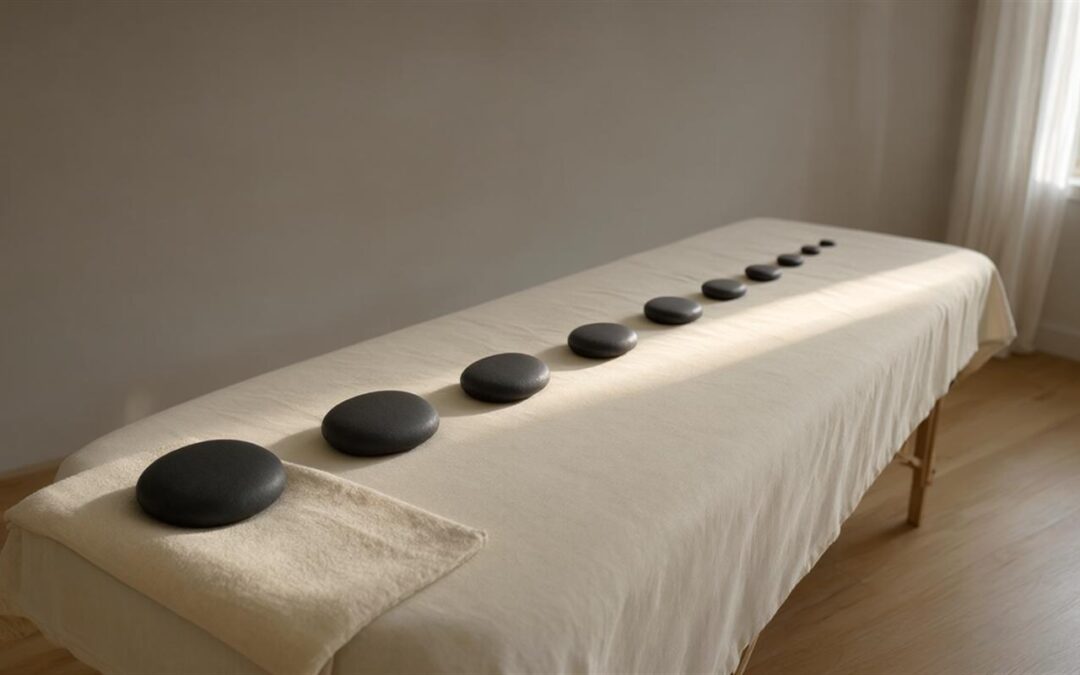
Stones are used in two ways during a hot stone session. Some are set down on an area of the body and left to rest there for a short time. Others are held and worked into the strokes themselves, so the warmth travels with the movement instead of sitting still. The pace tends to be slower than a standard massage, and the rhythm stays even. Nothing about the hour is designed to feel abrupt.
Clients can choose between basalt stone and Himalayan stone, and that decision is part of the setup rather than an afterthought. Pressure is separate. A hot stone session can stay light from start to finish, and medium pressure is a common request; the warmth is the main event, not a prelude to firmer work. The order of a first appointment, from the intake conversation through the last few minutes, is laid out in what to expect in a hot stone massage session.
What a Deep Tissue Session Feels Like in the Room
Deep tissue work is slower and more deliberate than most first-timers expect. The strokes are slow and the pressure is firm, applied so the work settles into deeper layers of muscle and connective tissue instead of skimming the surface. It is not a faster or harder version of a relaxation massage. The difference is how long the hands stay in one place and how precisely that place is chosen.
The appointment opens with a conversation about which areas matter most, and that conversation sets the shape of the hour. Time is finite: a session that spends most of its length on the neck and shoulders spends less of it on the legs or low back. Pressure stays adjustable throughout, and asking for deep tissue does not commit you to the firmest pressure available. Choosing between the two sessions gets easier once you know how a deep tissue appointment is planned around focus areas, since that plan is what the hour follows.
Hot Stones vs Deep Tissue at a Glance
Set side by side, the sessions differ in a few clear ways: what carries the hour, how much of the body it covers, how firm it feels, and what does not change at all.
- What carries the session: heated stones rest on the body and travel with the strokes, while deep tissue relies on slow, firm strokes of the hands.
- Coverage: a warm session tends to move across the body at an even pace, while focused work spends its time in one or two places.
- Pressure: hot stone can stay light or medium throughout, and deep tissue is the session built around firm, slow strokes.
- Pace: both are slower than a relaxation massage, but heat slows the whole hour while deep tissue concentrates it.
- What stays the same: the intake conversation, the draping, and your option to change pressure or skip an area mid-session.
Both services are offered in 45, 60, 75, and 90 minute lengths, so the question of duration is answered the same way whichever one you pick.
Where the Confusion Starts: Heat Is Not Pressure
A common mismatch is booking hot stone expecting deep pressure, then spending the hour waiting for work that was never part of the plan. Heat and pressure are separate settings. Warmth can be strong while pressure stays light, and firm work can happen in an ordinary room at an ordinary temperature. One does not imply the other.
Heat sensitivity and pressure sensitivity are separate too. Someone can want firm, sustained work and still find a hot stone session uncomfortable. Someone else can love the warmth and prefer not to be pressed deeply at all. Neither preference is unusual, and neither rules out the other service. Pressure is its own decision, and how to choose massage pressure sets out the three ranges in plain terms before the session starts.
The Time Question: Whole-Body Warmth or One Focused Area
Where the hour goes is often the deciding factor. Warmth spreads rather than concentrates: the hands move through shoulders, back, arms, and legs in turn, and each area gets a share of the time. That suits a day when nothing in particular is bothering you and the goal is a general reset.
Focused work makes the opposite trade. Naming one or two priority areas means the hour goes further into fewer places, and the rest of the body receives less attention. Neither arrangement is more thorough than the other. They answer different questions: what would feel good everywhere, or what has been asking for attention in one spot.
When Hot Stone Fits Better
Warmth as the main event is the clearest reason to choose hot stone. If the appeal of a massage is a warm room, an unhurried pace, and an hour that does not ask much of you, the stones are the reason that request works. It also suits a first appointment, or a day when firm work feels like more than you want to take on.
It is worth saying plainly that hot stone is not a shortcut to deep work. The stones do not add pressure; they change how the session feels while the pressure stays where you set it. The service description, including the choice between basalt and Himalayan stone, appears on the page for the hot stone massage service at MV Massage Therapy.
When Deep Tissue Fits Better
Deep tissue answers a specific request: an area that has been tight for a while, a stretch of back that complains after long hours at a desk, or a shoulder that never quite settled after a busy season. The session is designed to spend its time there rather than spreading attention evenly.
It also suits anyone who prefers sustained, quiet pressure to broad, flowing warmth, and anyone who has had focused work before and knows the shape of it. Soreness afterward is not proof that the session did its job, and sharp pain during the hour is a reason to say so immediately. The Pain Relief Deep Tissue Massage service describes how the work is approached and what the appointment includes.
What to Say at Booking So the Session Matches
A booking message does not need to be elaborate. The most useful thing to include is the areas you want worked and any that should be left alone, along with whether warmth appeals to you and how firm you like pressure. Those three answers are usually enough to place the session correctly.
The other half of the message is context. Recent surgery, pregnancy, medications that affect bruising or bleeding, and unexplained symptoms are all worth mentioning before the appointment, because they can change positioning or which areas are worked. So is anything that has changed since your last visit. Appointments are requested through the online booking page, and the preferences themselves are easiest to settle in the conversation that opens the session.
Key Takeaways
The two services answer different requests, and the choice gets simpler once the request is clear.
- Hot stone is a warm, unhurried session; deep tissue is firm, slow work in chosen areas.
- Hot stone does not imply deep pressure, and deep tissue does not require the firmest pressure on offer.
- Coverage differs as well: warmth travels through more of the body, and focused work narrows in.
- Heat comfort and pressure preference are separate settings, and both are worth mentioning before you book.
Conclusion
The question of hot stone massage vs deep tissue massage usually comes down to what you want the hour to be about: warmth that moves across the whole body, or sustained attention on the places that need it. Neither is the more thorough choice, and neither has to be permanent. A warm session this month and focused work next month is a reasonable way to use both. At MV Massage Therapy in Vienna, Virginia, both are offered in four session lengths alongside Swedish, signature, prenatal, aromatherapy, and lymphatic drainage massage, with in-home appointments available for Vienna and Fairfax. Questions about which one fits a particular day can go through the practice’s contact page before anything is booked.