Quick Answer: An in-home massage appointment is generally straightforward when the setup, consultation, privacy, and comfort preferences are clear from the start. Your therapist typically brings the essential equipment, reviews your goals and relevant health information, sets up in a private area, and adjusts the session based on your feedback.
The uncertainty usually comes from not knowing what happens after the door opens. At MV Massage Therapy LLC, in-home massage appointments are designed to follow a clear process rather than feel rushed or improvised. Knowing what to expect can make it easier to prepare your space and communicate what you need.
How Does an In-Home Massage Appointment Work?
An in-home massage generally follows a simple sequence: appointment confirmation, therapist arrival, equipment setup, a brief consultation, the massage, and a short wrap-up. The location changes, but the professional process should remain clear.
- You confirm the appointment details and prepare a suitable area.
- The therapist arrives with equipment for the scheduled service.
- You discuss goals, pressure, focus areas, and relevant comfort or health considerations.
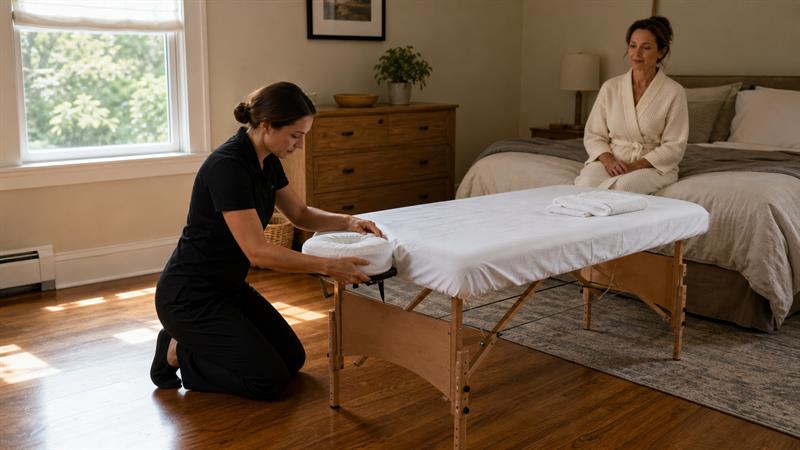
- The therapist sets up the massage table and begins once you are comfortable.
- After the session, you have time to dress, ask questions, and transition back to your day.
A common first-time concern is whether every preference must be decided before the appointment begins. It does not. Communication can continue throughout the session if pressure, positioning, temperature, or focus areas need to change.
Before the Appointment: How to Prepare for an In-Home Massage
The most useful preparation is simple: create a comfortable, private area with clear floor space and protect the time around your appointment. You do not need a large home or a perfect room. You need enough usable space for the massage setup and fewer interruptions once the session begins.
- Choose a room where you can have reasonable privacy.
- Clear enough floor space for a massage table and room to move around it.
- Plan for pets, children, deliveries, and other likely interruptions.
- Wear comfortable clothing before and after the appointment.
- Leave time after the massage instead of immediately moving into errands, work, or caregiving tasks.
A massage can feel less restorative when you are watching the clock, managing interruptions, or rushing out the door as soon as it ends. Giving yourself a little time before and after the session can help you settle in and transition back to your day.
Choose a Comfortable and Private Room
Choose the room that gives you the most privacy and the fewest interruptions. A bedroom, living room, or other quiet area can work when it gives the therapist space to set up and gives you room to relax without frequent foot traffic.
Comfort includes more than the room itself. Lighting, temperature, music, household noise, and conversation preferences all affect how the appointment feels. If you prefer a quiet session or need extra warmth, mention it early so the setting supports your goals.
Make Enough Space for the Massage Setup
You generally need enough clear floor space for a massage table and enough room for the therapist to move safely around it. The overall size of the home matters less than whether the selected room has open space around the setup.
- Move small furniture, loose items, and trip hazards out of the treatment area.
- Choose a level area where the table can be placed securely.
- Keep a clear path from the entrance to the room.
- Use a bedroom or living area if it provides privacy and usable space.
Exact space needs depend on the equipment and service arrangement. If a room feels cramped before the table is in place, another area may make the appointment more comfortable for both you and the therapist.
Plan for Pets, Deliveries, and Household Interruptions
Pets, doorbells, phone alerts, and family interruptions are common in-home distractions. They do not make an appointment impossible, but they can interrupt the calm many clients are trying to create.
A simple plan helps. Set phones to silent if you do not need them, decide how pets will be managed, and let household members know you will be unavailable during the session. The goal is not a perfectly silent home. It is to reduce distractions that pull your attention away from the massage.
What to Wear, Eat, and Drink Before a Massage
Wear comfortable clothing that is easy to change out of and back into after the appointment. During a table massage, professional draping is generally used to maintain modesty while allowing the therapist to work on the area being addressed.
Many people are more comfortable after a light meal than after a heavy one, and normal hydration is a sensible part of the day. There is no need for a rigid routine. The practical goal is to avoid arriving overly full, dehydrated, rushed, or uncomfortable.
What Happens When the Massage Therapist Arrives?
When the therapist arrives, the appointment generally begins with setup and a brief conversation about your needs. A mobile therapist commonly brings the core equipment for the scheduled massage, while you provide the location and room where the session will take place.
- Massage table
- Linens and draping materials
- Massage oils or lotions
- Other agreed-upon supplies related to the scheduled service
Equipment details vary by therapist and massage type. The arrival period is also when the room is organized, expectations are clarified, and practical questions can be addressed before hands-on work begins.
The Initial Consultation and Health Information
The initial consultation is where you explain what you want from the session and what the therapist needs to know to plan it appropriately. This usually includes focus areas, preferred pressure, recent discomfort, positioning needs, and relevant health information.
Share details that could affect the session, including pregnancy, recent surgery, injuries, medications, skin sensitivities, or restrictions provided by a healthcare professional. Massage therapy is not a substitute for medical evaluation or treatment, and specialized circumstances should be discussed before the session begins.
This is especially important when the request is more specific than general relaxation. A session involving deep pressure, prenatal comfort, lymphatic drainage, or post-operative cosmetic surgery support may require a more detailed conversation about goals, timing, and existing care instructions. Readers comparing styles can also review deep tissue massage versus Swedish massage to understand how the intended experience differs.
What to Expect During an In-Home Massage
During an in-home massage, the focus should stay on privacy, comfort, and communication. The therapist works within the service booked and can adjust pressure or positioning when you give feedback.
It can be helpful to mention discomfort as it comes up rather than waiting until the end of the session. Pressure, temperature, positioning, and sensitivity are personal, and clear feedback helps keep the massage aligned with your goals.
Privacy, Draping, and Professional Boundaries
Professional draping is generally used during a table massage to maintain modesty and expose only the area being worked on. You should understand the draping process before the massage begins and feel comfortable raising questions about privacy or positioning.
Professional boundaries are part of an appropriate appointment structure. The consultation, draping, clear communication, and focus on the scheduled massage service help establish what the session involves and what it does not.
How to Communicate About Pressure and Comfort
Say something when the pressure is too light, too intense, or uncomfortable. More pressure is not automatically better, especially when you are sensitive in a particular area or your goal is relaxation.
- Ask for lighter or more focused pressure.
- Request a different position or additional support.
- Let the therapist know if you are too warm or too cold.
- Share whether you prefer quiet, music, or conversation.
- Point out areas that need more attention or should be avoided.
If you are tensing, holding your breath, or bracing against the work, let the therapist know. The pressure, technique, or body position may need to change.
Choosing a Massage Style Based on Your Goals
The most practical massage choice starts with what you want the session to feel like and what areas need attention. Swedish or relaxation massage is generally suited to a calming, lighter-pressure experience. Deep tissue massage is more focused and may use firmer pressure based on your comfort and goals.
Hot stones and aromatherapy add a different sensory element to the appointment. Prenatal massage requires attention to pregnancy-related comfort and any restrictions already provided by the client’s care team. For a broader overview of available options, see which massage to choose for your goals.
Lymphatic drainage and post-operative cosmetic surgery massage should not be treated as interchangeable with a standard relaxation session. MV Massage Therapy LLC offers lymphatic drainage with Margarita, who also holds post-operative cosmetic surgery certification. These requests may need additional screening and a clear discussion of timing, restrictions, and the client’s existing care instructions.
When an In-Home Massage Needs More Planning
Specialized needs deserve a conversation before booking. If your session involves pregnancy, recent surgery, a health concern, or a request for lymphatic drainage, clearer planning before the massage begins can help ensure the service and setup are a good fit.
- You are pregnant and need supportive positioning or have been given activity restrictions.
- You recently had cosmetic surgery and are following specific post-operative instructions.
- You are requesting lymphatic drainage rather than a general relaxation massage.
- You have an injury, skin sensitivity, medication change, or symptom that affects comfort or positioning.
These details can change how the session is approached. Sharing them in advance helps avoid an uncomfortable setup or a service that does not align with your current needs and care instructions.
What Happens After an In-Home Massage?
After the massage, you generally have time to get dressed, gather yourself, and complete the appointment wrap-up. One advantage of an in-home session is that you are already at home, though that benefit may feel limited if you immediately move into a demanding schedule.
Give yourself a few quiet minutes if possible. Continue your normal hydration routine and pay attention to how you feel after the session. If you experience symptoms that feel unusual or concerning, seek guidance from an appropriate healthcare professional.
Scheduling a massage because you need a pause, then returning immediately to a packed routine, can make the transition feel abrupt. Protecting even a short transition period can help the appointment feel more complete.
Questions to Ask Before Booking an In-Home Massage
Before booking, focus on the details that affect whether the appointment is a good fit for your home and your goals. The right questions can prevent avoidable setup issues and help match the service to what you actually need.
- What equipment will be brought for the appointment?
- What room setup is needed for the massage table?
- Which massage style best fits my goals and pressure preferences?
- What health information or comfort needs should I share in advance?
- What changes if I am pregnant, recently had surgery, or have a relevant restriction?
- How can pressure, positioning, or environmental preferences be adjusted during the session?
If you are choosing between an in-home session and a studio appointment, the decision often comes down to privacy, convenience, available space, and the environment that helps you relax. The guide to in-home massage versus studio massage can help clarify that choice.
Key Takeaways
- An in-home massage appointment generally includes setup, consultation, the massage session, and a brief wrap-up.
- You do not need a perfect home, but a private, comfortable area with adequate room for the setup is helpful.
- Pressure, positioning, temperature, music, and focus areas can be discussed throughout the session.
- Pregnancy, recent surgery, lymphatic drainage, and other specialized needs generally require more detailed planning before the appointment.
How MV Massage Therapy LLC Approaches In-Home Massage
MV Massage Therapy LLC approaches in-home massage by addressing practical details before they become obstacles. An in-home appointment involves more than bringing a massage table into a home. It also involves creating a workable setting, understanding the client’s goals, and adjusting the session to the client’s comfort within the scope of the service.
This approach matters when a client has a specific reason for booking. A relaxation-focused session, deep tissue request, prenatal appointment, or lymphatic drainage inquiry does not begin with the same assumptions. The planning conversation helps identify what needs attention before the massage starts.
Frequently Asked Questions
What does a massage therapist bring to an in-home massage?
A mobile massage therapist commonly brings a massage table, linens, and massage supplies such as oils or lotions. The exact setup varies by provider and the scheduled service, but the client typically provides the room while the therapist brings the essential treatment equipment.
The key distinction is between the home environment and the massage setup. You do not usually need to supply professional equipment, but the selected room needs enough clear space for it to be used safely and comfortably.
How much space do I need for an in-home massage?
You generally need enough open floor space for the massage table and enough room for the therapist to move around it. A bedroom or living room can work well when furniture and loose items are moved aside and the room provides reasonable privacy.
The most important factor is usable space around the table, not the square footage of the entire home. A large room crowded with furniture can create more difficulty than a smaller room with a clear setup area.
What should I wear for an in-home massage?
Wear comfortable clothing before and after the appointment. During a table massage, professional draping is generally used to maintain modesty while allowing the therapist to work on the relevant area.
Clothing is only one part of comfort. If you need a different position, extra support, a warmer room, or adjustments related to pregnancy or sensitivity, those details matter just as much as what you wear.
Do I need to clean my house before a mobile massage?
You do not need to prepare a perfect home. The practical priority is a reasonably clean, private, comfortable area with enough open floor space for the massage table and a clear path to the room.
Clearing obstacles and reducing interruptions matters more than cleaning the entire house. The goal is a setup that lets the therapist work safely and lets you relax without managing your surroundings.
Can I ask the therapist to change the massage pressure?
Yes. You should speak up if pressure feels too light, too intense, or uncomfortable. Pressure preferences are individual, and more pressure is not automatically a better massage.
If you find yourself tensing, holding your breath, or bracing against the work, the pressure or technique may need adjustment. You can also communicate about positioning, temperature, sound, and which areas need more or less attention.
What should I tell a massage therapist before an in-home appointment?
Tell the therapist about your goals, preferred pressure, focus areas, recent discomfort, and relevant health information. Pregnancy, recent surgery, injuries, medications, skin sensitivities, and clinician-provided restrictions can affect how a massage is planned.
This becomes especially important for prenatal massage, lymphatic drainage, or post-operative cosmetic surgery massage. These services involve details that can shape how the session is approached and whether additional planning is needed.
Conclusion: Book an In-Home Massage With Clear Expectations
The real challenge with an in-home massage is not finding a perfect room. It is making sure the appointment is not rushed, poorly planned, or mismatched to your comfort needs. When privacy, space, pressure preferences, and relevant health details are discussed in advance, the session can begin with greater ease and clarity.
MV Massage Therapy LLC offers in-home massage for clients seeking a clear, well-planned massage experience in Vienna, Virginia. If you are ready for a mobile massage, book an in-home massage appointment with MV Massage Therapy LLC and share the practical details that can help the session feel comfortable from the start.