Quick Answer: A hot stone massage should feel warm, steady, and calming, not painfully hot or overly intense. One of the biggest misconceptions is that hot stone means deep pressure, when the real difference is how the heat changes the pace, sensation, and overall feel of the session.
At MV Massage Therapy LLC, this is one of the most common questions people ask before booking a heat-based service. Most want the same three answers right away: how the stones are used, whether the heat will feel comfortable, and what to mention before the session starts.
Why People Choose Hot Stone Massage
People usually choose hot stone massage because they want something different from a standard relaxation session. They want warmth, a slower pace, and a massage that does not rely only on pressure to feel effective.
Hot stone can also feel more approachable for someone who likes the idea of massage but does not enjoy firm work right away. The warmth often makes the session feel less abrupt, which can make it easier to relax into.
- It adds warmth to the session
- It creates a slower, more grounded rhythm
- It can feel more soothing than a standard massage alone
- It does not automatically mean deeper pressure
How heat changes the feel of a massage
Heat changes the experience before anything else. Many people notice that warmth helps them settle in faster, especially when the shoulders, back, or upper body already feel tight from stress or long hours in one position.
This is where people often get it wrong. Warmth and pressure are not the same thing. A hot stone massage can still use light or medium pressure, which is why it helps to understand how to choose massage pressure: light, medium, or firm before booking.
What Happens Before the Session Starts
The session usually starts with a short conversation about comfort, goals, and preferences. This helps the therapist understand whether the client wants full relaxation, more attention on specific areas, lighter pressure, or a gentler approach to heat.
Many first-time hot stone clients wait too long to mention what makes them uncomfortable. That is often where the experience starts to go off track. If someone dislikes too much heat, prefers less pressure, or has a sensitive area, saying it before the session begins usually leads to a smoother experience from the start.
If this is a first appointment, it can also help to review what to expect at your first massage appointment so there are fewer surprises once the session begins.
What to mention before a hot stone massage
- Whether you are sensitive to heat
- Whether you prefer light, medium, or firmer pressure
- Any areas that feel tender, irritated, or should be avoided
- Whether the goal is deep relaxation, tension relief, or a mix of both
What a Hot Stone Massage Usually Feels Like
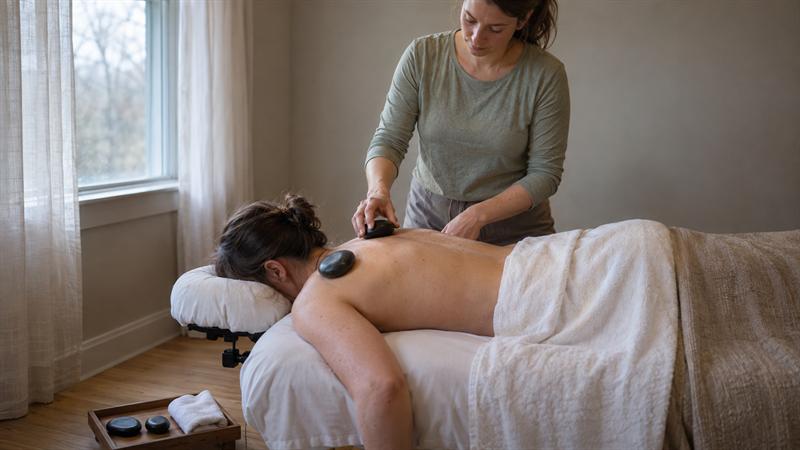
A hot stone massage usually feels warm, smooth, and unhurried. The stones may be placed on specific areas for a short time, used during massage strokes, or worked into parts of the session where warmth helps the body settle more fully.
The experience should not feel harsh. The warmth should support the massage, not take over the session. For many people, that creates a more grounded experience, especially when they want relaxation with a noticeable sensory element.
At MV Massage Therapy LLC, managing expectations matters. Some people assume the stones are only placed on the back and left there, but that is only one part of the service. A more accurate way to think about it is that the heat becomes part of the flow of the massage.
For a service-specific overview, readers comparing options can also review the Hot Stones service page.
How the stones may be used during the session
The stones may be used in a few different ways during one appointment. A therapist may place them on selected areas briefly, use them while massaging, or alternate between hands-on massage and stone-assisted strokes.
This is one of the details many hot stone descriptions leave out. People hear the name of the service, but they are not always told how it actually unfolds. Once the warmth is introduced, the session often feels slower and easier to sink into, which changes the tone of the appointment.
Areas where stones are commonly used
- Back
- Shoulders
- Neck area when appropriate
- Arms
- Legs
- Hands or feet, depending on the session
How Therapists Check Temperature and Comfort
The stones should feel comfortably warm, not painfully hot. If the heat feels distracting, sharp, or too intense to relax into, the session should be adjusted right away.
People sometimes stay quiet because they do not want to interrupt, but hot stone works best when comfort is adjusted throughout the session. The goal is not to tolerate too much heat. The goal is to stay relaxed enough for the warmth to feel supportive rather than overwhelming.
What comfortably warm usually means
Comfortably warm means the stone is clearly warm when it touches the skin, but the sensation should settle into something soothing within moments. It should not feel startling for long, and it should never feel like something you need to brace against.
If someone leaves a session remembering the heat more than the massage, the balance was probably off. In a well-paced session, the warmth blends into the overall experience instead of dominating it.
When to speak up during the session
- If the stone feels too warm
- If the pressure feels too firm or too light
- If an area feels too sensitive
- If you want more or less focus on a certain area
If any of these signs sound familiar, the session usually needs adjustment rather than more time:
- You tense up when the stone first touches the skin
- You hold your breath during part of the massage
- You stay focused on the heat instead of relaxing into the work
- You leave unsure whether the experience felt soothing or simply intense
When that happens, the best move is to adjust the session in the moment instead of waiting until it is over.
What to Expect From the Pace of the Session
Hot stone sessions usually feel slower than a standard massage. That slower pace is not a sign that less is happening. It is part of what makes the service distinct.
People expecting a typical massage rhythm are sometimes surprised by how grounded the session feels once heat is introduced. The warmth changes the tempo. It gives the therapist more room to work in a way that feels steady rather than rushed, which can create a more immersive experience.
Why the session may feel slower than a standard massage
The session may feel slower because the warmth is part of the setup, the flow, and the transitions between areas. More time may be spent easing into the experience instead of moving quickly from one region to the next.
This matters because pace changes perception. If someone wants a more cocooning, sensory experience, this slower rhythm is often what they are looking for. If they want a more familiar relaxation massage without added heat, another option may be a better fit.
Who May Want to Ask Questions Before Booking
Some people may want to ask more questions before choosing a heated service. That includes people who are very sensitive to heat, pregnant, dealing with irritated skin, recovering from recent procedures, or navigating circulation-related concerns.
This does not automatically mean hot stone is the wrong choice. It simply means the heat itself becomes part of the decision. Problems are more likely when someone books based only on the service name without thinking about how their body usually responds to warmth.
When another type of massage may be a better fit
If someone wants relaxation without added heat, Swedish massage is usually the more straightforward choice. If someone is mainly drawn to the sensory side of the experience but prefers scent over warmth, aromatherapy may make more sense.
That is why comparison matters. Readers who are still deciding can review Swedish massage, hot stone massage, or aromatherapy: how to choose to see which experience matches what they want right now.
How to Prepare for Your Appointment
Preparation for a hot stone massage is usually simple, but clarity matters. The more clearly someone understands their comfort preferences before the appointment, the easier it is for the session to feel right from the beginning.
First-time clients usually have the smoothest experience when they know what they want the session to feel like. They do not need every detail mapped out, but it helps to know whether they want lighter pressure, more focus on certain areas, or a more relaxation-centered pace.
Simple ways to make the session more comfortable
- Share pressure preferences early
- Mention heat sensitivity before the session starts
- Speak up as soon as something feels off
- Choose a clear session goal: relaxation, tension relief, or a mix of both
Hot Stone vs. Other Relaxation-Focused Options
Most people are not really choosing between service names. They are choosing between experiences. That is why hot stone is more useful to compare by feel than by category alone.
If someone likes warmth and slower pacing, hot stone is usually the better match. If they want a more familiar, classic relaxation massage, Swedish is often the more practical option. If scent changes the experience more than heat, aromatherapy may feel more aligned.
Hot stone vs Swedish massage
Swedish massage usually feels more familiar and straightforward, especially for a first-time client. Hot stone adds a stronger sensory element through warmth, which gives the session a more cocooning feel.
This changes the decision in a simple way. If the goal is classic relaxation, Swedish often makes more sense. If the goal is relaxation with added warmth and a slower rhythm, hot stone is usually the better fit.
Hot stone vs aromatherapy
Aromatherapy changes the experience through scent. Hot stone changes it through warmth and pacing.
That distinction matters because people sometimes choose based on what sounds appealing instead of what actually helps them relax. Someone who responds well to heat may prefer hot stone. Someone who relaxes more through calming scent cues may lean toward aromatherapy instead.
Key Takeaways
- Hot stone massage should feel warm, calming, and steady, not painfully hot or overly intense.
- The main difference is not deeper pressure. It is the added warmth and slower pace.
- The stones may be placed on the body, used during massage strokes, or both.
- Comfort depends on clear communication about heat, pressure, and session goals.
- If someone wants relaxation with added warmth, hot stone is often a strong fit.
- If someone wants relaxation without heat, Swedish massage is usually the more direct option.
Conclusion
The real issue is not whether hot stone massage sounds appealing. It is whether the session matches what the person actually wants to feel. When that decision is made without understanding the role of heat, pace, and comfort preferences, the experience can miss the mark.
People sometimes book the wrong style, stay quiet when the heat or pressure feels off, and leave thinking the service itself was the problem. In many cases, the mismatch started earlier with unclear expectations.
MV Massage Therapy LLC is a practical next step for anyone who wants a hot stone session explained clearly and matched to the right experience. When someone wants warmth, slower pacing, and a session that feels intentionally calming rather than generic, that clarity can make a real difference. Readers who are ready to move forward can book an appointment based on the service that fits what they want most from the session.
Company Approach
At MV Massage Therapy LLC, the better approach is to treat hot stone as an experience that needs the right setup, not just a service name on a menu. That means paying attention to how someone responds to warmth, what level of pressure feels comfortable, and whether the goal is full relaxation or focused tension relief.
Clear guidance usually leads to a better session. People tend to do best when they understand what the heat changes, what it does not change, and how to speak up early if something feels off. That kind of clarity helps prevent a common mismatch: booking hot stone for the idea of comfort, then not knowing how to shape the experience once it starts.
FAQ
What happens during a hot stone massage?
A hot stone massage usually includes both stone placement and hands-on massage. The therapist may place warmed stones on selected areas for a short time, use stones during massage strokes, or alternate between the two. The overall effect is a session that feels warmer and slower than a standard massage.
What many people misunderstand is that the stones are not always just placed on the back. In a well-structured session, the warmth becomes part of the flow of the massage itself. That is why the experience feels different even when the pressure stays light or medium.
Are the stones very hot during a hot stone massage?
No. The stones should feel comfortably warm, not painfully hot. You should notice the warmth right away, but it should settle into a soothing sensation instead of creating the urge to pull away or tense up.
The useful distinction is this: warm enough to relax into is normal, but heat that dominates your attention is not. If the temperature is the main thing you remember, the balance of the session was probably off.
Can a hot stone massage still be light pressure?
Yes. Hot stone massage can still be light pressure. Heat and pressure are separate parts of the experience, so someone can want warmth without wanting firm tissue work.
This is one of the most common misunderstandings. People often assume hot stone is automatically more intense, when in reality it may simply feel more immersive. The added heat changes the sensory quality of the session, not necessarily the force of the massage.
What should you tell your massage therapist before a hot stone session?
The most important details are your heat sensitivity, pressure preference, areas to focus on, areas to avoid, and the overall goal of the session. Those details directly shape how the heat is introduced and how the massage is paced.
For example, someone who wants a calming session with light pressure needs a different setup than someone who wants more attention on the shoulders and upper back. Small preferences matter more in a hot stone session because the comfort level depends on how warmth and pressure work together.
Who may need to ask questions before booking a hot stone massage?
People who are highly sensitive to heat, pregnant, dealing with irritated skin, recovering from recent procedures, or concerned about how their body responds to warmth may need more clarity before choosing a heated service.
The important point is not just whether massage sounds helpful. The question is whether heat is likely to improve the experience or complicate it. For some people, that single factor is what changes the decision.
Is hot stone massage better than Swedish massage?
Neither one is automatically better. Hot stone is usually better for someone who wants added warmth and a slower, more cocooning feel. Swedish is usually better for someone who wants a familiar, classic relaxation massage without the heat element.
What changes the decision is not the name of the service. It is the experience someone is trying to create. If warmth sounds like part of the solution, hot stone makes sense. If simplicity and familiarity matter more, Swedish is usually the clearer fit.