Quick Answer: If you are wondering what to bring to your first massage, bring any requested forms, a payment method if needed, and any information that affects your comfort or session plan. Most first-time clients do not need special gear, but the details can matter more for prenatal massage, focused therapeutic work, lymphatic drainage, or post-op sessions.
At MV Massage Therapy LLC, this is a common first-visit question because people often assume they need to prepare more than they actually do. Many first-time clients focus on special clothes or extra supplies and overlook what matters most: clear information about what they want help with and anything that may affect the session.
Quick Answer: What Most People Should Bring to a First Massage
Most first-time clients only need a few basics. The goal is to arrive prepared without overpacking.
- Photo ID if the practice requests it
- Payment method if payment is not already handled
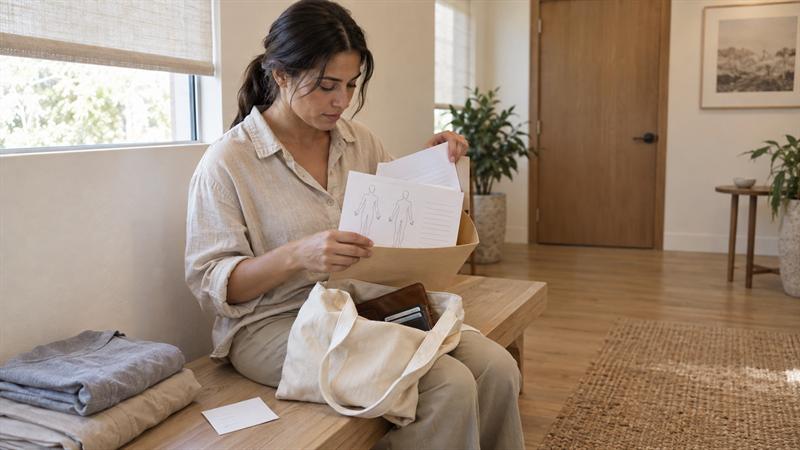
- Completed forms if requested in advance
- Relevant health updates that affect comfort, pressure, or positioning
- Comfortable clothes for before and after the session
- A hair tie or clip if you have long hair
- Water if you like having it ready afterward
Optional items depend on why you booked. If you want a full walkthrough of the visit itself, what to expect at your first massage appointment explains how the session typically flows.
Essentials to have with you
- Photo ID if requested
- Payment method if needed
- Appointment confirmation details if helpful
- Any intake forms you were asked to complete
- Relevant details about pain areas, sensitivities, pregnancy, or recent procedures
Optional items that may help
- Hair tie or clip
- Water bottle
- Glasses case
- A short note with questions, medications, allergies, or pain points
What you usually do not need to bring
Most people do not need to bring anything elaborate. First-time clients often overprepare and show up with items they will not use.
- No towels or sheets
- No robe
- No special massage clothes
- No bag full of extras unless you were given specific instructions
A first massage is usually simpler than expected. What matters most is comfort, communication, and any details that change how the session should be handled.
Why People Ask This Before Their First Massage
Many first-time clients are less worried about the massage itself than about doing something wrong. They want to avoid showing up unprepared, feeling awkward, or missing an important detail.
This concern tends to grow when broad online advice covers general spa etiquette but does not answer the practical question. What you bring can change slightly based on the type of massage and the reason for booking, which is why a short checklist is more useful than vague preparation tips.
Your First Massage Checklist
Here is the practical version: bring what is requested, bring what affects the session, and skip the rest. If you are unsure how to explain your needs, how to communicate your massage preferences before and during your session can help you organize what to say.
- Bring if requested: ID, payment method, intake forms, appointment details
- Bring if relevant: pain notes, allergy information, pregnancy-related details, post-op instructions, written clearance if specifically requested
- Bring for comfort: easy clothes, hair tie, water, glasses case
ID and payment method if needed
Bring these if the practice requires them. If payment was already completed online, this may matter less, but checking your confirmation helps prevent last-minute confusion.
Any forms or health information requested ahead of time
Intake paperwork helps the therapist understand what may need to be avoided, adjusted, or focused on. Clients sometimes forget to mention an important update until the session starts, which can make the first visit less focused.
Comfortable clothes for before and after your session
Easy-to-change clothes can make the visit feel smoother from start to finish. This matters even more after deeper bodywork, when tight waistbands or stiff clothing may feel less comfortable than usual.
A hair tie, water, and anything that supports comfort
These are small items, but they can solve common annoyances. Long hair can get in the way during neck and shoulder work, and water is simply convenient to have ready when the session is over.
Relevant instructions or provider guidance if your session requires them
This is where the checklist changes. If the appointment relates to pregnancy, recent surgery, swelling, or post-op recovery, bring the information that affects positioning, pressure, timing, or bodywork limits. Before those appointments, reviewing questions to ask before booking a massage therapist can help clarify what matters most.
What to Bring Based on the Type of Massage You Booked
Not every first massage has the same prep needs. Most people need only the basic checklist, but some services call for more specific information. If you are still deciding, which massage should I choose can help match the session to the reason you are booking.
Swedish or relaxation massage
This is usually one of the simplest appointments to prepare for. Bring the basics, wear comfortable clothes, and be ready to mention any areas where you want lighter pressure or extra attention.
Deep tissue massage
For deep tissue work, it helps to arrive with a clear sense of where the tension is, how long it has been bothering you, and what kind of pressure feels productive versus too aggressive. Clients sometimes book a deeper session for relief but arrive without a clear explanation of what hurts, where it spreads, or what tends to aggravate it. That can lead to a less targeted first visit.
Prenatal massage
Prenatal sessions are still simple, but the details matter more. Information about comfort, positioning, and any restrictions is more useful than bringing extra items. The main issue is not packing differently. It is making sure the session is set up around what feels comfortable for that stage of pregnancy.
Lymphatic drainage or post-op care
This is where generic first-massage advice often falls short. If the session is for lymphatic drainage or post-op support, bring any instructions that affect timing, restrictions, compression, or body areas that need to be avoided. These appointments are not prepared for in quite the same way as a standard relaxation massage, so having the right details ready helps avoid confusion.
If any of these apply, it is best to clarify them before the appointment:
- You recently had surgery and have written or verbal aftercare instructions
- You were told to avoid certain areas, positions, or pressure levels
- You are not sure whether your session is meant for relaxation, swelling support, or post-op recovery
- You have timing restrictions that affect when bodywork should begin
When those details are unclear, the session may need clarification before it starts. That helps keep the appointment focused on the right goal instead of using the opening minutes to sort out basic logistics.
Hot stone or aromatherapy sessions
These sessions usually do not require special items. The main exception is sensitivity. If scents, oils, or skin products are a concern, mention that early so the session can be adjusted around your comfort.
What to Wear Instead of What to Pack
Many people asking what to bring are really asking what to wear. In most cases, simple and comfortable is the right answer.
You do not need a special outfit for a massage. Easy clothes and a clear understanding of the process matter more than bringing extra items. If you want a broader overview of how the visit works, what to expect at your first massage appointment covers the setup in more detail.
Clothes that are easy to change in and out of
Choose clothing that feels easy before and after the session. Soft, non-restrictive clothes usually feel best when you are changing in and out without rushing.
Jewelry, makeup, and fragrance considerations
Bulky jewelry is easier to leave off if possible because it adds one more thing to manage. Makeup is a personal choice, but heavy fragrance is worth thinking about because scent sensitivities can affect comfort, especially during close-contact services or aromatherapy sessions.
What to know about draping and modesty
This is another area that first-time clients tend to worry about more than necessary. You do not have to figure it out alone. The therapist explains the process, and the session is handled in a way that supports comfort and professionalism.
What to Do Before You Leave Home
The best preparation is simple. A few small steps usually make the appointment smoother than bringing extra items ever will.
- Arrive a little early if forms or a short consultation are expected
- Eat lightly if that helps you feel more comfortable
- Check the appointment time and any special instructions
- Know what you want help with before you walk in
First appointments usually go more smoothly when clients arrive with a clear goal. If you can explain whether the session is for relaxation, tension relief, prenatal comfort, or recovery support, the visit tends to start with more direction and less guesswork.
Arrive a little early
Rushing into a first appointment makes everything feel more stressful. A little extra time gives space for questions, paperwork, and a calmer start.
Confirm any forms or special instructions
Check your email or booking confirmation before leaving home. This helps prevent a common first-visit problem: arriving ready for the massage but not ready for the specific appointment you booked.
Know what you want help with
This is often more important than bringing anything physical. If you are dealing with neck tension, lower back discomfort, stress, swelling, pressure sensitivity, or a body area you want avoided, say that clearly. The session is easier to shape when the goal is specific.
When to Call Ahead Before Your Appointment
Some questions are better handled before you arrive. This is not about making the process more complicated. It is about avoiding preventable confusion once the appointment starts.
- Pregnancy, recent surgery, swelling, or restrictions
- Allergies, fragrance sensitivity, or skin reactions
- Questions about pressure, draping, positioning, or comfort
Pregnancy, recent surgery, swelling, or other restrictions
These situations can change how the session may need to be approached. If those details are left unclear, the appointment often starts with uncertainty instead of a clear plan.
Allergies, skin sensitivities, or essential oil concerns
If lotions, oils, or scents are part of the service, ingredient sensitivities matter. This is especially relevant for aromatherapy or any session where scent is meant to support relaxation, because discomfort with the product works against the purpose of the appointment.
Questions about comfort, pressure, or positioning
If you already know you are nervous about pressure, side-lying, modesty, or specific body areas, bring that up early. If you want help putting that into words, how to communicate your massage preferences before and during your session can help.
Key Takeaways
- Most first-time massage clients need only a few basics, not a long packing list.
- One of the most important things to bring is accurate information about comfort, pain areas, sensitivities, or restrictions.
- Comfortable clothes matter more than special massage gear.
- Prenatal, lymphatic drainage, and post-op appointments usually need more specific preparation than a standard relaxation session.
- When details are unclear, resolving them before the appointment usually leads to a smoother first visit.
Next Steps for First-Time Clients
If you are still deciding which type of session fits your needs, start with the service match. If you already booked, review the checklist, confirm any instructions, and arrive with a clear sense of what you want help with.
At MV Massage Therapy LLC, first-time appointments often go more smoothly when clients come in with the right expectations and the right information, not extra clutter. If you are ready to move forward, book your appointment and choose the session that best fits your goals.
Conclusion
The real issue behind this question is usually not forgetting a water bottle or hair tie. It is showing up without the information that shapes the session, or treating a specialized appointment like a standard one. That can lead to confusion, extra time spent on logistics, and a first session that feels less focused than it could.
At MV Massage Therapy LLC, the process is kept clear, practical, and matched to the reason for the visit. Whether the goal is relaxation, deep tissue relief, prenatal support, or lymphatic drainage, the next step is simple: bring the basics, bring the details that matter, and book with MV Massage Therapy LLC if you want a first massage experience that is easier to prepare for and easier to understand.
FAQ
Do I need to bring anything special to my first massage?
Usually no. Most first-time massage clients only need basic appointment items such as requested forms, a payment method if needed, and relevant details that affect the session. The main exception is when the appointment is tied to something more specific, such as pregnancy or post-op recovery. In those cases, the important part is not bringing more objects. It is bringing the information that changes how the session should be planned.
What should I wear to my first massage appointment?
Wear comfortable clothes that are easy to change in and out of. That usually matters more than bringing anything extra. Soft, non-restrictive clothing tends to feel better before and after the session, especially if the massage is focused on deeper tension. What many people expect to be a packing question usually turns out to be more about clothing and comfort.
Should I bring my medical information to a massage?
Bring the information that is relevant to the session, not a full medical file. A useful way to think about it is whether the detail changes comfort, positioning, pressure, or what should be avoided. Recent surgery, pregnancy-related restrictions, allergies, skin sensitivities, and pain patterns all fit that category. A short, clear explanation is usually more useful than a large amount of unrelated paperwork.
What should I bring to a prenatal or lymphatic drainage massage?
These appointments usually require more specific information than a standard relaxation massage. For prenatal massage, the important details are the ones that affect comfort and positioning. For lymphatic drainage or post-op care, the useful items are usually instructions, timing details, restrictions, or any written guidance connected to recovery. The session is shaped by the reason for the visit, so the preparation should reflect that.
Do I need to bring water or snacks to a massage appointment?
Water is optional but convenient. A bottle of water is one of those small items that can make the visit easier without being necessary. Snacks are usually less important than showing up neither overly full nor overly hungry. In most cases, comfort matters more than extras, so keeping preparation simple works best.
Is it okay to ask questions before my first massage?
Yes, especially when the question affects comfort or preparation. Pressure concerns, draping, side-lying positioning, scent sensitivity, and post-op restrictions are all worth asking about before the appointment. That usually makes the first visit smoother because it clears up the details that tend to create stress when left uncertain.