
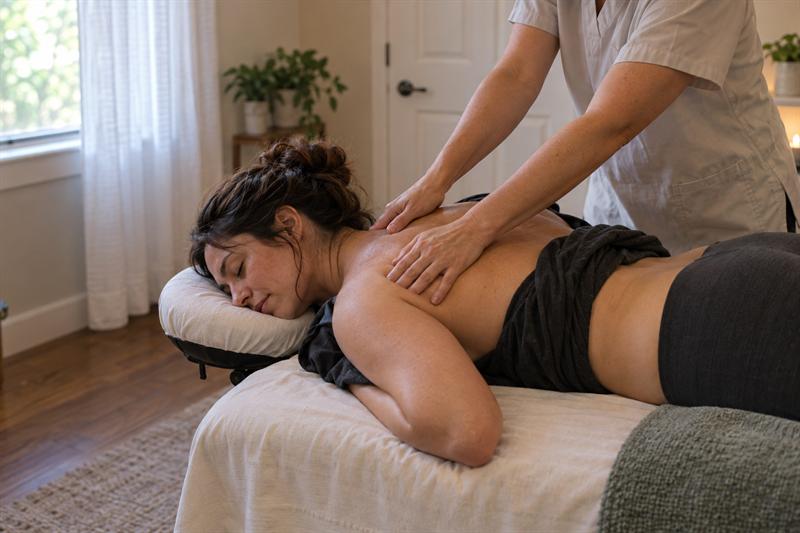
At MV Massage Therapy LLC, this is a familiar pattern: someone books because their neck feels tight, but the session works best when it considers a broader chain of tension through the shoulders, upper back, jaw, or low back. That is why a desk worker massage usually makes more sense when it is planned around how the tension builds, where it spreads, and what kind of pressure feels productive instead of overwhelming.
If the focus is too narrow, the same areas may tighten up again quickly. If the pressure is too aggressive for the pattern, the session can feel intense without feeling especially useful. A better approach is to match the session to how desk-work tension actually shows up.
Why desk work often shows up in the neck, shoulders, and upper back
Desk work tends to load the same areas repeatedly. Hours of screen time, repetitive mouse and keyboard use, and stress-related muscle guarding are all commonly linked with upper-body tension. For many people who spend most of the day sitting, that is where the pattern starts.
A common pattern is end-of-day heaviness across the tops of the shoulders, stiffness at the base of the neck, and pulling between the shoulder blades. This may feel worse after long meetings, limited movement, or mentally demanding work. The tension usually builds gradually, which is why it is easy to ignore until it becomes harder to shake off.
How screen time and static posture create recurring tension
When the body stays in the same position for hours, some muscles can stay active longer than they should. The shoulders may creep upward, the head may drift forward, and the upper back may start carrying more of the load. Add stress to that pattern, and jaw clenching or shallow breathing may add even more tension.
Many desk workers do not notice the pattern right away because the discomfort does not usually arrive all at once. It tends to build in layers. By the time it becomes obvious, it may already involve more than one area.
Why the tightest area is not always the starting point
The sorest area is not always the only area that needs attention. Someone may feel the strongest discomfort between the shoulder blades, while front shoulder and chest tightness are helping drive that strain. Another person may describe it as neck tension when the pattern also includes jaw clenching and scalp tension.
This is where session planning matters. If the work stays only on the loudest spot, the broader pattern may stay in place. That often leads to short-term relief, followed by the same tightness after the next stretch of desk work.
The most helpful focus areas for a desk worker massage
For many desk workers, the best session plan addresses the pattern, not just the complaint. The exact focus depends on how the tension feels and where it spreads, but these are the areas that often matter most.
Upper trapezius and neck base
This is one of the most common starting points. Tightness here often feels heavy and stubborn by the end of the day. It may also affect how easily the head turns and how fully the shoulders can drop.
If this area is skipped, the tension may keep feeding into the rest of the upper body. That is one reason it is often addressed early in a desk worker massage.
Shoulders and support muscles around the shoulder joint
Desk work tends to keep the shoulders slightly engaged for long periods. Over time, that can create a guarded, lifted feeling through the tops and backs of the shoulders. It is a common pattern when someone says they feel tense even when they are not doing anything active.
When this area stays overloaded, the neck may have to work harder too. The result can be a cycle where tight shoulders aggravate the neck, and neck tension reinforces the shoulders.
Mid-back and shoulder blade area
This area often feels knotted, pulled, or stuck after long periods at a desk. It matters most for people who feel discomfort between the shoulder blades or along the inner edge of the shoulder blade.
A common mistake is assuming the issue is only in the upper traps. In many cases, the mid-back is also carrying strain from repetitive sitting and forward-reaching work.
Chest and front shoulder tension
This area is easy to overlook, even though it can shape the whole upper-body pattern. When the front of the shoulders and chest stay tight, the shoulders may round forward and the upper back may keep compensating.
That can leave a persistent pulling feeling across the upper back, even after the back itself has been worked on. If the shoulders always feel like they are rolling inward, this area often deserves attention.
Scalp, temples, and jaw
Some desk workers carry tension upward as much as downward. Jaw tightness, temple pressure, and scalp tension are common when stress, concentration, and screen fatigue overlap.
If headaches or clenching are part of the pattern, leaving these areas out may leave the session feeling incomplete. That helps explain why neck and shoulder work alone does not always feel like enough.
Low back and hips from prolonged sitting
Sitting for long periods can affect more than the upper body. It may also leave the low back and hips feeling stiff or fatigued, especially when the day includes very little walking or position change.
For some people, this is the missing piece behind that overall worn-down feeling after work. If low back and hip tension are ignored, the body may keep returning to the same restricted sitting pattern, which can make upper-body relief harder to maintain.
How to tell what your session should focus on first
The most useful clue is not the label someone gives the discomfort. It is how the tension behaves during the day. If you can tell where it starts, where it spreads, and what makes it worse, the focus becomes much clearer.
This is also where people make a very common mistake. They ask for everything to be worked evenly, then leave without enough time spent on the areas that are actually driving the pattern.
If your tension feels heavy and tight by the end of the workday
This often points toward the upper traps, neck base, shoulders, and upper back. The body has been carrying a static load for too long, and the tension may have become dense rather than mildly stiff.
In that case, the session usually needs more time in those upper-body areas. It does not automatically mean the deepest pressure is best, but it does mean a very general light session may not be focused enough.
If you notice headaches, jaw clenching, or eye-area tension
This often means the pattern is traveling upward. The neck base, shoulders, scalp, temples, and jaw all become more relevant here, especially when stress is part of the workday rhythm.
When this pattern is handled too narrowly, the shoulders may feel a little better while the head and jaw still feel loaded. That is why upward-traveling tension usually needs a broader focus.
If your shoulders feel pulled forward or your chest feels stiff
This often means the front of the body is contributing as much as the back. The chest, front shoulders, upper back, and shoulder blade area need to be considered together.
If the session stays only in the upper back, the same forward-pulling pattern may remain. That is why this kind of tension tends to return quickly when the front side keeps getting missed.
If sitting leaves your low back and hips feeling compressed
This often means the session should not stay in the upper body alone. Low back, hips, and glutes often need attention alongside the upper back and shoulders.
This matters most when the body feels generally worn down after sitting, not just tight in one place. If the hips stay stiff and the low back stays compressed, the full desk-work pattern may remain harder to unwind.
You may need a more targeted plan if these signs sound familiar:
- Your neck and shoulders feel worse at the end of most workdays
- The tension spreads into headaches, jaw clenching, or temple pressure
- Upper back work helps briefly, but the same pulling returns quickly
- Sitting leaves both the upper body and low back feeling loaded
When the same pattern keeps repeating, a more specific session focus is usually more useful than a generic approach.
If it is hard to describe that pattern clearly, how to communicate your massage preferences before and during your session can help you put it into useful language.
Deep tissue or signature massage: which makes more sense?
For desk workers, this decision matters because the wrong fit can be frustrating. The session may stay too general to shift a stubborn tension pattern, or it may go too intense when the body would respond better to a more balanced reset.
At MV Massage Therapy LLC, the more useful question is not which option sounds stronger. It is which option fits the way the tension presents.
When deeper targeted work may be helpful
Deep tissue often makes more sense when the tension feels persistent, localized, and hard to shift with lighter work. This is a common pattern when someone points to the same neck, shoulder, or upper back area every time and says it always feels stuck.
In that case, spending more of the session on a few key areas usually works better than trying to cover the whole body evenly. For a closer look at how that type of session is structured, see what to expect in a deep tissue massage session.
When a balanced full-body approach may work better
Signature Massage often makes more sense when stress and muscle tension are both part of the problem. This is common for desk workers who feel tight in the neck and shoulders but also generally overloaded or physically worn down from long days.
A balanced full-body approach can address the main problem areas while still giving the body room to settle overall. That often makes more sense when the tension is widespread instead of concentrated in one stubborn spot. Readers comparing these approaches may also find Signature Massage vs. Deep Tissue Massage useful.
Why pressure tolerance matters as much as symptom location
One of the most common mistakes is assuming that serious tension always calls for very deep pressure. That is not always how the body responds. If the pressure is too much for the area or for the person receiving it, the body may guard instead of relax.
This is especially relevant for desk workers who already carry a high level of stress in the upper body. They may ask for the deepest work possible, then struggle to settle into it. In many cases, a more intentional pressure choice feels more effective than simply going harder. For help sorting that out, how to choose massage pressure: light, medium, or firm offers a useful framework.
What to communicate before your session
The clearest sessions usually start with clear patterns, not medical labels. You do not need a diagnosis to explain what is going on. You need to describe how the tension behaves.
This matters because vague requests usually lead to vague sessions. Specific details make it easier to focus time where it is actually needed.
The most useful details to share
- Where the tension starts and where it spreads
- Whether it feels heavy, tight, dull, sharp, or headache-related
- What time of day it gets worse
- Whether firm pressure usually helps or feels like too much
- Whether long computer use, stress, or commuting makes it worse
A common pattern is someone saying, “My neck hurts,” when the fuller story is that the tightness starts in the shoulders, moves into the neck by afternoon, and ends in a headache by evening. That level of detail changes the session plan.
How to describe discomfort without needing a diagnosis
Simple language works best. “My shoulders get tight by lunch, then the tension climbs into my neck and temples” is useful. “My upper back always feels pulled, and sitting all day makes my low back feel compressed too” is useful.
Descriptions like that say more than technical terms usually do. They show the pattern, and the pattern is what helps determine where the session should focus.
A simple plan for booking your next massage if you work at a desk
If the main goal is stress relief plus attention to common tension areas, a broader session usually makes more sense. If the problem feels persistent and concentrated in the same neck and shoulder areas every week, targeted work is usually the more practical choice.
Over time, repeating the same work pattern without adjusting the massage plan can make the tension feel more familiar, more widespread, and harder to settle between sessions.
Best fit for stress plus tension
A Signature Massage is usually the better fit when the body feels generally overloaded and the neck and shoulders are part of a bigger stress pattern. It allows space for full-body relief while still focusing on the upper-body areas that desk work tends to overload.
This is often the more practical choice when someone wants to feel reset overall, not just worked on in one or two places.
Best fit for persistent neck and shoulder tightness
A Deep Tissue Massage is usually the better fit when the same spots stay tight no matter how the week goes. This approach makes more sense when the goal is to spend more time on stubborn upper-body tension instead of spreading attention evenly across the whole body.
If the same neck and shoulder tightness keeps returning week after week, that usually points to a pattern that needs more focused work, not just another general massage.
When regular sessions may be more useful than waiting for a flare-up
Desk-work tension usually does not stay the same. It can build, spread, and become harder to unwind when it is only addressed after a rough week. That is why regular sessions often make more sense than waiting until the discomfort feels especially intense.
For people thinking about whether ongoing sessions would help, what to expect from a follow-up or regular massage appointment explains how repeat sessions are usually approached.
Key Takeaways
- A desk worker massage usually works best when it follows the full tension pattern, not just one sore spot.
- The most common starting areas are the neck base, upper trapezius, shoulders, and upper back.
- Chest, jaw, scalp, low back, and hips may matter too when the tension spreads.
- Deep tissue is often the better fit for persistent localized tightness.
- Signature Massage is often the better fit for broader stress-plus-tension patterns.
- Pressure choice matters as much as service choice because more pressure is not always more effective.
- Clear communication improves the session because it helps prioritize the right areas from the start.
Conclusion
The real issue with desk-work tension is not just that it feels uncomfortable. It often repeats in the same upper-body pattern, then may spread into the jaw, head, low back, or hips when it is not addressed well. If the session focus is too general or the pressure does not fit the pattern, the body may return to the same cycle quickly.
MV Massage Therapy LLC is a practical next step for people who want a session planned around that pattern instead of a one-size-fits-all approach. The issues discussed here are the same ones many desk workers deal with every week, and the work is usually most useful when the focus areas, pressure, and service type are matched to how the tension actually shows up. If your neck and shoulders keep tightening up after work, or the tension is starting to spread beyond one area, this is a good time to choose a more intentional session plan.
Company Approach
At MV Massage Therapy LLC, the approach is shaped around how tension often develops in daily life. Desk-work discomfort is not treated like a single sore spot that only needs more pressure. It is approached as a repeating pattern that often includes muscle load, stress, sitting time, and the way tension spreads from one area into another.
That is why the right session is usually the one that matches the pattern clearly. For some clients, that means a Signature Massage with focused upper-body work. For others, it means a Deep Tissue Massage that stays longer in the neck, shoulders, and upper back. The practical goal is the same: make the session fit the way the problem shows up, so the work feels more useful from the start.
FAQ
What type of massage is best for desk workers?
The best massage for desk workers depends on whether the tension feels widespread or concentrated. If the body feels generally overloaded with stress and tightness across several areas, a balanced full-body session with focused upper-body work usually makes more sense. If the same neck or shoulder spots stay tight week after week, targeted work is usually the better fit.
The key distinction is pattern, not intensity. Someone who feels drained, tight, and compressed after long workdays needs a different session than someone who keeps pointing to one stubborn knot near the neck base or shoulder blade.
Where should a massage focus if I have neck and shoulder tension from computer work?
The most common starting points are the upper trapezius, neck base, shoulders, and mid-back. But many desk workers also need attention in the chest, jaw, scalp, low back, or hips because the pattern rarely stays isolated.
A common misunderstanding is focusing only on the place that feels worst. If upper back tension keeps returning, front shoulder and chest tightness may be part of the reason it never fully settles.
Is deep tissue massage better for desk-related tension?
Not automatically. Deep tissue is often more useful when the tension is persistent, specific, and concentrated in a few areas that need more focused time. It is not automatically the right choice just because the muscles feel tight.
What changes the decision is whether the body responds well to deeper pressure and whether the goal is targeted work or a broader reset. One of the most common mistakes is treating “deeper” like it always means “better.”
Can desk work cause jaw tension and headaches too?
Yes, that can be a common extension of the same pattern. Neck and shoulder tension often travels upward into the jaw, temples, scalp, or the base of the skull, especially when concentration and stress are part of the workday.
This matters because a session that only focuses on the shoulders may miss a major part of the pattern. When headaches or clenching are part of what you are noticing, the session focus usually needs to expand.
What should I tell my massage therapist if I work at a desk all day?
The most useful details are where the tension starts, where it spreads, when it gets worse, and what type of pressure usually feels good or too intense. That tells a clearer story than trying to label the issue medically.
For example, saying “it starts in my shoulders by midday and moves into my neck and temples by evening” gives much more useful direction than simply saying “my neck is tight.” The pattern shapes the plan.
Should I choose a full-body massage or targeted work for desk tension?
Choose based on how concentrated the tension feels. If the whole body feels stressed, tight, and fatigued from sitting and screen time, a full-body approach usually makes more sense. If the same neck and shoulder areas stay tight no matter what, targeted work is usually the more practical option.
The main thing people misunderstand is that these are not just style preferences. They are different ways of addressing different tension patterns.