
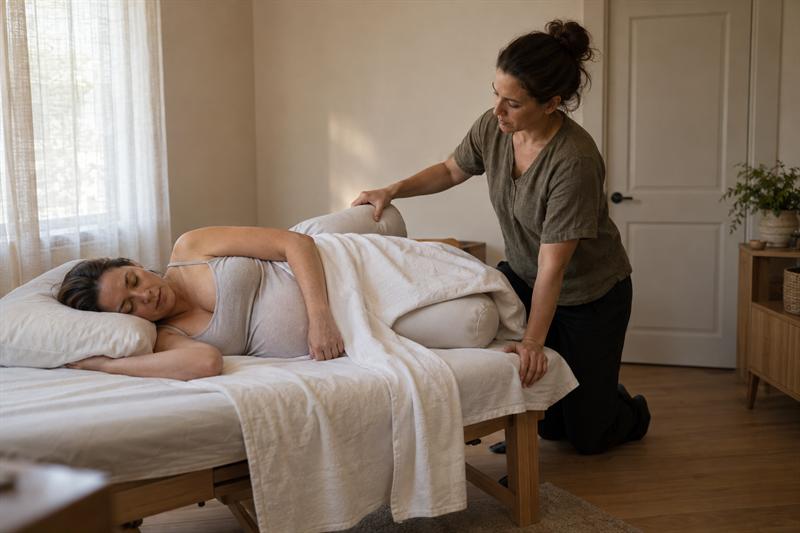
If you are searching for what to expect from a prenatal massage, the practical details usually matter most. Many people want to know how they will be positioned, what areas may be worked on, how privacy is handled, and whether the session will feel comfortable enough to relax.
At MV Massage Therapy LLC, that is often the point where someone decides whether to book. A prenatal massage is not just a regular massage under a different name. It is a session that is paced, positioned, and adjusted around how your body feels that day.
Why many people want to know what happens before they book
Prenatal massage sounds simple until it is time to picture the appointment. That is where hesitation often starts. Many people feel ready for relief, then delay because it is hard to picture how the session will work once lying flat, turning over, or staying in one position feels more difficult.
The questions are usually very specific. Will you be on your stomach? Will the pressure feel too strong? Will you stay covered? If you want more detail before booking, the concerns covered in prenatal massage questions and comfort preferences to discuss before booking can help, but the session itself should still feel easy to understand before you arrive.
Before the session: intake, health questions, and comfort planning
A prenatal massage appointment usually starts with a brief conversation before any hands-on work begins. This is where the session gets shaped around your current comfort instead of following a fixed routine.
- How far along you are in pregnancy
- Which areas feel most tense or fatigued
- Whether you have had massage before
- What level of pressure feels comfortable right now
- Whether any positions already feel difficult
- Whether there are any recent changes that affect comfort planning
Comfort can change quickly during pregnancy. What felt fine a week or two ago may not feel fine now. That is where problems can start when a session is treated like a standard massage instead of one that responds to current support needs. If you are comparing options, the Prenatal Massage service page gives a useful overview of how this service is offered at MV Massage Therapy LLC.
When provider clearance may be relevant
There are times when a massage therapist may ask a client to check with their prenatal provider before moving forward, especially when symptoms, timing, or recent changes create uncertainty about what is appropriate that day. The goal is not to create worry. It is to avoid forcing a session when the better next step is getting more clarity first.
How you are positioned during a prenatal massage
This is usually the biggest concern, and it helps to answer it clearly. A prenatal massage is typically set up to support the body rather than asking you to fit into a standard massage position. That often means side-lying support with pillows or bolsters to help reduce strain through the hips, low back, shoulders, and abdomen.
A common concern is that the setup will feel awkward or unstable. That is not how the session should feel. Good prenatal positioning should make it easier to settle in, breathe normally, and stay comfortable long enough for the massage to feel helpful.
- Side-lying support may help reduce pressure and make repositioning easier
- Pillows or bolsters can support the head, knees, hips, and upper body
- The setup can be adjusted if one side starts to feel tense or tired
- You should not feel locked into one position for the entire session
If this is also your first massage appointment overall, what to expect at your first massage appointment can help you understand the general flow beyond the prenatal setup itself.
Why positioning may change as pregnancy progresses
Comfort often becomes more specific as pregnancy progresses. Earlier on, one setup may feel easy. Later, the same position may create tension faster through the hips, ribs, shoulders, or low back. This becomes more noticeable when the session is not adjusted early and the body spends too long trying to tolerate a position that no longer works well.
That is why prenatal massage should stay flexible. A therapist may make small adjustments during the session instead of trying to keep everything exactly the same from beginning to end.
What the massage itself usually focuses on
Prenatal massage usually focuses on the areas that carry the most physical load as pregnancy changes posture and movement. The exact focus varies, but the session often centers on the places where tension builds fastest and starts affecting daily comfort.
- Neck and shoulders
- Low back
- Hips and glutes
- Legs and calves
- Feet
Discomfort is not always isolated to one spot. A tight low back may be connected to how the hips are holding tension, and shoulder strain may build because the body is already working harder to stay comfortable in everyday positions. That is why a prenatal session often benefits from a broader approach instead of focusing too aggressively on one sore area.
Prenatal massage is also different from assuming deeper pressure is better. The right pressure depends on how your body feels that day, and that can change more than people expect.
How pressure is usually adjusted
Pressure is typically adjusted based on comfort, sensitivity, and how easily the body relaxes once you are positioned. If the pressure feels too strong, the muscles may tighten against it instead of letting go. That can lead to a session that feels harder to tolerate and less useful overall.
A common mistake is expecting prenatal massage to feel like deep tissue work in a new position. That may not work well because the goal is not to push through discomfort. The goal is to work effectively within what the body can comfortably receive. If you want a clearer sense of how pressure choices affect the feel of a session, how to choose massage pressure: light, medium, or firm explains what changes from one pressure level to another.
If any of these sound familiar, the session usually needs a more deliberate comfort plan before it starts:
- You already know one side gets uncomfortable quickly
- You are worried standard pressure will feel too intense
- You need extra support under the hips, knees, or shoulders to relax
- You have delayed booking because you cannot picture a comfortable setup
When those signs are already clear, it helps to plan the session around comfort from the beginning instead of trying to fix problems after they start.
What comfort, privacy, and draping should feel like
Privacy should feel straightforward, not uncertain. Draping is generally used to help keep you covered while still allowing the therapist to work on the areas being addressed. Only the area being worked on is typically uncovered at that time.
Many first-time clients assume they just have to accept whatever setup is given. That is often where uncertainty builds. You do not need to guess how modesty, changing, or comfort boundaries work. If this part of the experience feels unclear, massage privacy, draping, and comfort boundaries explains what you can ask for and what clear communication should sound like.
- You should stay appropriately covered during the session
- You can ask for position changes if something starts to feel strained
- You can ask for pressure changes at any point
- You do not need to wait until discomfort becomes distracting
What to do if something feels uncomfortable during the session
Say it as soon as you notice it. If a hip starts tightening, a shoulder feels unsupported, or the pressure stops feeling helpful, waiting usually makes the rest of the session less effective.
In a prenatal massage, adjustments are part of the session. Needing a different pillow placement, a bathroom break, a side change, or lighter pressure is not a disruption. It is part of keeping the session comfortable and useful.
What happens after a prenatal massage session
After a prenatal massage, many people feel more settled, less tense, or more physically comfortable in the areas that were carrying the most strain. Sometimes the main change is not dramatic relaxation. It is the feeling that the body is not working as hard to stay comfortable.
Simple aftercare matters. Taking it easy, drinking water, and noticing how your body responds over the rest of the day usually gives you the clearest sense of what felt supportive and what should be adjusted next time.
When prenatal massage may need extra caution or a delayed appointment
There are situations where moving forward with the session right away may not be the best fit.
- There has been a recent change that affects comfort or positioning
- Symptoms make it unclear what kind of session setup is appropriate
- The body is not tolerating usual positions well enough to settle in
- Timing or current circumstances suggest the session needs more clarity first
Sometimes it makes more sense to pause and clarify the plan than to keep the appointment exactly as expected. Clear planning helps prevent a session from feeling limited, interrupted, or harder to enjoy.
Key takeaways before booking a prenatal massage
- A prenatal massage session should be built around comfort, support, and flexibility
- The intake conversation matters because the session should respond to how your body feels that day
- Positioning is one of the most important parts of the experience, especially side-lying support
- Pressure should help the body relax, not force it to tolerate too much
- Privacy, draping, and communication should feel clear from the start
- If something feels uncomfortable during the session, changing it early usually leads to a better experience
Company Approach
At MV Massage Therapy LLC, prenatal massage is approached as a session that needs to adapt in real time, not as a fixed routine that every client is expected to fit into. That matters because pregnancy can change comfort quickly, and the session usually works best when positioning, pressure, and pacing are adjusted before small discomfort turns into a distraction.
Clients deciding whether to book are often not looking for a generic description of massage. They want to know whether the appointment will feel physically manageable once they are on the table. That is why MV Massage Therapy LLC emphasizes practical planning, clear communication, and a setup that supports the body rather than asking the body to push through the session.
Conclusion
The real question is not only whether prenatal massage sounds helpful. It is whether the session will feel supportive, private, and comfortable enough to be worth booking. When that part is unclear, people may delay care they were ready to try, or they may end up in sessions that feel harder to settle into than expected.
If you want a prenatal massage session that is planned around positioning, pressure, and comfort from the start, MV Massage Therapy LLC is a practical place to begin. The concerns discussed here are usually easier to resolve when the session is built around how your body feels now, not around a standard routine that overlooks the details that matter most.
FAQ
What should you wear to a prenatal massage?
Wear whatever helps you feel comfortable arriving and getting settled. Professional draping is used during the session, so the setup should protect privacy while still allowing the therapist to work on the areas being addressed. What matters more than clothing is whether the session allows easy repositioning and a comfortable start.
Do you lie on your stomach during a prenatal massage?
Most prenatal massage sessions are set up around supportive positioning rather than asking you to lie on your stomach like a standard massage. Side-lying support is commonly used because it makes it easier to stay comfortable and adjust when needed. The important distinction is that prenatal massage is built around what your body can settle into, not around forcing a familiar table position.
How long is a prenatal massage session?
The exact length depends on the appointment booked, but prenatal sessions need enough time for position changes, support setup, and communication along the way. That means the experience is not just about hands-on time. A session that feels rushed leaves less room to adjust once comfort needs shift.
Can you ask for lighter pressure during a prenatal massage?
Yes. Pressure should be adjusted when your body responds better to a lighter or more moderate approach. Pressure is not only about preference. It also affects whether the muscles soften or tighten against the work. If the pressure creates guarding instead of release, lighter pressure is usually the better choice.
Is prenatal massage different from a regular Swedish massage?
Yes. The difference is not only pressure. Prenatal massage also changes positioning, pacing, support, and how the session is adjusted as comfort shifts. It is not just a gentler version of another service. It is a session structured around the physical realities of pregnancy.
What if you need to change position during the massage?
That is normal, and it should be easy to do. Pregnancy changes how long one position feels comfortable, especially through the hips, low back, and shoulders. If you need to shift, add support, or change sides, that usually means the session is responding appropriately to what your body needs rather than holding one setup for too long.