At MV Massage Therapy LLC, prenatal massage starts with a conversation. Pregnancy can change how a session is planned, so the best appointments often begin with clear questions before the booking is confirmed.
Why asking prenatal-specific questions before booking matters
Prenatal massage usually needs more planning than a standard massage appointment. Comfort can depend on positioning, pressure, sensitive areas, and how your body has been feeling recently.
Many clients know they want relief, but they are not always sure what details matter to mention ahead of time. That is where problems can start. If the booking conversation stays too general, the therapist has less information to shape the session around what feels supportive right now.
That is why general booking advice is only part of the picture. If you want broader guidance, these questions to ask before booking a massage therapist can help, but prenatal sessions usually call for a more specific conversation.
- Positioning may matter more during pregnancy
- Pressure tolerance can change
- Comfort needs may shift from week to week
- Small details can affect the session more than most people expect
Questions to ask before booking a prenatal massage
The most useful prenatal massage questions are the ones that change how the appointment is planned. Instead of asking only what the service includes, ask what the therapist needs to know, how the session is adapted, and what options are available if something does not feel comfortable.
If you are comparing providers, reviewing the Prenatal Massage service at MV Massage Therapy LLC alongside these questions may help you book with clearer expectations.
Do you offer prenatal massage regularly?
This question helps you tell the difference between a provider who occasionally books prenatal sessions and one who includes them as a regular part of practice. That difference often shows up in how clearly they explain the process.
- Do they ask follow-up questions right away?
- Do they explain how comfort is handled during the session?
- Do they sound prepared to adapt the appointment, not just perform it?
This is something clients sometimes miss. A service name on a menu does not always tell you how thoughtfully that service is delivered.
How do you position clients for comfort during pregnancy?
This is one of the most important questions to ask before booking. Positioning can affect how long you stay comfortable, how easily you relax, and how well the therapist can adapt the session to your needs.
Many people think about massage pressure first, but positioning is often the bigger issue. If the setup feels unsupported, the session can be harder to settle into no matter how skilled the hands-on work is.
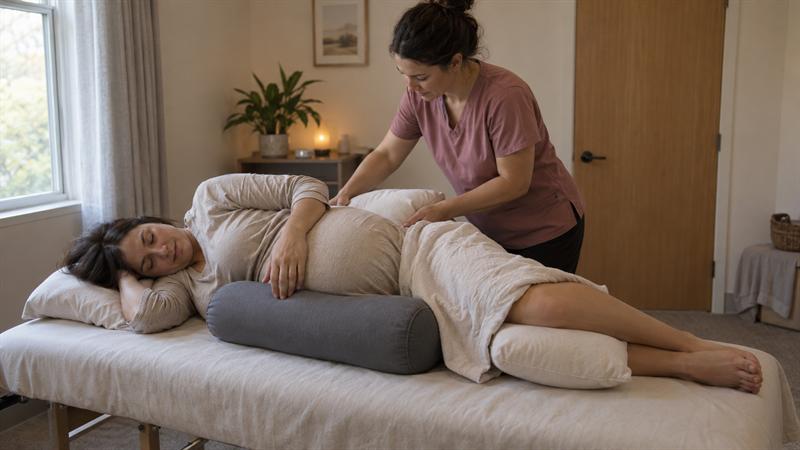
- Ask whether side-lying support is used
- Ask whether pillows or bolsters are part of the setup
- Ask how table comfort is handled if you need extra support
What should be shared about pregnancy stage or provider instructions?
Your pregnancy stage and any instructions you have already been given can help shape the session before it starts. That information gives the therapist context for comfort planning, timing, and whether extra questions are needed before the appointment is confirmed.
This may get overlooked when someone books quickly online and assumes the details can wait until arrival. Earlier communication can make the session smoother because the therapist can plan around your current needs from the start.
How is pressure adjusted during a prenatal session?
Pressure should be discussed before the appointment and adjusted during the session as needed. Prenatal massage is not a fixed routine, and the right pressure for one area is not always the right pressure for another.
Many first-time prenatal massage clients know they do not want overly firm work, but they are not sure how to describe what does feel comfortable. That is why this question matters. It opens the door to a better conversation before the session begins.
What should be discussed if there is swelling, tenderness, or discomfort?
Recent changes matter. If soreness, sleep discomfort, swelling, or mobility has changed lately, bring it up before the session. What felt manageable a few weeks ago may not feel the same now.
- Changes in hip or low back discomfort
- New tenderness in certain areas
- Sleep-related soreness or stiffness
This is where a generic intake can fall short. Prenatal comfort is not static, so the session should not be planned as if it is.
How long should the session be?
The best session length is the one you can stay comfortable through, not simply the longest one available. A longer session is not automatically better if positioning becomes tiring or if your comfort changes halfway through.
If you are unsure what length makes sense for a first prenatal appointment, this guide to choosing the right massage session length can help you think through what is most manageable.
If any of these sound familiar, it may be time to slow down and book more intentionally.
- You are interested in prenatal massage but unsure what to mention before the session
- You have had massage before, but not during pregnancy
- Your discomfort has changed recently and you do not want a one-size-fits-all appointment
- You are comparing providers and want to know who is actually planning around comfort
When those signs are present, a more detailed pre-booking conversation is often helpful.
Comfort preferences worth discussing ahead of time
Questions help you evaluate the provider. Preferences help shape the appointment. Sharing both can lead to a better prenatal massage experience.
Some people wait until the massage has started to mention what feels uncomfortable. The session can still be adjusted, but the easiest changes often happen before you get on the table.
Preferred pressure and sensitive areas
Tell the therapist what pressure generally feels good and which areas feel too sensitive right now. Tense areas and workable areas are not always the same thing.
- You might want gentle work on a sore area instead of deeper pressure
- You might want one area avoided even if it usually gets attention in a standard massage
- You might prefer pressure to be adjusted as the session moves from one region to another
That distinction matters because it changes the plan. It is also why choosing massage pressure is not just a comfort preference. During pregnancy, it can become part of how the therapist structures the session.
Side-lying support, pillows, and getting comfortable on the table
Support setup can affect whether the body relaxes or keeps bracing. Pillows, bolsters, and side-lying support are not minor details. They often make the difference between a session that feels settled and one that feels awkward.
- Let the therapist know if certain resting positions have been uncomfortable lately
- Mention if getting on or off the table has felt harder recently
- Bring up whether you usually need extra support to stay comfortable on one side
When the setup is right, everything else is usually easier to adjust.
Temperature, draping, and scent sensitivity
These details sound small until they affect the session. If the room feels too warm, the draping feels restrictive, or scents bother you right now, the session can become distracting instead of relaxing.
Some clients assume those preferences are too minor to mention. They are not. Temperature, blanket use, and scent sensitivity can directly affect how comfortable the session feels from start to finish.
If scent is part of the conversation, keep it simple and optional. For readers who want to understand how scent is typically incorporated, this aromatherapy massage overview provides useful context.
Areas you want focused on and areas you want avoided
Be specific about where your attention is needed and where it is not. Common focus areas during pregnancy often include the low back, hips, shoulders, and legs, but that does not mean every session should follow the same routine.
This is where personalization becomes practical. Clear direction about focus areas can make the appointment more useful and may help prevent discomfort from spending too much time in the wrong place.
Information to share with the therapist before the appointment
The booking conversation works best when the therapist has the information needed to prepare. You do not need a perfect summary. You only need to share the details that change comfort, setup, or pacing.
This is where strong prenatal planning stands out from generic massage booking. The goal is not to make the intake complicated. The goal is to make the session easier to adapt before it begins.
Pregnancy stage and any provider guidance
Share your current stage of pregnancy and any guidance you have already received. That helps the therapist understand how to plan the appointment and whether any follow-up questions are needed before confirming it.
This can lead to a smoother session because the setup is based on your current situation, not assumptions.
Recent changes in pain, swelling, sleep, or mobility
Recent changes matter more than old patterns. If your sleep position has become harder to tolerate, if soreness has shifted, or if moving around feels different than it did recently, mention that before the appointment.
Some people describe their general pregnancy experience but leave out what changed this week. In a prenatal session, the recent change is often the detail that matters most.
What has and has not felt comfortable lately
- Resting on one side for too long
- Lying in one position without extra support
- Strong scents or too much warmth
- Pressure on certain areas
- Needing extra support under the knees or belly
You do not need special terminology to describe this. Plain language is enough. If something has been uncomfortable lately, it belongs in the conversation.
When to pause and check with your prenatal care provider first
Some situations need more clarity before the appointment moves forward. That does not automatically mean massage is off the table. It means the booking conversation should not skip over important context.
If there are restrictions, complications, or instructions already in play, those details need to be part of the planning process from the beginning.
- You have been given specific activity or care restrictions
- You are unsure whether recent symptoms change what is appropriate for you
- You have been told to follow added precautions during pregnancy
If those factors are present, the next step is usually to get clearer guidance before the session is planned like a routine appointment.
How to prepare for the appointment
Preparation should make the appointment easier, not more complicated. The goal is to arrive ready to communicate clearly and settle into the session without last-minute stress.
Some people focus on what to bring and overlook what to think through beforehand. In prenatal massage, knowing what has felt uncomfortable lately is usually more important than bringing anything special.
What to wear and bring
Wear comfortable clothing and bring anything you want to remember to mention during intake. Most of the preparation is simple.
If you want a broader prep list, this first massage checklist covers the basics without overcomplicating them.
Arriving with enough time to communicate preferences
Rushing into the room can lead to rushed communication. That is where key details get missed, especially when you are trying to remember what has been bothering you lately.
Give yourself enough time to explain pressure preferences, focus areas, and any support needs before the session starts. That can lead to a more comfortable appointment from the first few minutes.
What to know if booking an in-home appointment
If you are booking an in-home session, comfort planning still matters just as much. Space, setup, and timing should support the same kind of clear prenatal communication you would want in any other setting.
For a closer look at the practical side, this in-home massage booking checklist helps you confirm the details that make the appointment run more smoothly.
Signs a prenatal massage provider may be a good fit
The best fit is usually clear in the conversation. A provider who understands prenatal massage does not just confirm availability. They ask useful questions, explain how comfort is handled, and adapt the session to what is happening now.
The more clearly a provider explains the process, the easier it is to trust how the session will be handled.
They ask clear questions
- They ask about current comfort, not just general goals
- They ask about pregnancy stage and recent changes
- They ask what support or pressure tends to feel best right now
That usually means they are planning the session, not just filling the time.
They explain setup and comfort options
A good fit includes a clear explanation of how positioning and support are handled. If the provider can explain side-lying support, comfort adjustments, and what happens if something does not feel right, that often reflects a more thoughtful prenatal process.
This can reduce uncertainty before the session even begins, which is often what a client needs most at the booking stage.
They adapt the session instead of using a one-size-fits-all routine
Pregnancy changes quickly, and comfort needs can change with it. A provider who adapts the session based on current needs is often a better fit than one who treats prenatal massage like a fixed sequence.
This is where experience becomes visible. Good prenatal massage planning responds to what is happening now, not what normally happens in a standard appointment.
Key Takeaways
- The most important prenatal massage questions are the ones that affect comfort, setup, and communication before the session starts.
- Positioning is often one of the first issues to get overlooked, and it can affect the whole appointment.
- Recent changes in soreness, swelling, sleep, or mobility should be shared before booking, not saved for arrival.
- Pressure, support, temperature, draping, and scent sensitivity can shape comfort more than many clients expect.
- A strong prenatal massage provider explains how the session is adapted instead of treating it like a standard massage with a different name.
Conclusion
The real issue is not whether prenatal massage sounds helpful. It is whether the session is planned around the comfort details that actually shape how it feels once it begins. When those details are skipped, the appointment can become more generic, less comfortable, and harder to adjust after the fact.
MV Massage Therapy LLC is a practical next step for clients who want a prenatal massage experience built around clear communication, thoughtful comfort planning, and session adjustments that reflect what is happening right now. If you are ready to move forward, review the Prenatal Massage service or go directly to Book Appointment to schedule.
Company Approach
At MV Massage Therapy LLC, the approach to prenatal massage centers on how the session is set up before hands-on work begins. That includes understanding current comfort, identifying what positions feel sustainable, and adjusting pressure and focus areas instead of forcing a routine.
Small planning details can make a meaningful difference in comfort. When support, pressure, and communication are handled clearly from the start, the session often feels more settled and more useful.
FAQ
Can you ask for side-lying support during a prenatal massage?
Yes. Side-lying support is one of the most practical comfort details to discuss before the session starts. It affects how relaxed the body feels and how long you can stay comfortable without needing constant repositioning.
The important distinction is that support is not just about choosing one side over another. It also includes pillows or bolsters that help the position feel stable. If the setup feels unsupported, the body may keep adjusting instead of relaxing, and that can change the whole session.
What should you tell a prenatal massage therapist before your first appointment?
Share the details that change how the session should be planned: your pregnancy stage, any provider guidance you have already received, recent soreness or swelling, pressure preferences, scent sensitivity, and anything that has felt uncomfortable lately.
The most useful information is current information. For example, saying your hips have been more uncomfortable this week is more useful than only saying you want to relax. That detail helps shape setup, pacing, and focus areas before the session even begins.
How do you know if a massage therapist is a good fit for prenatal massage?
A strong sign is that the therapist asks clear questions instead of treating prenatal massage like a standard appointment with a different label. They should be able to explain positioning, support, pressure adjustments, and how preferences can be updated during the session.
The real difference is not whether prenatal massage appears on a service menu. It is whether the provider explains how the session is adapted in practice. That often shows real familiarity with prenatal comfort needs.
Should you mention your pregnancy stage before booking a massage?
Yes, because it changes how the appointment is planned. Pregnancy stage gives the therapist context for positioning tolerance, recent comfort changes, and whether follow-up questions are needed before the appointment is confirmed.
Some clients wait until arrival to mention those details. Earlier communication can lead to a smoother appointment because the setup is based on current needs from the beginning.
What if pressure or positioning becomes uncomfortable during the session?
That usually means the session needs an adjustment, not that the appointment is going wrong. Prenatal massage should not depend on pushing through discomfort.
Sometimes the issue is pressure. Other times the problem is support, pacing, or staying in one position too long. A sore hip, for example, may need a lighter approach or a change in positioning rather than more work in the same spot. Comfort feedback is part of the session, not a disruption to it.
What should you bring or prepare for a prenatal massage appointment?
Preparation is usually simple. Wear comfortable clothing, bring any notes you want to remember during intake, and give yourself enough time so you are not rushing into the session.
What matters most is thinking through what has been uncomfortable lately. That usually makes the intake conversation more useful than bringing extra items. The strongest preparation is knowing what details will change the setup, pressure, or focus of the appointment.