Quick Answer: Massage privacy and draping are there to support your comfort, modesty, and sense of control during the session. You do not have to undress beyond your comfort level, and you can ask for more coverage, skip certain areas, or adjust how the session is handled at any point.
At MV Massage Therapy LLC, this is a common first-visit concern. Many people feel fine about booking a massage until they start thinking about clothing, coverage, and what happens once the therapist leaves the room.
If you are trying to understand what to expect with draping during massage, whether you can keep clothes on during massage, or what comfort boundaries are reasonable to request, the key point is simple: professional massage should make those choices clear before the session starts, not leave you guessing once you are already on the table.
Why privacy and draping matter to first-time massage clients
Privacy concerns can stop an appointment before it starts. For many people, the hesitation is not massage itself. It is not knowing how much to undress, what “draping” actually means, or whether it is okay to speak up about coverage.
A common concern is assuming there is one correct way to handle everything. People think they are supposed to know what is normal before they arrive. That is where stress builds. When expectations are unclear, people may stay tense, hold back questions, or put off booking altogether.
Comfort also goes beyond pressure. It includes clothing, coverage, body position, room temperature, and whether you feel free to say no. If you are new to massage, what to expect at your first massage appointment can help with the broader process, but privacy and draping deserve their own explanation because they are often the real hesitation point.
How draping works during a professional massage
Draping is the method used to keep your body covered during a massage while allowing the therapist to work on one area at a time. In a professional session, you are typically given privacy to change, get on the table, and settle under the sheet or blanket before the therapist returns.
The basic standard is simple: your body stays covered except for the area being worked on. That coverage supports modesty, warmth, and clear physical boundaries throughout the session. It also makes the session feel structured instead of uncertain.
Many clients find that once the process is explained step by step, the anxiety eases quickly. The uncertainty often feels bigger than the actual process. When the setup is handled clearly, much of the stress around exposure tends to fade before the massage even begins.
What “only the area being worked on is uncovered” usually means
Exposure should be limited and specific. If the therapist is working on your back, the rest of your body stays covered. If the therapist moves to one leg, that leg is uncovered as needed while the other leg and the rest of the body remain draped.
The same approach applies to shoulders, arms, and feet. Good draping is controlled and intentional. It should not involve broad exposure or unnecessary shifting of the sheet as the therapist moves from one area to another.
This point matters because short FAQ answers often leave too much open to interpretation. In practice, coverage should follow the treatment area, not the other way around.
When you change clothes and how privacy is handled
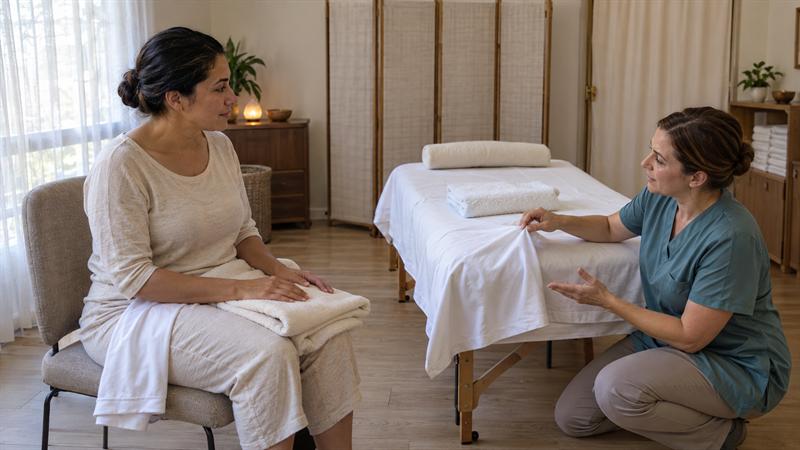
Before the massage begins, the therapist typically explains what to do, then steps out so you can change in private. You get on the table and place the sheet or blanket over yourself before the therapist returns.
In a professional setting, the therapist should not re-enter while you are changing. There is often a knock or verbal check before coming back in. That small step matters because it removes guesswork and helps the session start in a calm, respectful way.
If you want help with the practical side of getting ready, what to bring to your first massage can help you prepare without overthinking it.
Do you have to undress fully for a massage?
No. Most clients undress to their comfort level, and that does not mean there is only one right choice. Some fully undress under the drape. Some keep underwear on. Some leave on certain clothing depending on the session and the areas being treated.
The most practical option depends on the kind of massage and the session goal. A full-body session often works best when the therapist has clear access to the areas being treated, but that does not remove your right to set limits. If you are uncomfortable, the session should adjust around that instead of expecting you to tolerate it.
Some clients decide silently before the session starts, then feel stuck with that choice once the massage begins. That usually creates more stress than necessary. Clear communication tends to solve most of this before it becomes a problem.
What “undress to your comfort level” actually means
It means you do not have to follow someone else’s standard. If you are comfortable undressing fully under the sheet, that is one option. If you prefer to keep underwear on or stay more covered, that is also a normal choice.
The main tradeoff is access. More clothing usually means less direct access to some areas, especially the hips, glutes, or upper legs. That does not make your preference wrong. It just means the therapist may need to adjust the session so the work still fits within your boundaries.
Can you keep underwear on?
Yes. Many clients do, and it is a common choice. In most sessions, keeping underwear on does not create a problem by itself.
What changes is how certain areas can be approached. If the goal is focused work around the glutes, hips, or upper thigh, underwear may limit direct access. In a relaxation session, that difference is often minor. In a more targeted deep tissue session, it may matter more because access and comfort need to work together.
Can you stay more covered for certain services?
Yes. Some services are easier to adapt than others. A Swedish relaxation massage or signature massage is usually easier to modify for someone who wants a more modest setup, while a targeted deep tissue session may need more direct access to specific muscle groups.
Prenatal massage brings its own comfort considerations because body positioning matters as much as coverage. Lymphatic drainage and post-op sessions can also raise more specific questions around garments, tenderness, and how exposed an area needs to be for the work to be practical.
- You are delaying booking because you do not know how much you are expected to undress.
- You want massage, but you already know you will need extra coverage or want certain areas skipped.
- You are choosing between services and your comfort level changes depending on the body area being treated.
- You feel more stressed about privacy than about the massage itself.
If those signs sound familiar, the issue usually needs to be addressed before the session starts. Pushing through the uncertainty tends to make the first appointment more stressful than it needs to be. Clear expectations usually lead to a better experience.
What comfort boundaries can you ask for?
You can ask for more than many first-time clients expect. You can ask to avoid certain areas, keep more of your body covered, adjust pressure, change position, or pause to clarify what is happening during the session.
This is where sessions often go off track. Clients may assume they should stay quiet once the massage starts. That can leave them feeling tense, distracted, or less comfortable than they expected. A professional massage should make room for communication before and during the appointment.
If you want help with that conversation, how to communicate your massage preferences before and during your session offers a more detailed breakdown.
Asking to avoid certain areas
You can ask to skip any area that feels too sensitive, too exposed, or simply not relevant to your goal. That might include the abdomen, glutes, chest area, feet, scalp, or face. You do not need a dramatic reason for that preference to be valid.
Many clients worry that declining one area will make the entire massage ineffective. Usually, it just changes the session plan. The session can still focus on the areas that matter most without forcing work where you do not want it.
Asking for more coverage or different draping
You can ask for more conservative draping, extra blanket coverage, or slower transitions when the sheet is adjusted. Those details matter because once you feel exposed, it becomes much harder to relax into the session.
It usually works better to mention modesty preferences early, because that shapes the setup before the session gets moving. Early clarity tends to make the rest of the appointment feel easier.
Asking to adjust pressure, music, temperature, or positioning
Comfort is not only about privacy. Pressure that feels too intense, a room that feels too cold, or a body position that feels awkward can keep you tense even if the draping itself feels fine.
That can change the whole session. If the issue is pressure, the work may feel unpleasant instead of helpful. If the issue is temperature or positioning, your body may stay guarded. If you are unsure what level of intensity fits your goal, how to choose massage pressure: light, medium, or firm can help narrow it down.
How draping and comfort may vary by massage type
Different massage services create different practical expectations. That does not change your right to boundaries, but it does affect how easily certain preferences fit into the session.
This is where generic advice falls short. “Undress to your comfort level” is not enough by itself because comfort choices interact with the type of work being done. The more useful question is not just what you prefer. It is how that preference affects the service you actually want.
Swedish / relaxation or signature massage
These sessions are usually the easiest place to start if you want a slower pace and a more flexible comfort setup. Coverage tends to be straightforward, and clients can still request modifications around clothing, draping, and body areas they want skipped.
If your goal is general relaxation rather than targeted muscle work, a more modest setup often fits more easily without changing the session much. That is one reason these services are often a good fit for first-time clients.
Deep tissue massage
Deep tissue work usually needs more direct access to specific muscles and tension patterns. If the goal involves shoulders, hips, glutes, or upper legs, coverage choices affect how the work can be done.
That does not mean you have to give up your boundaries. It means the session needs to be planned honestly. If you want focused relief but also want to avoid certain areas or stay more covered, those limits shape what kind of work is practical and how targeted the session can be.
Prenatal massage
Prenatal massage adds another layer of comfort because support and positioning matter just as much as draping. Many clients are more focused on side-lying support, pressure adjustments, and feeling stable on the table than on coverage alone.
If that is your situation, comfort preferences should be part of the planning from the start. Prenatal massage questions and comfort preferences to discuss before booking covers the details that tend to matter most.
Lymphatic drainage and post-op considerations
These sessions bring up more specific privacy questions because tenderness, swelling, compression garments, and area-focused treatment all affect how the session is set up. A standard full-body expectation may not apply in the same way.
At MV Massage Therapy LLC, clear expectations matter here. When a client is dealing with post-op sensitivity or targeted lymphatic work, confusion often starts when the session is explained too generally. Coverage, garment changes, and treated areas should be clear before the session begins so the client is not trying to figure it out in the moment.
Signs of a professional, respectful massage experience
A professional massage experience should feel clear, not confusing. You should know what to do before the session starts, have privacy while changing, and stay properly draped throughout the appointment.
- The therapist explains the setup before touch begins.
- You are given privacy to change and get under the sheet.
- Draping stays secure and only shifts as needed for the treatment area.
- Consent is clear before work near more sensitive areas or before changing positions.
- Your feedback leads to real adjustments instead of being brushed aside.
- You should not feel pushed to accept pressure, exposure, or bodywork you do not want.
If those standards are missing, the problem is not that you are asking for too much. The session may not be managed in a professional way.
Questions to ask before your appointment if you feel unsure
If privacy is already one of your main concerns, asking a few direct questions ahead of time can prevent much of the stress people bring into a first session.
- Can I keep my underwear on during the session?
- How is draping handled during the massage?
- Can I request extra coverage?
- Can I ask to avoid certain areas?
- Does this service involve any special positioning or clothing considerations?
- Should I mention pregnancy, post-op needs, or modesty preferences when booking?
This is also where service choice matters. If you are still narrowing down the right fit, questions to ask before booking a massage therapist can help you compare options more clearly.
Key Takeaways
- Massage privacy and draping are meant to support comfort, modesty, and clear boundaries.
- You do not have to undress beyond your comfort level.
- Keeping underwear on, asking for more coverage, or skipping certain areas are all normal requests.
- Different services change how much direct access is useful, especially with deep tissue, prenatal massage, and lymphatic drainage.
- Many privacy problems come from unclear expectations, not from the massage itself.
- A professional session should make room for questions and adjustments before and during treatment.
Conclusion
The real problem is not draping itself. The real problem is walking into a massage session without knowing what will be covered, what you can decline, or how much control you actually have. When that is not addressed clearly, people may stay tense, delay treatment, or end up in sessions that feel more stressful than helpful.
At MV Massage Therapy LLC, privacy, draping, and comfort boundaries are treated as part of the massage experience, not as an afterthought. That matters because first-time clients, prenatal clients, and clients seeking lymphatic drainage or more targeted work usually need more than a short reassurance. They need clear expectations, respectful communication, and a session setup that supports what they are actually coming in for.
If privacy concerns have been the thing holding you back, the practical next step is simple: book an appointment with MV Massage Therapy LLC. Clear expectations at the start usually lead to a better first experience, a more comfortable session, and less uncertainty going in.
Company Approach
MV Massage Therapy LLC treats client comfort as part of good session planning. That means privacy, draping, service choice, positioning, and communication need to work together instead of being handled as separate issues.
This matters even more when the session is not one-size-fits-all. A Swedish relaxation massage, prenatal massage, deep tissue session, or lymphatic drainage appointment each brings different practical needs. The best approach is one that keeps the session goal clear while making the client comfortable enough to benefit from the work.
FAQ
Do you have to take all your clothes off for a massage?
No. Clients usually undress to their comfort level, not to a fixed rule. That can mean fully undressing under the drape, keeping underwear on, or leaving on certain clothing if the session allows it. The main distinction is that clothing limits access to some areas, so a full-body session is generally easier with less fabric in the way, while a more focused session may allow more coverage without changing the work much.
Can you keep your underwear on during a massage?
Yes. Many clients do. Keeping underwear on is a common choice and usually fits easily into a professional draping setup. The practical difference is that it limits direct access to areas like the hips, glutes, or upper thigh, which tends to matter more in a deep tissue or targeted session than in a general relaxation massage.
What parts of your body are covered during a massage?
During a professionally draped massage, the body is generally kept covered except for the specific area being worked on at that moment. For example, if the therapist is working on the back, the rest of the body stays draped. If the therapist moves to a leg or shoulder, the draping is adjusted so coverage remains in place elsewhere. Good draping is controlled, deliberate, and tied to the treatment area.
Can you ask a massage therapist to avoid certain areas?
Yes. Clients can set boundaries around areas they do not want worked on, such as the abdomen, glutes, feet, scalp, or any other area that feels too sensitive or too personal. A preference does not need to be tied to an injury or a major issue to be valid. Some requests are about soreness, some are about modesty, and some are simply about comfort.
Is it okay to ask for more coverage during a massage?
Yes. Asking for more coverage is a normal comfort request, especially for first-time clients or anyone who prefers a more modest setup. More coverage might mean an extra blanket, more conservative draping, or slower, clearer transitions when the sheet is adjusted. What matters most is whether the extra coverage still allows the therapist to access the areas being treated in a practical way.
What should you do if you feel uncomfortable during a massage?
Say so as soon as something feels off. Discomfort can come from pressure that is too strong, draping that feels too exposed, a body position that feels awkward, or work in an area you would rather skip. The solution depends on the cause. If the issue is pressure, the work needs to be adjusted. If the issue is coverage or boundaries, the draping or session plan needs to change. A professional session should respond to feedback in real time instead of expecting the client to endure it.