
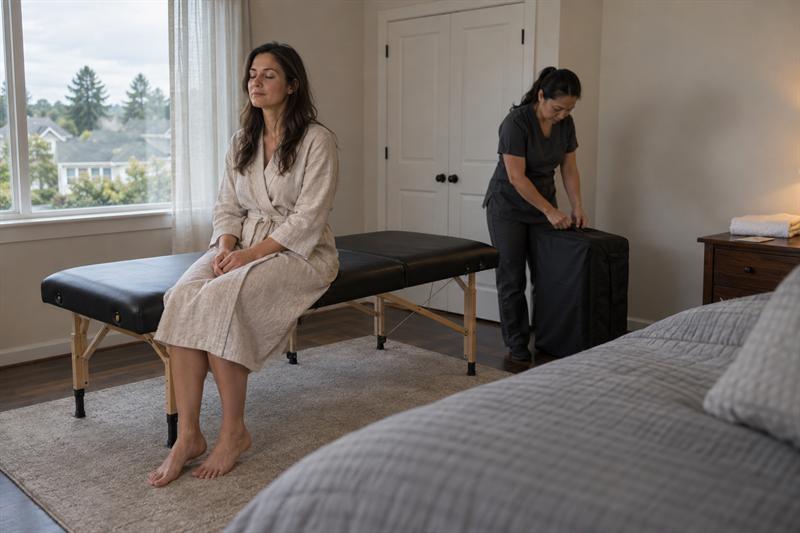
At MV Massage Therapy LLC, a common pattern is simple: people know massage would be helpful, but the week never seems open enough to make it happen. The problem usually is not the session itself. It is everything around it, including commute time, parking, household timing, and the pressure to move straight into the next task.
If the goal is to make massage realistic instead of something that keeps getting postponed, in-home appointments can remove one of the biggest obstacles first. They can cut down on the extra steps that make a session feel like a much larger time commitment.
Why In-Home Massage Appeals to People With Packed Schedules
Busy schedules tend to derail self-care plans in the same ways. The session sounds helpful, but getting there, getting back, and shifting the whole day around it can make the appointment feel harder than it should.
That is why in-home and mobile massage often works well for women balancing work, family, and home life. It removes the drive, the waiting, and the rushed trip back home. For many people, that makes the appointment feel more manageable from the start.
That tends to matter most for local professionals and caregivers in Vienna and Fairfax. When the schedule is already tight, even a useful appointment gets pushed back if it adds too many moving parts. Reducing friction is often what makes follow-through possible.
Is In-Home Massage Really Easier to Fit Into a Busy Week?
For many people, yes. The real advantage depends on what makes the week hard in the first place. If travel, timing, and transitions are the main problem, in-home massage often addresses one of the biggest barriers right away.
It is not automatically the best fit for every household. If home is noisy, crowded, or full of interruptions, that changes the experience. A calm appointment still needs a usable window.
- In-home massage is usually a better fit when travel feels like the hardest part.
- It also works well when leaving the house requires extra planning for children, family members, or errands.
- A studio can still feel easier if home does not give you a reliable quiet block.
If that is the main question, this guide to in-home massage vs. studio massage can help clarify which setup makes more sense for your routine.
How to Choose the Best Appointment Window
Before-Work Appointments
Before-work sessions usually make the most sense when the goal is to start the day calmer instead of carrying tension into the morning. This time block often fits lighter, relaxation-focused work better than a session that may leave you wanting more downtime afterward.
A common mistake is booking too close to a rushed start. If the morning already includes commuting, school drop-off, or back-to-back calls, the session can lose the space that makes it useful.
Midday or Work-From-Home Breaks
This option works best when the calendar has a real buffer, not just an open space on the screen. A midday massage can help break up stress before it builds through the rest of the day, but the timing usually falls apart when the next obligation starts too soon.
This is where problems start for many work-from-home professionals. The session fits on paper, but there is no transition time before the next meeting. That can turn a potentially helpful break into one more rushed event.
After-Work Appointments
After-work appointments often make sense when tension has built all day and there is no need to leave the house again. This timing gives you room to settle instead of shifting straight into another task.
If the evening still includes errands, activities, or household demands, the benefit can get cut short. The best after-work window is one that leads into a quieter night.
Weekend Planning
Weekend appointments can work well when weekdays stay unpredictable. The mistake is treating the weekend like open space when it is already full of family plans, catch-up tasks, and social obligations.
Protected time matters more than free time. A short window that is clearly reserved usually works better than a larger block that keeps getting interrupted.
If any of these sound familiar, the scheduling issue may need a different approach:
- You keep planning a massage, then cancel because the day gets crowded.
- You have free time on paper, but no time that actually feels calm.
- You want stress relief, but every appointment feels like one more errand.
- You have to leave the house again right after the session ends.
When that pattern keeps repeating, the next step is often choosing a lower-friction time block instead of waiting for a perfectly open day.
Planning Around Family and Caregiving Responsibilities
Booking During School, Nap, or Quiet Windows
The most workable time is usually the most predictable one. For parents and caregivers, that often means school hours, nap time, or another part of the day that already has a stable rhythm.
For busy women trying to fit care into a full week, a short, dependable window usually works better than a longer stretch that looks available but is likely to change.
Minimizing Interruptions at Home
A home does not need to be perfect. It does need to support a session without constant disruption. Pets, deliveries, noise, and shared spaces are often what break the flow.
This usually gets worse when people assume being home automatically means being available. A massage at home still works best when the household understands that the time is protected.
- Choose the quietest room available.
- Plan around the most predictable part of the day.
- Reduce likely interruptions before the session starts.
If setup feels like part of the hesitation, this in-home massage space preparation guide can help simplify what matters most.
When Support From a Partner, Family Member, or Caregiver Helps
Sometimes the easiest fix is not changing the massage plan. It is arranging a short handoff. If another adult can handle childcare, pets, or household interruptions for that window, the appointment usually becomes much easier to use well.
That is not about creating a perfect routine. It is about removing the obstacle that keeps the appointment from happening at all.
Matching the Session Type to Your Schedule and Goals
Swedish or Relaxation Massage When Stress Is the Main Issue
If the main problem is mental overload, a lighter relaxation-focused session is often the easiest fit. This type of appointment usually works well when the goal is to settle the body and shift into a quieter part of the day.
It also tends to fit better into shorter recovery windows. For readers comparing styles, the difference is clearer in this guide on what to expect in a Swedish relaxation massage session.
Deep Tissue When Tension Has Been Building
Deep tissue usually makes more sense when the issue is persistent tightness rather than general stress. It often works best when the schedule leaves enough room afterward to decompress instead of going straight into another physically or mentally demanding task.
A common pattern is choosing deep tissue because the calendar finally opened up, even though the rest of the day is still overloaded. In that situation, the timing is usually the problem, not the service itself.
Prenatal Massage When Comfort and Timing Both Matter
Prenatal massage planning is usually less about squeezing in one more appointment and more about reducing unnecessary strain around it. In-home sessions can make the day easier by removing extra travel and allowing the appointment to happen in a familiar space.
Comfort matters, but timing matters too. If the day already feels physically demanding, adding transportation and waiting time can make the schedule harder to manage.
Hot Stones, Aromatherapy, or Lymphatic Drainage as Schedule-Based Choices
Optional services usually fit best when the goal is a more restorative block of time at home. Hot stones or aromatherapy are often chosen when someone wants the appointment to feel more calming and less task-focused.
Lymphatic drainage usually calls for more intentional scheduling because people generally book it for a specific reason, not as a last-minute add-on. At MV Massage Therapy LLC, lymphatic drainage is provided by Margarita, which gives clients looking for that service a clear point of contact. The key planning question is whether the day supports the kind of focused session you are booking.
How Much Time to Set Aside Beyond the Massage Itself
The scheduled session is not the full time commitment. This is one of the biggest misunderstandings around in-home massage planning.
- Time is needed for arrival and setup.
- A brief intake or preference discussion may happen before the session begins.
- Most people also need a short transition before going back into work or household demands.
This is where planning often goes wrong. People sometimes overestimate how complicated the appointment will be, but underestimate how important transition time is. If you want a clearer picture of the flow, this overview of what to expect from an in-home massage appointment can help set expectations.
A Simple Planning Framework for First-Time Bookings
Start with the goal. If the goal is stress relief, choose a window that leads into a calmer part of the day. If the goal is working on deeper tension, choose a block that leaves more space afterward.
Next, choose the least disruptive time, not just the first one that looks open. Then make sure the home setup is realistic, likely interruptions are reduced, and the session does not end right before the next major obligation begins.
For first-time mobile bookings, this is usually the right order:
- Pick the main reason for the massage.
- Choose the time block that creates the least stress around it.
- Make sure the home environment supports a short uninterrupted window.
- Leave transition time after the session.
- Review the practical details before confirming.
For that last step, this in-home massage booking checklist is useful because it focuses on details people commonly miss.
Common Scheduling Mistakes to Avoid
- Booking too close to meetings, school pickup, or errands. This usually makes the session feel compressed.
- Assuming any open slot will feel restorative. Open time and usable time are not the same thing.
- Choosing a massage style without thinking about the rest of the day. The right service still needs the right timing.
- Ignoring likely interruptions at home. This is where a good plan usually starts to break down.
With first-time in-home bookings, the massage itself is often not the issue. The problem is usually how tightly the rest of the day is stacked around it.
Key Takeaways
- In-home massage is often easier to fit into a busy week because it removes travel-related friction.
- The best appointment window depends on what happens before and after the session, not just what looks open on the calendar.
- Parents, caregivers, and professionals usually do better with predictable quiet windows than with last-minute openings.
- The massage style should match both the goal of the session and the shape of the day.
- Planning problems usually come from poor timing and interruptions, not from lack of interest.
Conclusion
The real question is not whether massage would help. It is whether the appointment fits into the day without creating more stress around it. When timing is handled poorly, the session gets delayed, rushed, or treated like one more obligation. That usually means tension keeps building while self-care stays on the list instead of becoming part of the routine.
MV Massage Therapy LLC is a practical option for people in Vienna and Fairfax who want massage to fit real life, not an idealized calendar. If you are seeing the same pattern discussed throughout this article, including canceled plans, no protected time, or stress that keeps getting pushed aside, exploring the in-home service options may be the clearest next step. Choose a session that fits your schedule instead of waiting for the perfect week.
Company Approach
At MV Massage Therapy LLC, the approach is built around how people actually live. Busy schedules, family demands, and work obligations do not disappear just because massage would be helpful. That is why planning matters as much as the session type.
The focus is not on making the day more complicated. It is on helping clients choose a service, timing, and setup that fit the reality of the week. Whether someone is looking for Swedish relaxation massage, deep tissue, prenatal massage, hot stones, aromatherapy, or lymphatic drainage with Margarita, the right choice starts with what they want from the session and what the schedule can realistically support.
FAQ
How far in advance should you book an in-home massage if you have a busy schedule?
If your week fills quickly, earlier booking usually works better because it gives you a better chance of choosing a usable time block instead of settling for whatever is left. The main issue is not just therapist availability. It is whether the appointment still fits once meetings, errands, or family needs start stacking up.
A common mistake is waiting until stress is high and then trying to fit the session into the only open hour. That usually creates a timing problem, not a massage problem.
Can an in-home massage fit into a work-from-home lunch break?
Yes, but only if the break includes real transition time. If the session ends right before a meeting or a high-focus task, the break usually feels too compressed to be restorative.
This is where many people misread their calendars. A lunch break may look open, but if there is no room to settle in and return to work smoothly, the timing is probably too tight.
What is the best time of day for a deep tissue massage at home?
The best time is usually when the rest of the day is lighter. Deep tissue often makes the most sense when there is space afterward instead of an immediate return to errands, commuting, or concentrated work.
What changes the decision is not the hour itself. It is whether the schedule gives the session enough room to do its job without being cut short by the next obligation.
Is in-home massage a good option for moms or caregivers who cannot easily leave the house?
Yes, because the biggest challenge is often not the massage. It is everything required to get out the door. In-home massage removes that layer and usually makes the appointment more realistic.
The important distinction is that home still needs a protected window. School hours, nap time, or a brief handoff with another adult usually matter more than trying to find a perfect day with no responsibilities.
How much setup is needed before a mobile massage therapist arrives?
Usually less than people expect. The goal is not creating a perfect spa setup. It is making sure there is enough space, enough privacy, and fewer interruptions.
What commonly gets misunderstood is that setup is rarely the hardest part. Timing and household flow are usually what determine whether the appointment feels easy or stressful.
What if your home is busy or not completely quiet?
A home does not need to be silent to support an in-home massage, but it does need a window that is calm enough to avoid repeated disruptions. Occasional background noise is different from ongoing interruptions.
If the home stays active all day, the schedule usually needs a more protected block. That often means choosing the quietest part of the day instead of the first part that looks available.