One of the biggest reasons people hesitate to book a massage is not the massage itself. It is the unknowns around pressure, privacy, pacing, and whether the session will actually feel relaxing. At MV Massage Therapy LLC, that hesitation often comes up with first-time clients and with people who have waited because they assumed massage had to feel intense to be worthwhile.
A Swedish relaxation massage is often the most approachable starting point when the goal is to settle the body, ease everyday tension, and make the experience feel clear instead of overwhelming. If you want a broader overview of the process, what to expect at your first massage appointment explains it in more detail.
What Is a Swedish Relaxation Massage?
Swedish massage is a relaxation-focused massage style that usually uses long, flowing strokes, gentle kneading, and light to medium pressure. The goal is not to push into the deepest layers of muscle. The goal is to help the body let go of broad tension and settle into a slower, calmer state.
- It is typically full-body unless you request a different focus.
- It usually feels smoother and more soothing than more targeted deep work.
- It is often a strong fit for stress, general tightness, and first-time massage clients.
- Many people choose it when they want relief without feeling worked over afterward.
At MV Massage Therapy LLC, Swedish massage is not treated like a catch-all service for people who are unsure what to book. It is a clear choice for people who want relaxation, a gentler pace, and a session that does not start with intensity. If you are already comparing options, the Stress Relief Swedish Massage page gives a direct service overview.
How Swedish massage differs from deeper massage styles
Swedish massage is built around easing general tension and helping the body unwind. Deep tissue massage is more focused on firmer pressure and more specific areas of tightness. That difference matters because people sometimes book the stronger option when what they actually want is a calmer, more comfortable reset.
A common assumption is that deeper pressure automatically means better results. That is not always the case. When someone is already stressed, sensitive, or unsure how their body responds to massage, jumping straight into a firmer session may lead to bracing instead of relaxing. If you want a closer comparison, Deep Tissue Massage vs. Swedish Massage: Which Is Right for You? breaks down how that decision usually changes.
What a Swedish Massage Usually Feels Like
A Swedish massage usually feels smooth, quiet, and unhurried. Instead of sharp pressure or concentrated discomfort, the body tends to notice broad, flowing contact that helps tension stop stacking up in the background.
That is one reason it works well for people who feel mentally overloaded as much as physically tight. Swedish massage is not trying to force release in one stubborn spot at the expense of the rest of the session. It usually works best when the whole body has room to settle.
Pressure, pacing, and common techniques
Most Swedish sessions use long gliding strokes, gentle kneading, and smooth transitions from one area to the next. The pressure usually stays in the light to medium range, though it can be adjusted within that general style.
- Long strokes help the session feel continuous rather than choppy.
- Gentle kneading addresses everyday muscle tightness without turning the session into deep work.
- Steady pacing helps the body relax instead of anticipating discomfort.
If pressure is one of your biggest concerns, it is worth bringing up before you get on the table. A lighter session is not a lesser session. In many cases, it is the more practical choice because it matches the goal instead of fighting it. For more on how pressure changes the experience, see How to Choose Massage Pressure: Light, Medium, or Firm.
Why many first-time clients start here
Swedish massage gives first-time clients a clearer entry point because it removes a lot of the pressure, literally and mentally. You do not have to already know that you want targeted deep work. You do not have to prepare for a more intense experience afterward. You can learn how your body responds to professional massage in a lower-stress way.
That is often true for clients who have put off booking for months. The delay usually has less to do with time and more to do with uncertainty. Swedish massage works well because it answers that hesitation with a session that feels more approachable from start to finish.
What Happens Before the Session Starts
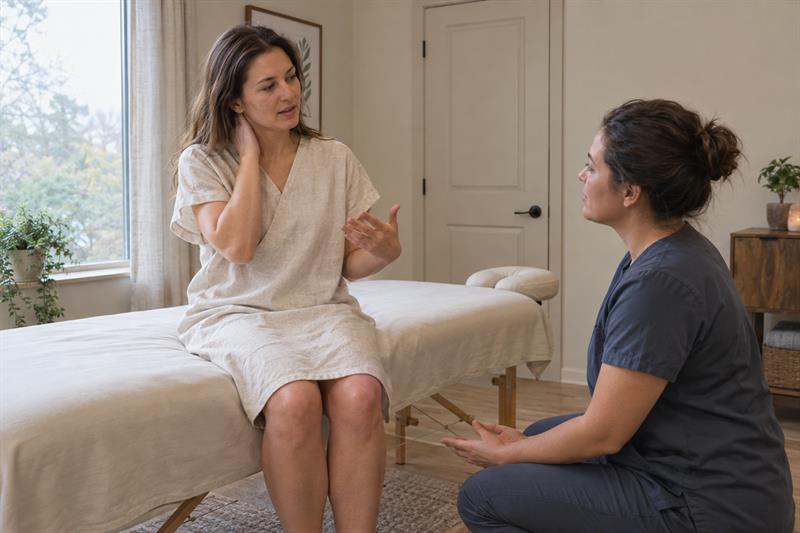
Before the massage begins, there is usually a short check-in about your goals, pressure preferences, and any areas you want more or less attention on. This part matters more than people think. It sets the direction of the session and often shapes whether the massage feels matched to what you want or just generally pleasant.
Another common pattern is staying quiet because you do not want to seem difficult. That can lead to a session that misses the point. If your shoulders are the main issue, or if firmer pressure makes you tense up, saying that early can improve the session right away.
Check-in, intake questions, and comfort preferences
The intake process is usually brief and practical. You may be asked about focus areas, pressure preferences, and anything that needs to be avoided or adjusted.
- Let the therapist know if your neck, shoulders, or lower back need more attention.
- Say clearly if you prefer light or medium pressure.
- Mention any sensitivities so the session does not start with unnecessary discomfort.
This is where the session becomes specific to you. If you want help putting those preferences into words, How to Communicate Your Massage Preferences Before and During Your Session explains what matters most.
What to wear and how draping works
For a Swedish massage, people typically undress to their comfort level and lie under a sheet or drape. Only the area being worked on is uncovered at that time. The purpose is privacy, comfort, and a clear professional structure throughout the session.
This is one of the most common unspoken concerns, especially for first-time clients. It usually feels less awkward once the process starts because the structure is straightforward. The uncertainty is usually biggest before the appointment, not during it.
What Happens During a Swedish Massage Session
During the session, the therapist usually starts with broader, calmer strokes to help your body settle and to gauge how your muscles respond. From there, the massage moves through common full-body areas such as the back, shoulders, neck, arms, and legs, depending on the length of the session and your priorities.
The key thing to expect is consistency. Swedish massage generally does not feel abrupt or aggressive. It tends to build gradually, with the session moving toward calm instead of intensity.
How the therapist begins the session
Most sessions begin with lighter, broader contact rather than immediate focused pressure. That opening matters because it gives the body a chance to stop guarding. It also gives the therapist a better sense of where tension is sitting and how quickly the body softens or resists.
In practice, when the body is carrying stress, the first few minutes are usually less about fixing anything and more about creating enough ease for the work to land well. If that step is rushed, the rest of the session may feel less effective.
Areas commonly worked during a full-body massage
A full-body Swedish massage commonly includes the back, shoulders, neck, arms, and legs. Depending on the session length, hands or feet may also be included.
- Back and shoulders are common tension centers for people carrying work or everyday stress.
- Neck work is often helpful when tightness spreads upward from the shoulders.
- Arms and legs help the session feel balanced instead of limited to one problem area.
Not every Swedish session has to be identical. If your shoulders are what brought you in, the session should reflect that rather than treating every area equally.
When and how to speak up about pressure or comfort
You can speak up at any point if the pressure feels too light, too firm, or if something about the setup is distracting. That includes room temperature, table comfort, or a position that does not feel right. Swedish massage works best when the body stays at ease, and that usually breaks down when discomfort goes unmentioned.
A common mistake is waiting until the session is over to mention that the pressure was not right. By then, the useful adjustment window is gone. If something feels off in the first few minutes, it usually helps to correct it right then rather than save it for later.
What to Expect After a Swedish Massage
After a Swedish massage, many people feel calmer, looser, and less compressed by tension. The session is usually designed to leave you feeling settled rather than sore.
That does not mean every response is identical. Some people feel immediately quiet and relaxed. Others notice that certain areas feel more noticeable once the surrounding tension drops. The main outcome is that the body often feels less wound up than it did going in.
How people often feel after the session
Common post-session reactions include feeling lighter, mentally quieter, or more physically at ease. Swedish massage is generally less likely than deeper work to leave you feeling heavily worked over.
The important distinction is that relief from tension does not always feel dramatic. Sometimes it shows up as easier breathing, less shoulder guarding, or simply not feeling as mentally crowded. That is still a meaningful shift, especially when stress has been building for a while.
Simple aftercare tips
- Drink water as you normally would.
- Give yourself a little time before jumping back into a rushed pace.
- Pay attention to how your neck, shoulders, and back feel for the rest of the day.
What often cuts a relaxation session short is going straight back into rushing, tension, and poor body awareness. If that happens, the benefits can fade quickly. Sometimes that points to more than muscle tightness alone and to the habits that keep the tension going.
Is Swedish Massage the Right Choice for You?
Swedish massage is usually the right choice when your main goal is relaxation, broad tension relief, or a more comfortable first massage experience. It also makes sense when you know you do not want a session built around firmer, more targeted pressure.
If the real issue is one stubborn area that has been tight for a long time, Swedish may still help, but it is not always the most direct approach. This is where the decision needs to match the goal instead of the label.
Good fit for relaxation, stress, and general tension
- You want a gentler full-body session.
- You feel stressed, mentally overloaded, or broadly tight rather than focused on one intense pain point.
- You are new to massage or returning after a long break.
Swedish massage works especially well when the body needs a reset more than it needs force. At MV Massage Therapy LLC, it is commonly the better starting point for clients who have been carrying tension in several areas, not just one.
When deep tissue, prenatal massage, or another option may make more sense
If you want more focused pressure for persistent muscular tightness, deep tissue may be the better fit. If you are pregnant, prenatal massage is usually the more appropriate option because the session needs to match that stage and set of body changes. If your main goal is a different sensory experience, hot stones or aromatherapy can change how the session feels while Swedish massage remains the base style.
It also helps not to confuse Swedish massage with lymphatic drainage. They are not interchangeable. Lymphatic drainage uses a different purpose and approach, especially when swelling or post-procedure considerations are part of the reason for booking.
- If these signs sound familiar, it may be time to choose the session that matches what you actually want from the appointment.
- You feel stressed and tight in several areas, not just one small spot.
- Firmer pressure tends to make you tense up instead of relax.
- You have been avoiding massage because you are unsure what the session will feel like.
- You want relief without the intensity of a deeper treatment.
When those patterns show up, a Swedish relaxation massage is often a practical next step.
Optional Ways to Personalize a Relaxation Massage
Personalizing a Swedish massage does not have to mean making it stronger. In many cases, the better adjustment is changing the feel of the session, not pushing the pressure higher. That is an important distinction because people often assume customization only means going deeper.
Aromatherapy
Aromatherapy can add a stronger sense of calm for people who respond well to scent and want the session to feel more immersive. It is not necessary for everyone, but it can noticeably change the tone of the experience. If that is part of what you are looking for, Aromatherapy Massage: What the Experience Includes explains how that experience differs.
Hot stones
Hot stones add warmth and can make a relaxation massage feel more settling, especially when the body feels guarded or stiff. What changes is the feel of the session, not its purpose. Swedish massage is still centered on relaxation and general tension relief, while the warmth changes how the body receives that work.
Pressure preferences and focus areas
You can usually ask for lighter or more moderate pressure and for extra time on common tension areas like the shoulders, neck, or back. That kind of personalization is often what makes the session feel more useful. It keeps the massage aligned with what brought you in rather than turning it into a routine that ignores the obvious priority.
Key Takeaways
- Swedish massage is usually a calm, full-body session built around light to medium pressure.
- It is often a strong starting point for stress, general tension, and first-time massage clients.
- The session should feel adjustable, not fixed. Pressure, focus areas, and comfort preferences matter.
- If the real issue is more persistent or targeted muscular tightness, a different massage style may make more sense.
Conclusion
The real question is not just what Swedish massage is. It is whether the session will feel comfortable, useful, and matched to what you actually want from the experience. When that uncertainty keeps getting pushed off, tension often keeps building and stress can keep showing up physically.
At MV Massage Therapy LLC, Swedish relaxation massage is a practical next step when you want a session that feels approachable, calming, and clearly guided from the beginning. If you are ready for a massage that matches stress, broad tension, or first-time hesitation without pushing you into a deeper experience too soon, book with MV Massage Therapy LLC and start with the service that gives your body room to settle instead of brace.
Company Approach
At MV Massage Therapy LLC, the approach to Swedish massage is not built around generic relaxation language. It is built around matching the session to what is actually showing up in the body. That usually means paying attention to whether the tension is broad or targeted, whether the client is arriving already overstimulated, and whether firmer pressure would help or simply create more guarding.
This is where experience can change the outcome. A common assumption is that relaxation massage is too simple to matter. In practice, when the pacing is right, the pressure is matched well, and the focus areas reflect how tension is actually building, Swedish massage can be the more useful choice, not the lighter compromise.
FAQ
What happens during a Swedish massage for first-time clients?
A first Swedish massage usually starts with a short conversation about pressure, focus areas, and any sensitivities. The session then moves into broad, smooth strokes that help the body settle before working through common areas like the back, shoulders, neck, arms, and legs.
What surprises many first-time clients is how structured the experience feels once it begins. The uncertainty is usually strongest before the appointment. During the session, the rhythm is typically straightforward, and adjustments can be made as soon as something feels off.
Is Swedish massage supposed to hurt?
No. Swedish massage is generally meant to feel soothing rather than painful. The pressure usually stays in the light to medium range, and the goal is to ease tension without creating the kind of intensity people associate with deeper work.
That said, a tight area can still feel more sensitive than the rest of the body. The important difference is that sensitivity should not take over the session. If it does, the pressure is no longer supporting relaxation, and the session needs a different adjustment.
Do you wear clothes during a Swedish massage?
People usually undress to their comfort level for a Swedish massage and stay covered with draping during the session. Only the area being worked on is uncovered at that moment.
The part that gets misunderstood is thinking there is one required standard for what you must wear. The more useful expectation is that privacy and comfort are built into the session structure, and the draping process is there to keep the experience clear and professional.
How long should a Swedish massage session be?
The right length depends on what you want the session to accomplish. A shorter session works better for a quick reset or one main area, while a longer session usually gives the body enough time for a fuller, more unhurried experience.
This matters because the feeling most people want from Swedish massage comes from pacing as much as pressure. If the goal is broad relaxation, more time usually allows that process to develop instead of feeling compressed. For a clearer breakdown, How Long Should Your First Massage Be? Choosing the Right Session Length by Goal explains how session time changes the experience.
Can I ask the therapist to focus on my shoulders or back?
Yes. Even in a full-body Swedish massage, you can usually ask for more attention on the shoulders, upper back, or another area that is carrying most of the tension.
That does not turn the session into a different service. It simply means the massage reflects what is actually going on in your body. This usually leads to a better result than dividing time evenly when one area is clearly doing most of the work.
Should I choose Swedish massage or deep tissue massage?
Choose Swedish massage when the main goal is relaxation, general tension relief, or a more approachable first massage. Choose deep tissue when the issue is more focused, persistent muscular tightness and you know firmer pressure fits that goal.
The biggest misunderstanding is treating deep tissue like the stronger, more effective version of every massage. That can lead people into the wrong session. The better question is whether your body needs to unwind or whether you want more targeted intensity. That difference changes the decision.